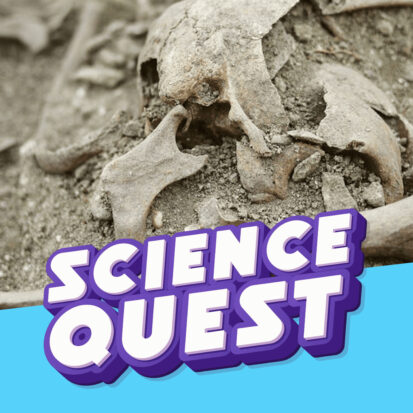
VAMPIRE MYSTERY: Archaeologists Examine a Strange Burial ♂️
Leave a reviewIt’s still time for another BIG and BRILLIANT adventure into the world of science on this week’s Science Quest!
© Fun Kids | 00:28:46
|Episode: 509 |
Full episode description
 Episode One: MIDWEEKLY: Why Is The Ocean Salty?
This is an Episodic show. You can listen to it in any order, but episode one is always a great place to start.
Full Episode description
It’s still time for another BIG and BRILLIANT adventure into the world of science on this week’s Science Quest!
In Science in the News, a rare turtle rescued in the UK begins the next stage of its recovery, scientists discover that snakes don’t get hungry in the same way humans do, and archaeologist Nataša Sarkic joins Dan to investigate the remains of a so-called “vampire” found in a grave at Račesa, a fortress in eastern Croatia.
It’s time for your questions too. Leo wants to know how chameleons change colour, and Simon Green from the Open University answers Roscoe’s big space question: just how hot is the Sun’s core?
Dangerous Dan introduces the bizarre hag moth, and in Battle of the Sciences, we head beneath the ice with glaciologist Sammie Buzzard from the UK Centre for Polar Observation and Modelling to uncover what glaciers can teach us about our planet.
Plus, in Space Cadets, Harry and Terry blast off on an accidental adventure to the Sun to discover more about the star at the centre of our Solar System.
What we learn about:
How rescued sea turtles recover
Why snakes don’t feel hunger like humans
The truth behind a “vampire” burial in Croatia
How chameleons change colour
How hot the Sun’s core really is
The unusual hag moth
What glaciologists study beneath the ice
All that and more on this week’s Science Quest!
Join Fun Kids Podcasts+: https://funkidslive.com/plus
See omnystudio.com/listener for privacy information.
© Fun Kidsbop| Status: Active, 101 episodes | Kind: Episodic | Episode URL
The content, Artwork and advertising within this podcast is not owned or affiliated with Sound Carrot and remain the property of their respective owners.