Install SoundCarrot
Add it to your home screen for quick access.
Listened
In progress
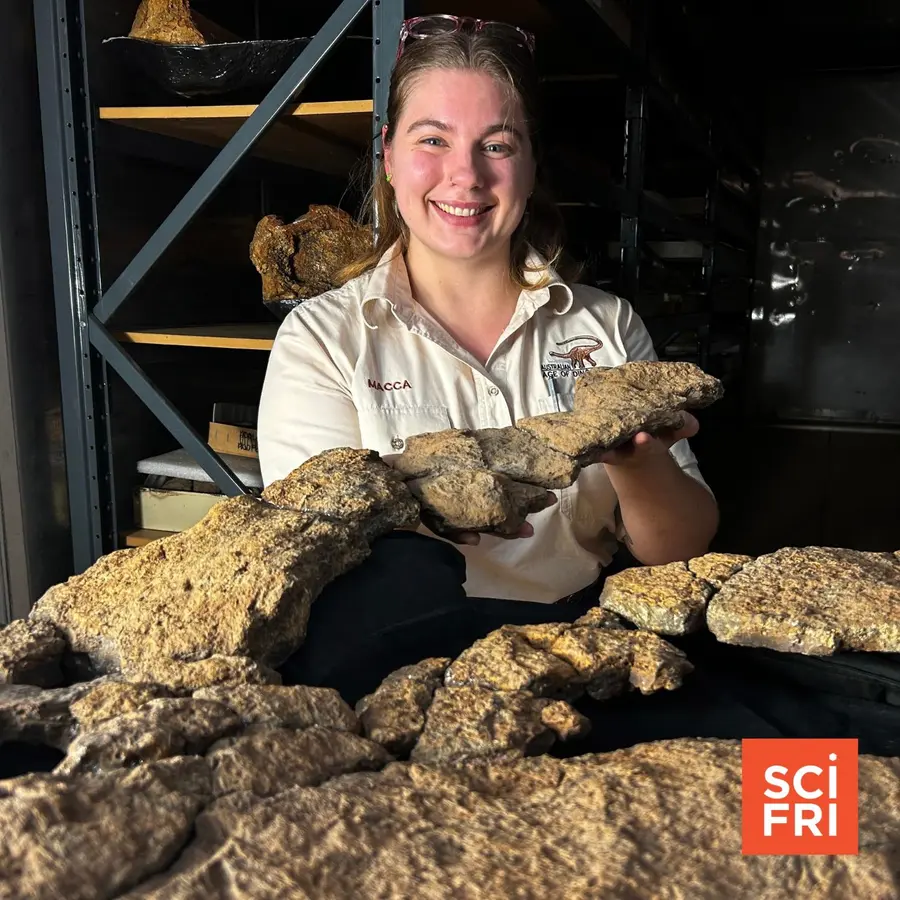
While there are a lot of dinosaur fossils, and a lot of plant fossils, the precise connection between the two has been something of a mystery. Now, researchers report that they’ve found what’s called a cololite, fossilized gut contents, in the remains of a sauropod—a massive, long-necked plant-eater. The dino’s last meal dates back 95 to 100 million years. Paleontologist Stephen Poropat joins Host Flora Lichtman to dig into the mysteries of a dinosaur’s tummy.
And, for prairie dogs, communication is key. The rodents’ yips and barks can warn when danger is near—and not just to other prairie dogs. A new study suggests that birds called long-billed curlews are eavesdropping on this chatter to learn when a predator is lurking nearby. Using speakers and a taxidermied badger on wheels, ornithologists are untangling the social dynamics of black-tailed prairie dogs.
While there are a lot of dinosaur fossils, and a lot of plant fossils, the precise connection between the two has been something of a mystery. Now, researchers report that they’ve found what’s called a cololite, fossilized gut contents, in the remains of a sauropod—a massive, long-necked plant-eater. The dino’s last meal dates back 95 to 100 million years. Paleontologist Stephen Poropat joins Host Flora Lichtman to dig into the mysteries of a dinosaur’s tummy.
And, for prairie dogs, communication is key. The rodents’ yips and barks can warn when danger is near—and not just to other prairie dogs. A new study suggests that birds called long-billed curlews are eavesdropping on this chatter to learn when a predator is lurking nearby. Using speakers and a taxidermied badger on wheels, ornithologists are untangling the social dynamics of black-tailed prairie dogs. Host Flora Lichtman talks with study author Andrew Dreelin about this eavesdropping behavior and what it means for conservation.
Guests:
Dr. Stephen Poropat is a paleontologist and deputy director of the Western Australian Organic and Isotope Geochemistry Centre at Curtin University in Perth, Australia.
Andrew Dreelin is a research fellow with the Smithsonian Conservation Biology Institute and a PhD candidate at Northern Illinois University.
Transcripts for each episode are available within 1-3 days at sciencefriday.com.
Subscribe to this podcast. Follow our show on Instagram, TikTok, Facebook, and Bluesky @scifri and sign up for our newsletters. Got a science question that’s keeping you up at night? Call us: 877-472-4374
Hosted by Simplecast, an AdsWizz company. See pcm.adswizz.com for information about our collection and use of personal data for advertising.
QUICK LINKS
This is an episodic podcast, so you can listen to it in any order, but episode one is a great place to start.
Listen to episode one hereWhile there are a lot of dinosaur fossils, and a lot of plant fossils, the precise connection between the two has been something of a mystery. Now, researchers report that they’ve found what’s called a cololite, fossilized gut contents, in the remains of a sauropod—a massive, long-necked plant-eater. The dino’s last meal dates back 95 to 100 million years. Paleontologist Stephen Poropat joins Host Flora Lichtman to dig into the mysteries of a dinosaur’s tummy.
And, for prairie dogs, communication is key. The rodents’ yips and barks can warn when danger is near—and not just to other prairie dogs. A new study suggests that birds called long-billed curlews are eavesdropping on this chatter to learn when a predator is lurking nearby. Using speakers and a taxidermied badger on wheels, ornithologists are untangling the social dynamics of black-tailed prairie dogs. Host Flora Lichtman talks with study author Andrew Dreelin about this eavesdropping behavior and what it means for conservation.
Guests:
Dr. Stephen Poropat is a paleontologist and deputy director of the Western Australian Organic and Isotope Geochemistry Centre at Curtin University in Perth, Australia.
Andrew Dreelin is a research fellow with the Smithsonian Conservation Biology Institute and a PhD candidate at Northern Illinois University.
Transcripts for each episode are available within 1-3 days at sciencefriday.com.
Subscribe to this podcast. Follow our show on Instagram, TikTok, Facebook, and Bluesky @scifri and sign up for our newsletters. Got a science question that’s keeping you up at night? Call us: 877-472-4374
Hosted by Simplecast, an AdsWizz company. See pcm.adswizz.com for information about our collection and use of personal data for advertising.
Sound Carrot is your source for Family Podcast Discovery. Verified awesome, 0% boring.
Distraction free website, no flashing banners or adverts to steal your attention.
(Some shows do contain their own ads however).
At first I made this site for my kids, but like any dad I got a little over excited. I hope you find it as useful as they do.
Whether you want to listen to them together in the car, or alone in your room - the content is all safe for younger ears.