Install SoundCarrot
Add it to your home screen for quick access.
Listened
In progress
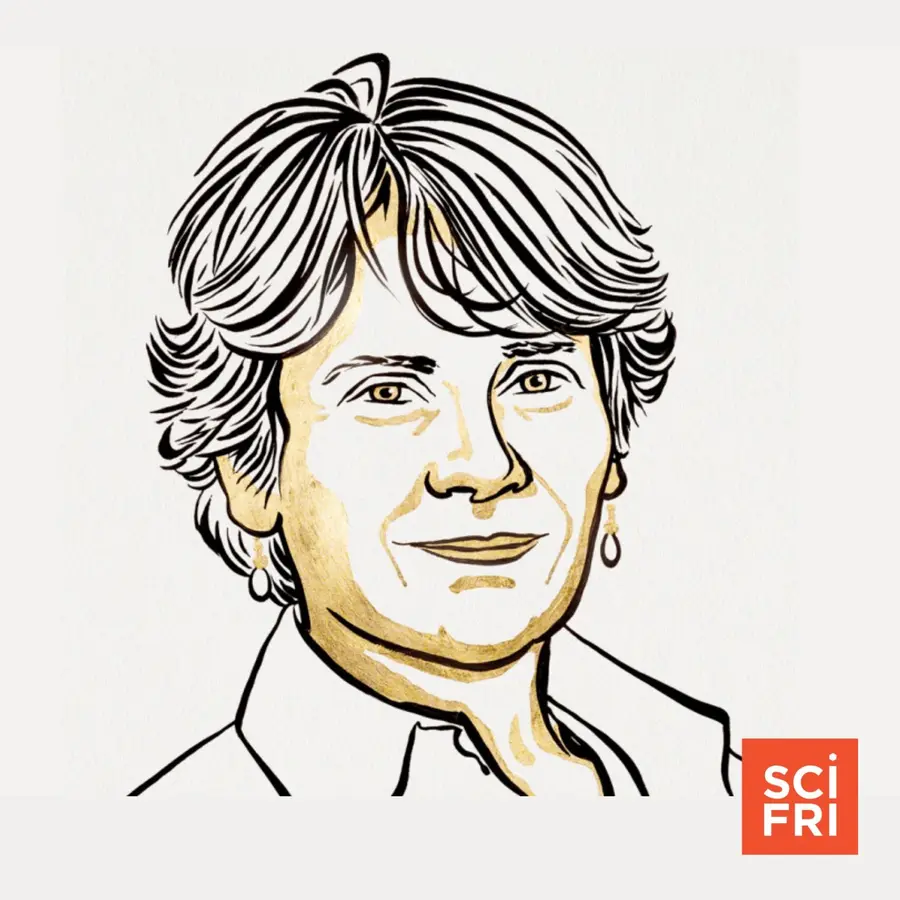
In 2022, the Nobel Prize in Chemistry went to Dr. Carolyn Bertozzi of Stanford University, Dr. Morten Meldal of the University of Copenhagen, and Dr. K. Barry Sharpless of the Scripps Research Institute “for the development of click chemistry and bioorthogonal chemistry.” In “click chemistry,” molecular building blocks snap together quickly and efficiently to let chemists build more complicated molecules.
“When someone is thinking outside the box, or in a very different way, we like to think of that as orthogonal thinking,” Bertozzi explained. “So biorthogonal means not interacting with biology. Totally separate from biology.” Her research began with an interest in developing ways to see specific sugar molecules on the surface of cells. But it has developed into an approach that can be used for advanced drug delivery in fields such as chemotherapy.
In 2022, the Nobel Prize in Chemistry went to Dr. Carolyn Bertozzi of Stanford University, Dr. Morten Meldal of the University of Copenhagen, and Dr. K. Barry Sharpless of the Scripps Research Institute “for the development of click chemistry and bioorthogonal chemistry.” In “click chemistry,” molecular building blocks snap together quickly and efficiently to let chemists build more complicated molecules. But bioorthogonal chemistry takes that work one step further, allowing the technique to be used within living organisms without damaging cells.
“When someone is thinking outside the box, or in a very different way, we like to think of that as orthogonal thinking,” Bertozzi explained. “So biorthogonal means not interacting with biology. Totally separate from biology.” Her research began with an interest in developing ways to see specific sugar molecules on the surface of cells. But it has developed into an approach that can be used for advanced drug delivery in fields such as chemotherapy.
As part of Science Friday’s 33rd anniversary show, we’re revisiting our listeners’ favorite stories, including this one. In 2022, Bertozzi joined Ira Flatow for a wide-ranging conversation about her research, chemistry education, her early music career, and the importance of diversity in the field of chemistry.
Transcripts for each segment will be available after the show airs on sciencefriday.com.
Subscribe to this podcast. Follow our show on Instagram, TikTok, Facebook, and Bluesky @scifri and sign up for our newsletters. Got a science question that’s keeping you up at night? Call us: 877-472-4374
Hosted by Simplecast, an AdsWizz company. See pcm.adswizz.com for information about our collection and use of personal data for advertising.
QUICK LINKS
This is an episodic podcast, so you can listen to it in any order, but episode one is a great place to start.
Listen to episode one hereIn 2022, the Nobel Prize in Chemistry went to Dr. Carolyn Bertozzi of Stanford University, Dr. Morten Meldal of the University of Copenhagen, and Dr. K. Barry Sharpless of the Scripps Research Institute “for the development of click chemistry and bioorthogonal chemistry.” In “click chemistry,” molecular building blocks snap together quickly and efficiently to let chemists build more complicated molecules. But bioorthogonal chemistry takes that work one step further, allowing the technique to be used within living organisms without damaging cells.
“When someone is thinking outside the box, or in a very different way, we like to think of that as orthogonal thinking,” Bertozzi explained. “So biorthogonal means not interacting with biology. Totally separate from biology.” Her research began with an interest in developing ways to see specific sugar molecules on the surface of cells. But it has developed into an approach that can be used for advanced drug delivery in fields such as chemotherapy.
As part of Science Friday’s 33rd anniversary show, we’re revisiting our listeners’ favorite stories, including this one. In 2022, Bertozzi joined Ira Flatow for a wide-ranging conversation about her research, chemistry education, her early music career, and the importance of diversity in the field of chemistry.
Transcripts for each segment will be available after the show airs on sciencefriday.com.
Subscribe to this podcast. Follow our show on Instagram, TikTok, Facebook, and Bluesky @scifri and sign up for our newsletters. Got a science question that’s keeping you up at night? Call us: 877-472-4374
Hosted by Simplecast, an AdsWizz company. See pcm.adswizz.com for information about our collection and use of personal data for advertising.
Sound Carrot is your source for Family Podcast Discovery. Verified awesome, 0% boring.
Distraction free website, no flashing banners or adverts to steal your attention.
(Some shows do contain their own ads however).
At first I made this site for my kids, but like any dad I got a little over excited. I hope you find it as useful as they do.
Whether you want to listen to them together in the car, or alone in your room - the content is all safe for younger ears.