Install SoundCarrot
Add it to your home screen for quick access.
Listened
In progress
The term “living fossil” has been applied to any number of animals, from sharks to turtles to the coelacanth. It’s the idea that those animals look very much the same way their species may have looked millions of years ago, with limited evolutionary change over that time.
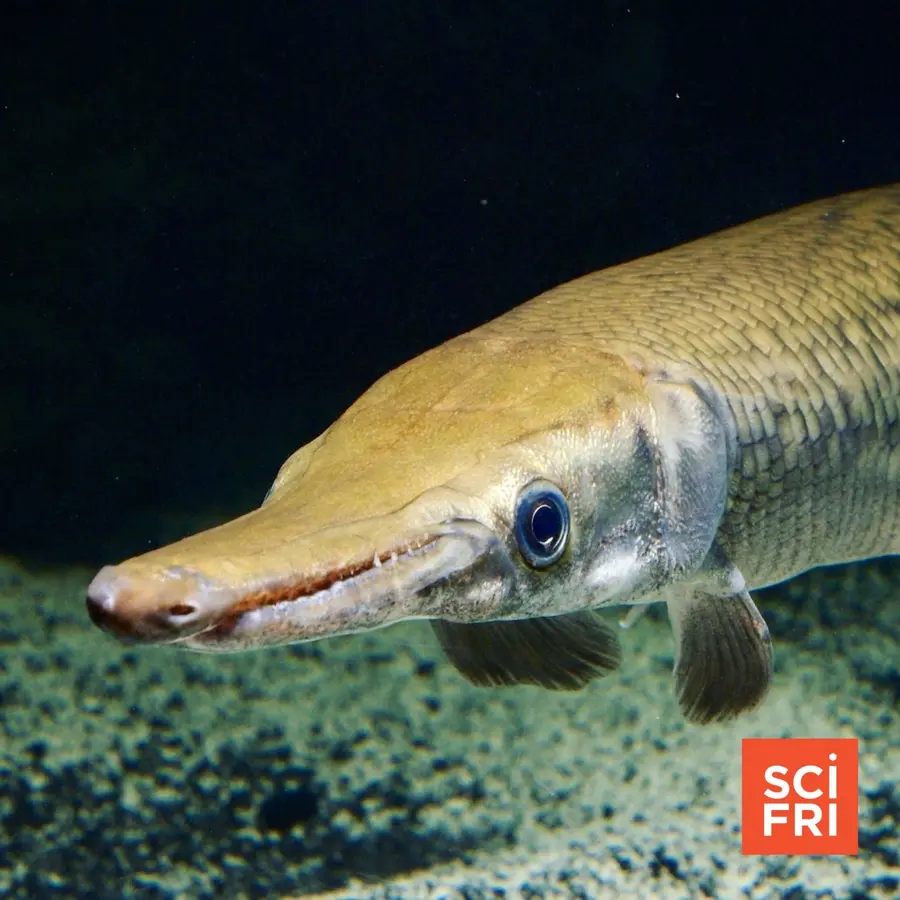
After analyzing the genomes of many different species on that “living fossil” list, researchers report they may have found an animal that evolves more slowly than all the others—a group of fish called gar. The rate of molecular change in gar genomes is the slowest of any jawed vertebrate, the researchers say. In fact, gar genomes change so slowly that two gar species that diverged from each other over 105 million years ago can still interbreed and produce fertile offspring.
The term “living fossil” has been applied to any number of animals, from sharks to turtles to the coelacanth. It’s the idea that those animals look very much the same way their species may have looked millions of years ago, with limited evolutionary change over that time.
After analyzing the genomes of many different species on that “living fossil” list, researchers report they may have found an animal that evolves more slowly than all the others—a group of fish called gar. The rate of molecular change in gar genomes is the slowest of any jawed vertebrate, the researchers say. In fact, gar genomes change so slowly that two gar species that diverged from each other over 105 million years ago can still interbreed and produce fertile offspring. In evolutionary time, that’s comparable to the distance between humans and elephants. The researchers believe that the slow rate of change in gars may be due to an exceptional ability to repair mutations and other errors in their genes.
Dr. Solomon David, assistant professor of aquatic ecology at the University of Minnesota, and Chase Brownstein, a graduate student in Yale’s department of ecology and evolutionary biology, join Ira to discuss the findings, recently reported in the journal Evolution.
Transcripts for each segment will be available after the show airs on sciencefriday.com.
Subscribe to this podcast. Follow our show on Instagram, TikTok, Facebook, and Bluesky @scifri and sign up for our newsletters. Got a science question that’s keeping you up at night? Call us: 877-472-4374
Hosted by Simplecast, an AdsWizz company. See pcm.adswizz.com for information about our collection and use of personal data for advertising.
QUICK LINKS

This is an episodic podcast, so you can listen to it in any order, but episode one is a great place to start.
Listen to episode one hereThe term “living fossil” has been applied to any number of animals, from sharks to turtles to the coelacanth. It’s the idea that those animals look very much the same way their species may have looked millions of years ago, with limited evolutionary change over that time.
After analyzing the genomes of many different species on that “living fossil” list, researchers report they may have found an animal that evolves more slowly than all the others—a group of fish called gar. The rate of molecular change in gar genomes is the slowest of any jawed vertebrate, the researchers say. In fact, gar genomes change so slowly that two gar species that diverged from each other over 105 million years ago can still interbreed and produce fertile offspring. In evolutionary time, that’s comparable to the distance between humans and elephants. The researchers believe that the slow rate of change in gars may be due to an exceptional ability to repair mutations and other errors in their genes.
Dr. Solomon David, assistant professor of aquatic ecology at the University of Minnesota, and Chase Brownstein, a graduate student in Yale’s department of ecology and evolutionary biology, join Ira to discuss the findings, recently reported in the journal Evolution.
Transcripts for each segment will be available after the show airs on sciencefriday.com.
Subscribe to this podcast. Follow our show on Instagram, TikTok, Facebook, and Bluesky @scifri and sign up for our newsletters. Got a science question that’s keeping you up at night? Call us: 877-472-4374
Hosted by Simplecast, an AdsWizz company. See pcm.adswizz.com for information about our collection and use of personal data for advertising.
Sound Carrot is your source for Family Podcast Discovery. Verified awesome, 0% boring.
Distraction free website, no flashing banners or adverts to steal your attention.
(Some shows do contain their own ads however).
At first I made this site for my kids, but like any dad I got a little over excited. I hope you find it as useful as they do.
Whether you want to listen to them together in the car, or alone in your room - the content is all safe for younger ears.