Install SoundCarrot
Add it to your home screen for quick access.
Listened
In progress
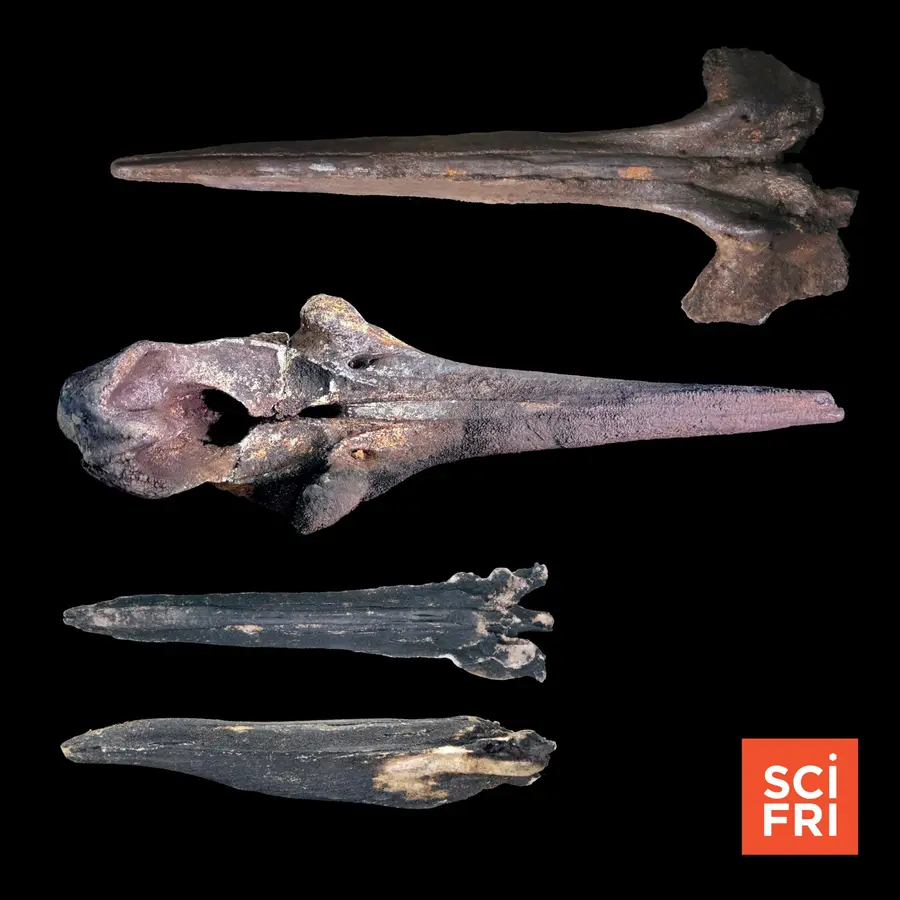
Researchers just published details of a massive undersea graveyard of whales deep in the Indian Ocean. Spanning about 1,200 kilometers (745 miles), it contains whale remains dating back more than 5 million years—and at least five active whale fall sites still teeming with life. Fossil whale expert Nick Pyenson joins Host Flora Lichtman to discuss these findings.
Then, marine biologists Rachel Sipler and Sara Jobson join Ira Flatow to describe an unusual discovery in certain species of sea cucumbers: If a foot or tentacle becomes detached, the parts don’t wither up and rot away. Even without a stomach, these parts appear to directly extract nutrients from the surrounding seawater. “Zombie” sea cucumber parts have been observed surviving for more than three years.
Researchers just published details of a massive undersea graveyard of whales deep in the Indian Ocean. Spanning about 1,200 kilometers (745 miles), it contains whale remains dating back more than 5 million years—and at least five active whale fall sites still teeming with life. Fossil whale expert Nick Pyenson joins Host Flora Lichtman to discuss these findings.
Then, marine biologists Rachel Sipler and Sara Jobson join Ira Flatow to describe an unusual discovery in certain species of sea cucumbers: If a foot or tentacle becomes detached, the parts don’t wither up and rot away. Even without a stomach, these parts appear to directly extract nutrients from the surrounding seawater. “Zombie” sea cucumber parts have been observed surviving for more than three years.
Guests:
Dr. Nick Pyenson is curator of fossil marine mammals at the Smithsonian National Museum of Natural History.
Dr. Rachel Sipler is a senior research scientist in the Bigelow Laboratory in East Boothbay, Maine.
Sara Jobson a PhD student at the Memorial University of Newfoundland in St. Johns, Canada.
Other episodes you may enjoy:
Remembering Roger Payne, Who Helped Save The Whales
Can A Microbe Conservation Movement Take Off?
Transcripts for each episode are available within 1-3 days at sciencefriday.com.
Subscribe to this podcast. Follow our show on Instagram, TikTok, Facebook, and Bluesky @scifri and sign up for our newsletters. Got a science question that’s keeping you up at night? Call us: 877-472-4374
Hosted by Simplecast, an AdsWizz company. See pcm.adswizz.com for information about our collection and use of personal data for advertising.
QUICK LINKS
This is an episodic podcast, so you can listen to it in any order, but episode one is a great place to start.
Listen to episode one hereResearchers just published details of a massive undersea graveyard of whales deep in the Indian Ocean. Spanning about 1,200 kilometers (745 miles), it contains whale remains dating back more than 5 million years—and at least five active whale fall sites still teeming with life. Fossil whale expert Nick Pyenson joins Host Flora Lichtman to discuss these findings.
Then, marine biologists Rachel Sipler and Sara Jobson join Ira Flatow to describe an unusual discovery in certain species of sea cucumbers: If a foot or tentacle becomes detached, the parts don’t wither up and rot away. Even without a stomach, these parts appear to directly extract nutrients from the surrounding seawater. “Zombie” sea cucumber parts have been observed surviving for more than three years.
Guests:
Dr. Nick Pyenson is curator of fossil marine mammals at the Smithsonian National Museum of Natural History.
Dr. Rachel Sipler is a senior research scientist in the Bigelow Laboratory in East Boothbay, Maine.
Sara Jobson a PhD student at the Memorial University of Newfoundland in St. Johns, Canada.
Other episodes you may enjoy:
Remembering Roger Payne, Who Helped Save The Whales
Can A Microbe Conservation Movement Take Off?
Transcripts for each episode are available within 1-3 days at sciencefriday.com.
Subscribe to this podcast. Follow our show on Instagram, TikTok, Facebook, and Bluesky @scifri and sign up for our newsletters. Got a science question that’s keeping you up at night? Call us: 877-472-4374
Hosted by Simplecast, an AdsWizz company. See pcm.adswizz.com for information about our collection and use of personal data for advertising.
Sound Carrot is your source for Family Podcast Discovery. Verified awesome, 0% boring.
Distraction free website, no flashing banners or adverts to steal your attention.
(Some shows do contain their own ads however).
At first I made this site for my kids, but like any dad I got a little over excited. I hope you find it as useful as they do.
Whether you want to listen to them together in the car, or alone in your room - the content is all safe for younger ears.