Install SoundCarrot
Add it to your home screen for quick access.
Listened
In progress
Millions of years ago, iguanas somehow got from North America to Fiji. Scientists think they made the trip on a raft of fallen vegetation. Also, the marine reptile’s fossilized fetus is cluing paleontologists into the lives of ancient sea creatures.
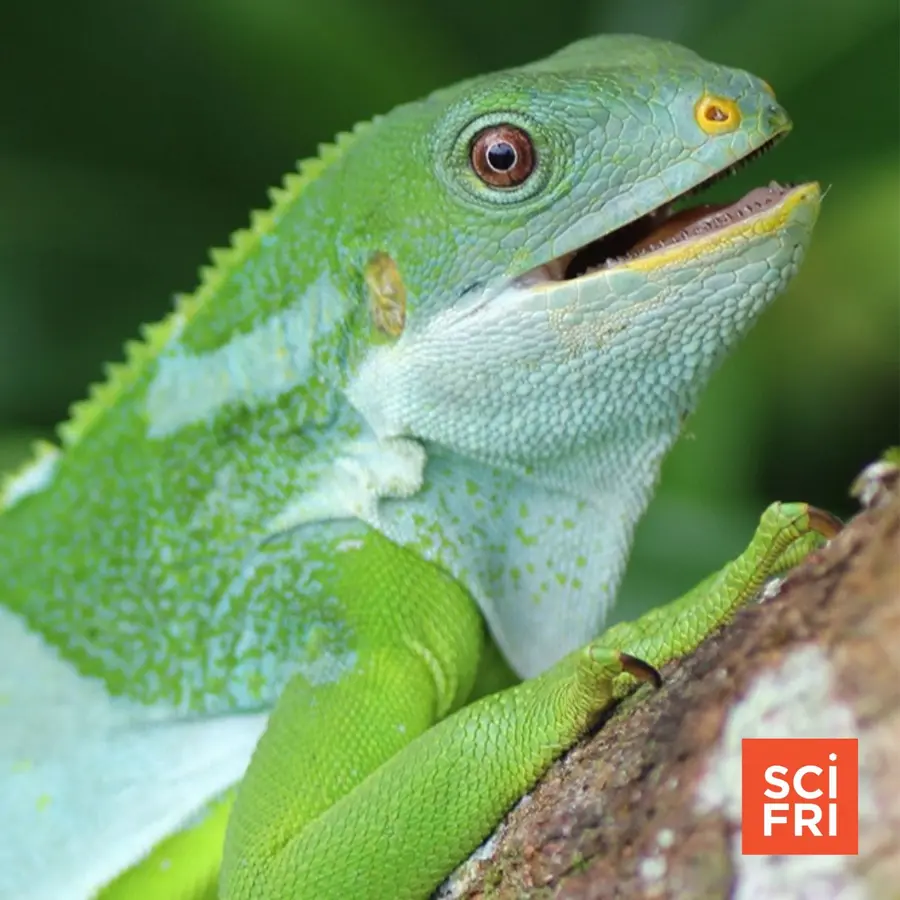
Ancient Iguanas Floated 5,000 Miles Across The PacificIf you picture iguanas, you might imagine them sunbathing on hot sand in the Caribbean or skittering around the Mojave Desert. But far, far away from where these iguanas are found is another group of iguanas living on the islands of Fiji and Tonga in the South Pacific—closer to New Zealand than the Americas. And it raises the question: How in the world did these iguanas end up all alone, on the other side of the ocean?
Millions of years ago, iguanas somehow got from North America to Fiji. Scientists think they made the trip on a raft of fallen vegetation. Also, the marine reptile’s fossilized fetus is cluing paleontologists into the lives of ancient sea creatures.
Ancient Iguanas Floated 5,000 Miles Across The PacificIf you picture iguanas, you might imagine them sunbathing on hot sand in the Caribbean or skittering around the Mojave Desert. But far, far away from where these iguanas are found is another group of iguanas living on the islands of Fiji and Tonga in the South Pacific—closer to New Zealand than the Americas. And it raises the question: How in the world did these iguanas end up all alone, on the other side of the ocean? In a study published in Proceedings of the National Academy of Sciences in March, scientists suggest that millions of years ago, iguanas hitched a ride on a raft and accidentally sailed all the way across the ocean before washing ashore and starting a new life. Host Flora Lichtman discusses the iguanas’ intrepid adventure with lead author Dr. Simon Scarpetta, evolutionary biologist and assistant professor at the University of San Francisco in California.
Meet Fiona, The Pregnant Icthyosaur FossilIn the Patagonia region of Chile, Torres del Paine National Park is a graveyard of ichthyosaurs—ancient, dolphin-like reptiles that roamed the oceans when dinosaurs dominated the land. Nearly 90 of these giant reptiles’ fossils have been found amongst the glaciers. But the standout in the bone heap is Fiona, an ichthyosaur that lived 131 million years ago. She’s in pristine condition, the only fully preserved ichthyosaur in Chile. And, she died pregnant. She’s teaching paleontologists about the evolution of her species. And some of those findings were recently published in the Journal of Vertebrate Paleontology. Host Flora Lichtman talks with lead author Dr. Judith Pardo-Pérez, paleontologist at the University of Magallanes in Chile.
Transcripts for each segment will be available after the show airs on sciencefriday.com.
Subscribe to this podcast. Follow our show on Instagram, TikTok, Facebook, and Bluesky @scifri and sign up for our newsletters. Got a science question that’s keeping you up at night? Call us: 877-472-4374
Hosted by Simplecast, an AdsWizz company. See pcm.adswizz.com for information about our collection and use of personal data for advertising.
QUICK LINKS

This is an episodic podcast, so you can listen to it in any order, but episode one is a great place to start.
Listen to episode one hereMillions of years ago, iguanas somehow got from North America to Fiji. Scientists think they made the trip on a raft of fallen vegetation. Also, the marine reptile’s fossilized fetus is cluing paleontologists into the lives of ancient sea creatures.
Ancient Iguanas Floated 5,000 Miles Across The PacificIf you picture iguanas, you might imagine them sunbathing on hot sand in the Caribbean or skittering around the Mojave Desert. But far, far away from where these iguanas are found is another group of iguanas living on the islands of Fiji and Tonga in the South Pacific—closer to New Zealand than the Americas. And it raises the question: How in the world did these iguanas end up all alone, on the other side of the ocean? In a study published in Proceedings of the National Academy of Sciences in March, scientists suggest that millions of years ago, iguanas hitched a ride on a raft and accidentally sailed all the way across the ocean before washing ashore and starting a new life. Host Flora Lichtman discusses the iguanas’ intrepid adventure with lead author Dr. Simon Scarpetta, evolutionary biologist and assistant professor at the University of San Francisco in California.
Meet Fiona, The Pregnant Icthyosaur FossilIn the Patagonia region of Chile, Torres del Paine National Park is a graveyard of ichthyosaurs—ancient, dolphin-like reptiles that roamed the oceans when dinosaurs dominated the land. Nearly 90 of these giant reptiles’ fossils have been found amongst the glaciers. But the standout in the bone heap is Fiona, an ichthyosaur that lived 131 million years ago. She’s in pristine condition, the only fully preserved ichthyosaur in Chile. And, she died pregnant. She’s teaching paleontologists about the evolution of her species. And some of those findings were recently published in the Journal of Vertebrate Paleontology. Host Flora Lichtman talks with lead author Dr. Judith Pardo-Pérez, paleontologist at the University of Magallanes in Chile.
Transcripts for each segment will be available after the show airs on sciencefriday.com.
Subscribe to this podcast. Follow our show on Instagram, TikTok, Facebook, and Bluesky @scifri and sign up for our newsletters. Got a science question that’s keeping you up at night? Call us: 877-472-4374
Hosted by Simplecast, an AdsWizz company. See pcm.adswizz.com for information about our collection and use of personal data for advertising.
Sound Carrot is your source for Family Podcast Discovery. Verified awesome, 0% boring.
Distraction free website, no flashing banners or adverts to steal your attention.
(Some shows do contain their own ads however).
At first I made this site for my kids, but like any dad I got a little over excited. I hope you find it as useful as they do.
Whether you want to listen to them together in the car, or alone in your room - the content is all safe for younger ears.