Install SoundCarrot
Add it to your home screen for quick access.
Listened
In progress
The space elevator has been a staple of science fiction for decades, from The Fountains of Paradise by Arthur C. Clarke to the Apple TV show “Foundation.” But the work and theories to make it a reality have been in development since the late 19th century.
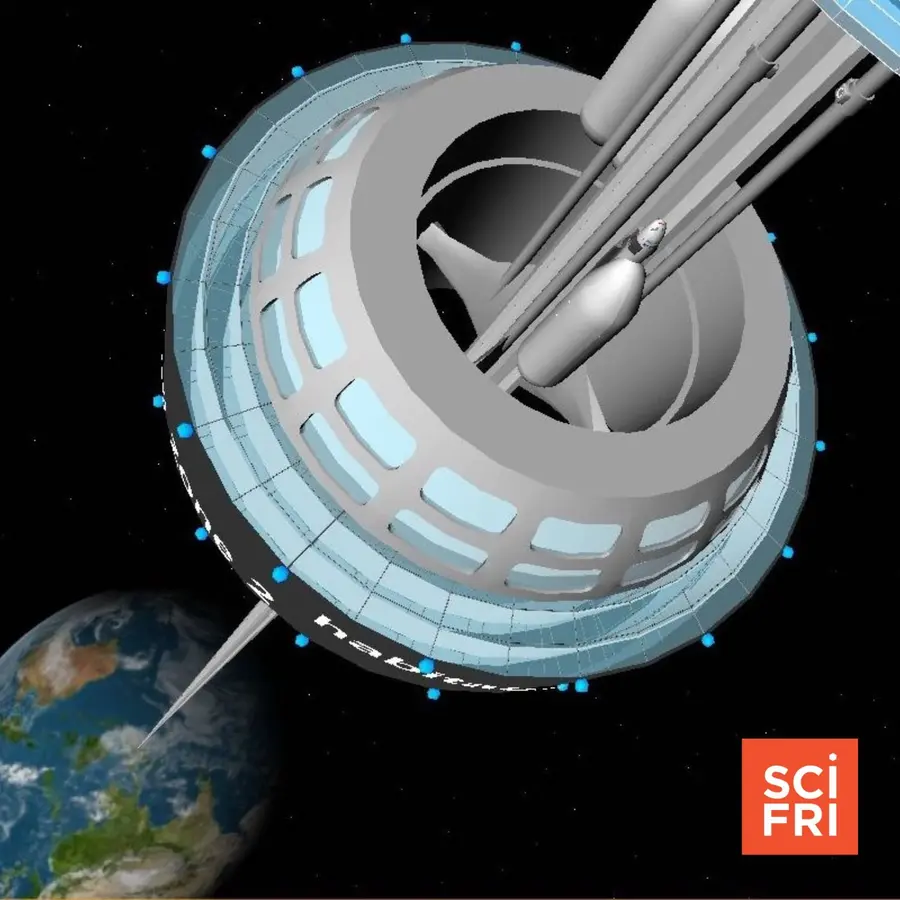
It’s a simple concept: Imagine a long cable, stretching from the Earth’s surface to a satellite locked in orbit 22,000 miles high. It would work like elevators here on Earth, enabling us to send things—and people—up into space. And it would make the need for the expensive rockets we use today obsolete.
The space elevator has been a staple of science fiction for decades, from The Fountains of Paradise by Arthur C. Clarke to the Apple TV show “Foundation.” But the work and theories to make it a reality have been in development since the late 19th century.
It’s a simple concept: Imagine a long cable, stretching from the Earth’s surface to a satellite locked in orbit 22,000 miles high. It would work like elevators here on Earth, enabling us to send things—and people—up into space. And it would make the need for the expensive rockets we use today obsolete.
Although it has never been considered feasible due to the exorbitant cost and the engineering challenges it poses, the idea refuses to go away.
One of Japan’s biggest construction companies, the Obayashi Corporation, which built the Tokyo Sky Tree, had plans to build a space elevator in 2025 but has reportedly delayed that goal.
So what are the hurdles that keep us from building it? And why does it seem that the space elevator is always 25 years away? Ira Flatow is joined by Dr. Dennis Wright, president of the International Space Elevator Consortium to talk about the feasibility of this megaproject.
Transcripts for each segment will be available after the show airs on sciencefriday.com.
Subscribe to this podcast. Follow our show on Instagram, TikTok, Facebook, and Bluesky @scifri and sign up for our newsletters. Got a science question that’s keeping you up at night? Call us: 877-472-4374
Hosted by Simplecast, an AdsWizz company. See pcm.adswizz.com for information about our collection and use of personal data for advertising.
QUICK LINKS

This is an episodic podcast, so you can listen to it in any order, but episode one is a great place to start.
Listen to episode one hereThe space elevator has been a staple of science fiction for decades, from The Fountains of Paradise by Arthur C. Clarke to the Apple TV show “Foundation.” But the work and theories to make it a reality have been in development since the late 19th century.
It’s a simple concept: Imagine a long cable, stretching from the Earth’s surface to a satellite locked in orbit 22,000 miles high. It would work like elevators here on Earth, enabling us to send things—and people—up into space. And it would make the need for the expensive rockets we use today obsolete.
Although it has never been considered feasible due to the exorbitant cost and the engineering challenges it poses, the idea refuses to go away.
One of Japan’s biggest construction companies, the Obayashi Corporation, which built the Tokyo Sky Tree, had plans to build a space elevator in 2025 but has reportedly delayed that goal.
So what are the hurdles that keep us from building it? And why does it seem that the space elevator is always 25 years away? Ira Flatow is joined by Dr. Dennis Wright, president of the International Space Elevator Consortium to talk about the feasibility of this megaproject.
Transcripts for each segment will be available after the show airs on sciencefriday.com.
Subscribe to this podcast. Follow our show on Instagram, TikTok, Facebook, and Bluesky @scifri and sign up for our newsletters. Got a science question that’s keeping you up at night? Call us: 877-472-4374
Hosted by Simplecast, an AdsWizz company. See pcm.adswizz.com for information about our collection and use of personal data for advertising.
Sound Carrot is your source for Family Podcast Discovery. Verified awesome, 0% boring.
Distraction free website, no flashing banners or adverts to steal your attention.
(Some shows do contain their own ads however).
At first I made this site for my kids, but like any dad I got a little over excited. I hope you find it as useful as they do.
Whether you want to listen to them together in the car, or alone in your room - the content is all safe for younger ears.