Install SoundCarrot
Add it to your home screen for quick access.
Listened
In progress
A new ESA telescope could help us understand how dark matter and dark energy influence the structure of the universe. Also, using both JWST and the Chandra Observatory, astronomers discover the oldest known black hole.
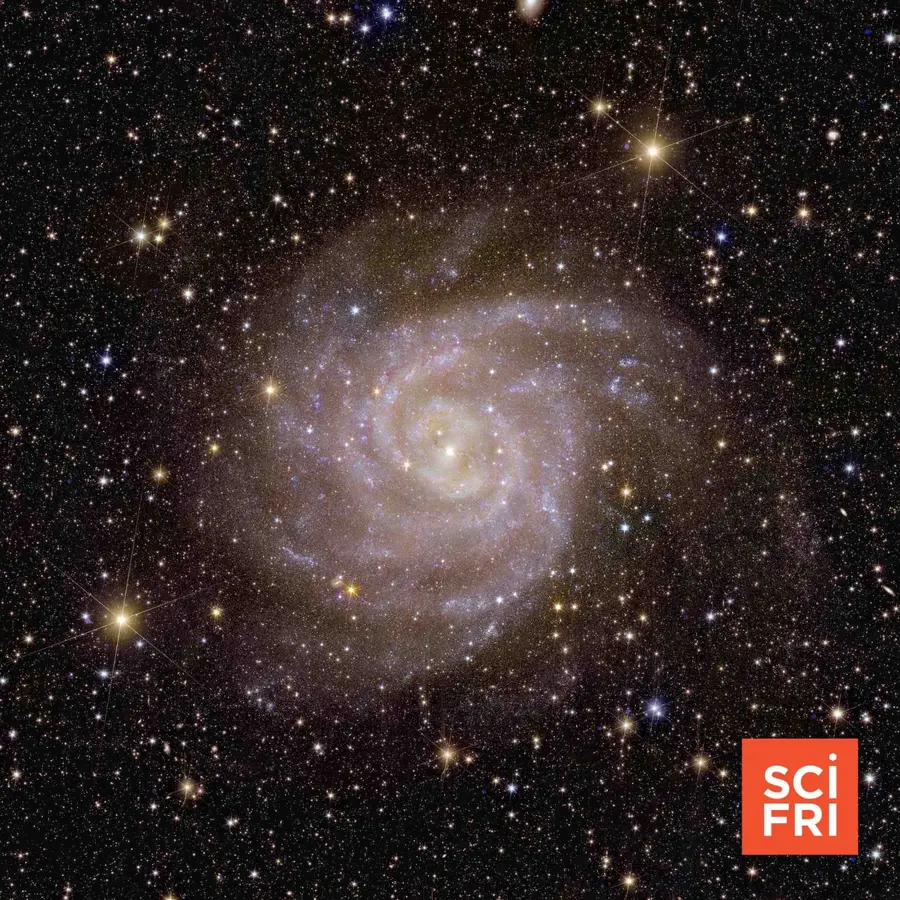
Euclid Telescope’s First Images UnveiledThis week, the European Space Agency unveiled the Euclid space telescope’s first full-color images of the cosmos. The telescope has a wide field of view and is designed to take images of large swaths of the sky in both visible and infrared light.
A new ESA telescope could help us understand how dark matter and dark energy influence the structure of the universe. Also, using both JWST and the Chandra Observatory, astronomers discover the oldest known black hole.
Euclid Telescope’s First Images UnveiledThis week, the European Space Agency unveiled the Euclid space telescope’s first full-color images of the cosmos. The telescope has a wide field of view and is designed to take images of large swaths of the sky in both visible and infrared light. The telescope’s designers hope that they will be able to create a detailed 3D map of the cosmos over the next six years and, with that map, begin to sort out the influences of dark matter and dark energy on the basic structure of the universe.
Sophie Bushwick, technology editor at Scientific American, joins Ira to talk about the first images from the Euclid telescope and other stories from the week in science. They’ll try to explain the recent conversation about ultraprocessed foods and discuss steps toward regulating AI coming from the Biden administration and a host of other countries; a move to rename some North American birds; and the tale of a fish that uses electrolocation and some shimmies to get a 3D map of its environment.
Not Just Dying Stars: A Black Hole That Came From GasThis week, astronomers confirmed that they had found the oldest known black hole, thanks to the James Webb Space Telescope (JWST) and the Chandra X-ray Observatory. The supermassive black hole formed when the universe was still a toddler, just 470 million years after the Big Bang. But its age isn’t the only thing that makes it unusual.
Astronomers long thought that the only way a black hole could form was through the collapse of a star. But this week’s discovery confirms a theory that some black holes at this early stage in the universe formed from the condensation of clouds of gas. The theory purports that such black holes would produce superheated x-ray-emitting gas. Now, data from JWST and Chandra have helped confirm these x-ray signals from the newly discovered black hole. The findings are available via preprint and have been published in the journal Nature Astronomy.
Ira sits down with Dr. Priyamvada Natarajan, a professor of astronomy and physics at Yale who helped develop this theory, to talk about how these unique black holes change our understanding of the early universe.
To stay updated on all things science, sign up for Science Friday's newsletters. Transcripts for each segment will be available the week after the show airs on sciencefriday.com.
Subscribe to this podcast. Follow our show on Instagram, TikTok, Facebook, and Bluesky @scifri and sign up for our newsletters. Got a science question that’s keeping you up at night? Call us: 877-472-4374
Hosted by Simplecast, an AdsWizz company. See pcm.adswizz.com for information about our collection and use of personal data for advertising.
QUICK LINKS
This is an episodic podcast, so you can listen to it in any order, but episode one is a great place to start.
Listen to episode one hereA new ESA telescope could help us understand how dark matter and dark energy influence the structure of the universe. Also, using both JWST and the Chandra Observatory, astronomers discover the oldest known black hole.
Euclid Telescope’s First Images UnveiledThis week, the European Space Agency unveiled the Euclid space telescope’s first full-color images of the cosmos. The telescope has a wide field of view and is designed to take images of large swaths of the sky in both visible and infrared light. The telescope’s designers hope that they will be able to create a detailed 3D map of the cosmos over the next six years and, with that map, begin to sort out the influences of dark matter and dark energy on the basic structure of the universe.
Sophie Bushwick, technology editor at Scientific American, joins Ira to talk about the first images from the Euclid telescope and other stories from the week in science. They’ll try to explain the recent conversation about ultraprocessed foods and discuss steps toward regulating AI coming from the Biden administration and a host of other countries; a move to rename some North American birds; and the tale of a fish that uses electrolocation and some shimmies to get a 3D map of its environment.
Not Just Dying Stars: A Black Hole That Came From GasThis week, astronomers confirmed that they had found the oldest known black hole, thanks to the James Webb Space Telescope (JWST) and the Chandra X-ray Observatory. The supermassive black hole formed when the universe was still a toddler, just 470 million years after the Big Bang. But its age isn’t the only thing that makes it unusual.
Astronomers long thought that the only way a black hole could form was through the collapse of a star. But this week’s discovery confirms a theory that some black holes at this early stage in the universe formed from the condensation of clouds of gas. The theory purports that such black holes would produce superheated x-ray-emitting gas. Now, data from JWST and Chandra have helped confirm these x-ray signals from the newly discovered black hole. The findings are available via preprint and have been published in the journal Nature Astronomy.
Ira sits down with Dr. Priyamvada Natarajan, a professor of astronomy and physics at Yale who helped develop this theory, to talk about how these unique black holes change our understanding of the early universe.
To stay updated on all things science, sign up for Science Friday's newsletters. Transcripts for each segment will be available the week after the show airs on sciencefriday.com.
Subscribe to this podcast. Follow our show on Instagram, TikTok, Facebook, and Bluesky @scifri and sign up for our newsletters. Got a science question that’s keeping you up at night? Call us: 877-472-4374
Hosted by Simplecast, an AdsWizz company. See pcm.adswizz.com for information about our collection and use of personal data for advertising.
Sound Carrot is your source for Family Podcast Discovery. Verified awesome, 0% boring.
Distraction free website, no flashing banners or adverts to steal your attention.
(Some shows do contain their own ads however).
At first I made this site for my kids, but like any dad I got a little over excited. I hope you find it as useful as they do.
Whether you want to listen to them together in the car, or alone in your room - the content is all safe for younger ears.