Install SoundCarrot
Add it to your home screen for quick access.
Listened
In progress
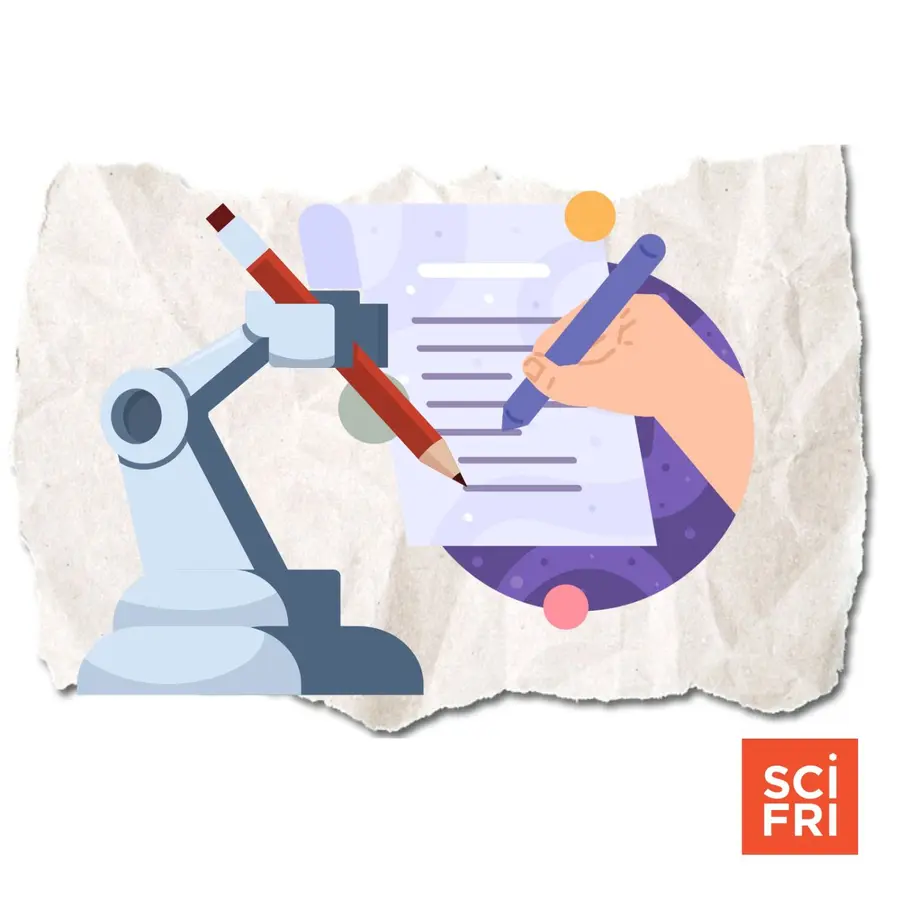
Since ChatGPT was released to the public almost three years ago, generative AI chatbots have had many impacts on our society: They played a large role in the recent Hollywood strikes, energy usage is spiking because of them, and they’re having a chilling effect on various writing-related industries.
But they’re also affecting the world of research papers and scientific publishing. They do offer some benefits, like making technical research papers easier to read, which could make research more accessible to the public and also greatly aid non-English speaking researchers.
Since ChatGPT was released to the public almost three years ago, generative AI chatbots have had many impacts on our society: They played a large role in the recent Hollywood strikes, energy usage is spiking because of them, and they’re having a chilling effect on various writing-related industries.
But they’re also affecting the world of research papers and scientific publishing. They do offer some benefits, like making technical research papers easier to read, which could make research more accessible to the public and also greatly aid non-English speaking researchers.
But AI chatbots also raise a host of new issues. Researchers estimate that a significant amount of papers from the last couple years were at least partially written by AI, and others suspect that they are supercharging the production of fake research papers, which has led to thousands of paper retractions across major journals in recent years. Major scientific journals are struggling with how to set guidelines for generative AI use in research papers, given that so-called AI-writing detectors are not as accurate as they were once thought to be.
So what does the future of scientific publishing look like in a world where AI chatbots are a reality? And how does that affect the level of trust that the public has with science?
Ira Flatow sits down with Dr. Jessamy Bagenal, senior executive editor at The Lancet and adjunct professor at University of North Carolina at Chapel Hill, to talk about how generative AI is changing the way scientific papers are written, how it’s fueling the fake-paper industry, and how she thinks publishers should adjust their submission guidelines in response.
Transcripts for each segment will be available after the show airs on sciencefriday.com.
Subscribe to this podcast. Follow our show on Instagram, TikTok, Facebook, and Bluesky @scifri and sign up for our newsletters. Got a science question that’s keeping you up at night? Call us: 877-472-4374
Hosted by Simplecast, an AdsWizz company. See pcm.adswizz.com for information about our collection and use of personal data for advertising.
QUICK LINKS
This is an episodic podcast, so you can listen to it in any order, but episode one is a great place to start.
Listen to episode one hereSince ChatGPT was released to the public almost three years ago, generative AI chatbots have had many impacts on our society: They played a large role in the recent Hollywood strikes, energy usage is spiking because of them, and they’re having a chilling effect on various writing-related industries.
But they’re also affecting the world of research papers and scientific publishing. They do offer some benefits, like making technical research papers easier to read, which could make research more accessible to the public and also greatly aid non-English speaking researchers.
But AI chatbots also raise a host of new issues. Researchers estimate that a significant amount of papers from the last couple years were at least partially written by AI, and others suspect that they are supercharging the production of fake research papers, which has led to thousands of paper retractions across major journals in recent years. Major scientific journals are struggling with how to set guidelines for generative AI use in research papers, given that so-called AI-writing detectors are not as accurate as they were once thought to be.
So what does the future of scientific publishing look like in a world where AI chatbots are a reality? And how does that affect the level of trust that the public has with science?
Ira Flatow sits down with Dr. Jessamy Bagenal, senior executive editor at The Lancet and adjunct professor at University of North Carolina at Chapel Hill, to talk about how generative AI is changing the way scientific papers are written, how it’s fueling the fake-paper industry, and how she thinks publishers should adjust their submission guidelines in response.
Transcripts for each segment will be available after the show airs on sciencefriday.com.
Subscribe to this podcast. Follow our show on Instagram, TikTok, Facebook, and Bluesky @scifri and sign up for our newsletters. Got a science question that’s keeping you up at night? Call us: 877-472-4374
Hosted by Simplecast, an AdsWizz company. See pcm.adswizz.com for information about our collection and use of personal data for advertising.
Sound Carrot is your source for Family Podcast Discovery. Verified awesome, 0% boring.
Distraction free website, no flashing banners or adverts to steal your attention.
(Some shows do contain their own ads however).
At first I made this site for my kids, but like any dad I got a little over excited. I hope you find it as useful as they do.
Whether you want to listen to them together in the car, or alone in your room - the content is all safe for younger ears.