Install SoundCarrot
Add it to your home screen for quick access.
Listened
In progress
As the surgeon general has stated, we are in a mental health crisis. Depression is the leading cause of disability worldwide. And a major challenge is that depression can be difficult to treat, especially for people who don’t respond well to talk therapy or antidepressants.
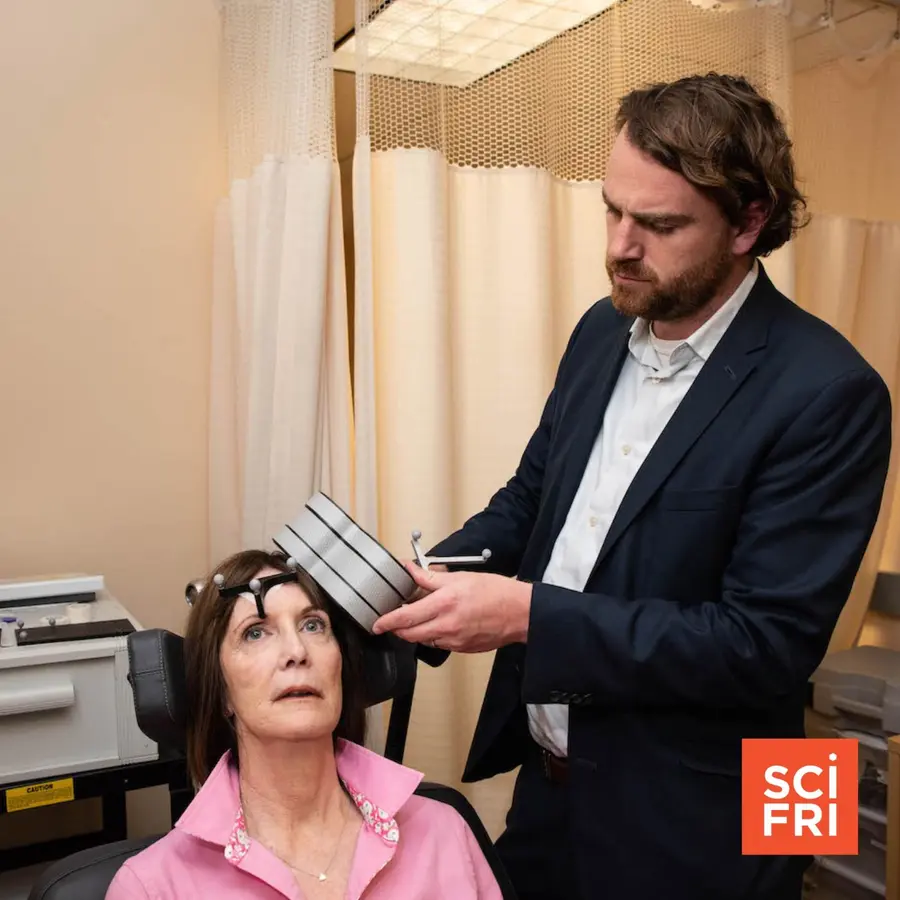
But there’s a relatively new technique that seems to have a significant positive impact on people with treatment-resistant depression, even sending many of them into remission. It’s called transcranial magnetic stimulation (TMS) and it uses magnets to stimulate certain areas of the brain that play a role in depression.
As the surgeon general has stated, we are in a mental health crisis. Depression is the leading cause of disability worldwide. And a major challenge is that depression can be difficult to treat, especially for people who don’t respond well to talk therapy or antidepressants.
But there’s a relatively new technique that seems to have a significant positive impact on people with treatment-resistant depression, even sending many of them into remission. It’s called transcranial magnetic stimulation (TMS) and it uses magnets to stimulate certain areas of the brain that play a role in depression.
A team at Stanford developed a protocol for TMS that received FDA clearance in 2022 and, as of this year, it’s covered by Medicare. In a study from 2021, it was shown to improve remission rates for depression by up to 80%, with one patient calling it “a game changer.”
So how does TMS work, and could it change the way we treat depression and other mental illnesses?
Ira Flatow is joined by Dr. Nolan Williams, associate professor of psychiatry and behavioral sciences at Stanford University, where he’s also the director of the Stanford Brain Stimulation Lab. They talk about the advances that Williams’ team made with their SAINT protocol (Stanford Accelerated Intelligent Neuromodulation Therapy), patient experiences with the technology, and potential future applications of this technique.
Transcripts for each segment will be available after the show airs on sciencefriday.com.
Subscribe to this podcast. Follow our show on Instagram, TikTok, Facebook, and Bluesky @scifri and sign up for our newsletters. Got a science question that’s keeping you up at night? Call us: 877-472-4374
Hosted by Simplecast, an AdsWizz company. See pcm.adswizz.com for information about our collection and use of personal data for advertising.
QUICK LINKS
This is an episodic podcast, so you can listen to it in any order, but episode one is a great place to start.
Listen to episode one hereAs the surgeon general has stated, we are in a mental health crisis. Depression is the leading cause of disability worldwide. And a major challenge is that depression can be difficult to treat, especially for people who don’t respond well to talk therapy or antidepressants.
But there’s a relatively new technique that seems to have a significant positive impact on people with treatment-resistant depression, even sending many of them into remission. It’s called transcranial magnetic stimulation (TMS) and it uses magnets to stimulate certain areas of the brain that play a role in depression.
A team at Stanford developed a protocol for TMS that received FDA clearance in 2022 and, as of this year, it’s covered by Medicare. In a study from 2021, it was shown to improve remission rates for depression by up to 80%, with one patient calling it “a game changer.”
So how does TMS work, and could it change the way we treat depression and other mental illnesses?
Ira Flatow is joined by Dr. Nolan Williams, associate professor of psychiatry and behavioral sciences at Stanford University, where he’s also the director of the Stanford Brain Stimulation Lab. They talk about the advances that Williams’ team made with their SAINT protocol (Stanford Accelerated Intelligent Neuromodulation Therapy), patient experiences with the technology, and potential future applications of this technique.
Transcripts for each segment will be available after the show airs on sciencefriday.com.
Subscribe to this podcast. Follow our show on Instagram, TikTok, Facebook, and Bluesky @scifri and sign up for our newsletters. Got a science question that’s keeping you up at night? Call us: 877-472-4374
Hosted by Simplecast, an AdsWizz company. See pcm.adswizz.com for information about our collection and use of personal data for advertising.
Sound Carrot is your source for Family Podcast Discovery. Verified awesome, 0% boring.
Distraction free website, no flashing banners or adverts to steal your attention.
(Some shows do contain their own ads however).
At first I made this site for my kids, but like any dad I got a little over excited. I hope you find it as useful as they do.
Whether you want to listen to them together in the car, or alone in your room - the content is all safe for younger ears.