Install SoundCarrot
Add it to your home screen for quick access.
Listened
In progress
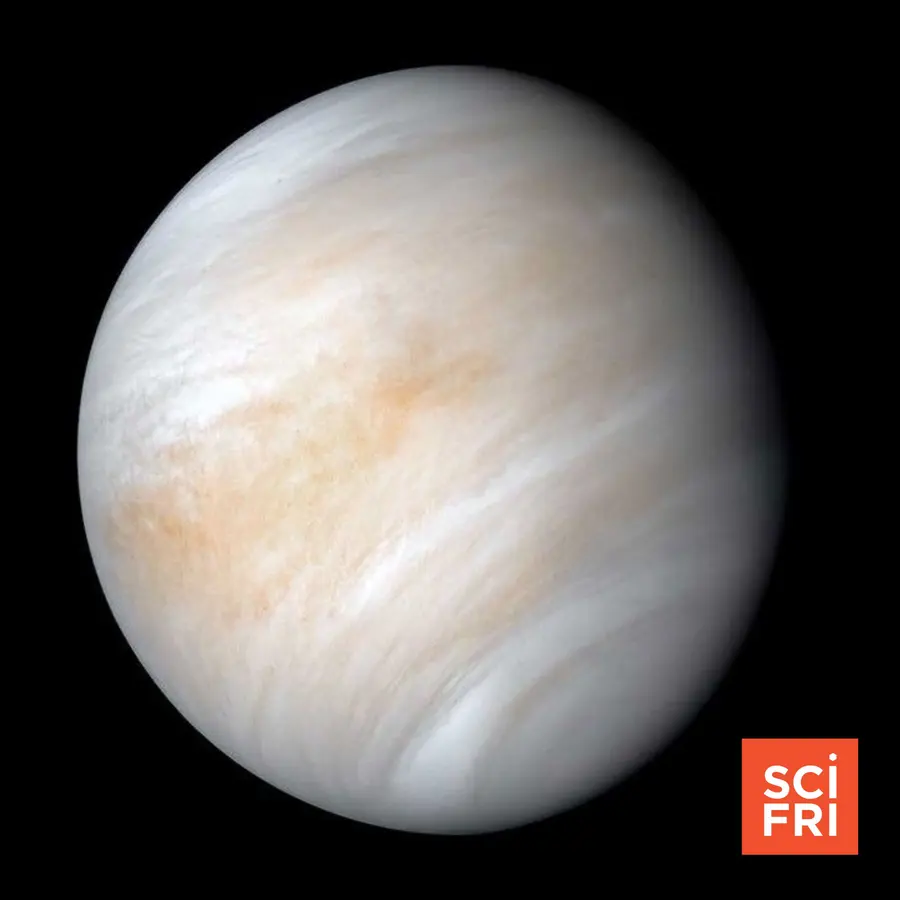
A group of researchers and private investors are planning a series of privately funded missions to Venus, hoping to find signs of life. That may seem like a startling possibility. Although Venus is a close neighbor to Earth, it has a smothering atmosphere of carbon dioxide that has allowed the planet’s surface to heat to temperatures that would melt lead. There’s crushing pressure. And to top it off, there are clouds of sulfuric acid.
Astrophysicist and planetary scientist Sara Seager joins Host Ira Flatow to explain why she thinks life on Venus might be possible, high up in the clouds. Seager has conducted lab experiments that indicate various biomolecules could survive there, despite the toxic conditions. She’s leading a series of proposed private missions to the planet, to study the atmosphere, conduct habitability studies, and even bring back a sample of Venusian cloud material.
A group of researchers and private investors are planning a series of privately funded missions to Venus, hoping to find signs of life. That may seem like a startling possibility. Although Venus is a close neighbor to Earth, it has a smothering atmosphere of carbon dioxide that has allowed the planet’s surface to heat to temperatures that would melt lead. There’s crushing pressure. And to top it off, there are clouds of sulfuric acid.
Astrophysicist and planetary scientist Sara Seager joins Host Ira Flatow to explain why she thinks life on Venus might be possible, high up in the clouds. Seager has conducted lab experiments that indicate various biomolecules could survive there, despite the toxic conditions. She’s leading a series of proposed private missions to the planet, to study the atmosphere, conduct habitability studies, and even bring back a sample of Venusian cloud material.
Guest:
Dr. Sara Seager is an astrophysicist and a professor of physics, planetary science, and aeronautics and astronautics at the Massachusetts Institute of Technology.
Other episodes you may enjoy:
Bizarre exoplanet clouds + Counting insects with weather radar
The lucky breaks that make our Earth home
Transcripts for each episode are available within 1-3 days at sciencefriday.com.
Subscribe to this podcast. Follow our show on Instagram, TikTok, Facebook, and Bluesky @scifri and sign up for our newsletters. Got a science question that’s keeping you up at night? Call us: 877-472-4374
Hosted by Simplecast, an AdsWizz company. See pcm.adswizz.com for information about our collection and use of personal data for advertising.
QUICK LINKS

This is an episodic podcast, so you can listen to it in any order, but episode one is a great place to start.
Listen to episode one hereA group of researchers and private investors are planning a series of privately funded missions to Venus, hoping to find signs of life. That may seem like a startling possibility. Although Venus is a close neighbor to Earth, it has a smothering atmosphere of carbon dioxide that has allowed the planet’s surface to heat to temperatures that would melt lead. There’s crushing pressure. And to top it off, there are clouds of sulfuric acid.
Astrophysicist and planetary scientist Sara Seager joins Host Ira Flatow to explain why she thinks life on Venus might be possible, high up in the clouds. Seager has conducted lab experiments that indicate various biomolecules could survive there, despite the toxic conditions. She’s leading a series of proposed private missions to the planet, to study the atmosphere, conduct habitability studies, and even bring back a sample of Venusian cloud material.
Guest:
Dr. Sara Seager is an astrophysicist and a professor of physics, planetary science, and aeronautics and astronautics at the Massachusetts Institute of Technology.
Other episodes you may enjoy:
Bizarre exoplanet clouds + Counting insects with weather radar
The lucky breaks that make our Earth home
Transcripts for each episode are available within 1-3 days at sciencefriday.com.
Subscribe to this podcast. Follow our show on Instagram, TikTok, Facebook, and Bluesky @scifri and sign up for our newsletters. Got a science question that’s keeping you up at night? Call us: 877-472-4374
Hosted by Simplecast, an AdsWizz company. See pcm.adswizz.com for information about our collection and use of personal data for advertising.
Sound Carrot is your source for Family Podcast Discovery. Verified awesome, 0% boring.
Distraction free website, no flashing banners or adverts to steal your attention.
(Some shows do contain their own ads however).
At first I made this site for my kids, but like any dad I got a little over excited. I hope you find it as useful as they do.
Whether you want to listen to them together in the car, or alone in your room - the content is all safe for younger ears.