Install SoundCarrot
Add it to your home screen for quick access.
Listened
In progress
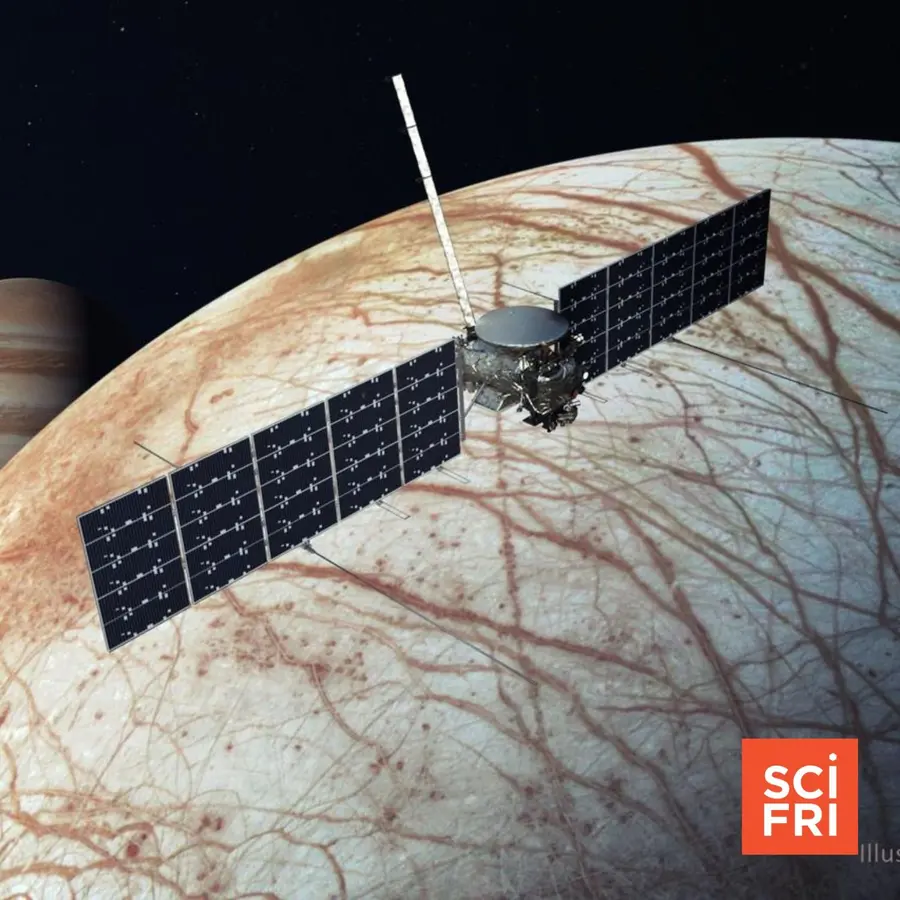
On October 14, NASA launched Europa Clipper, its largest planetary mission spacecraft yet. It’s headed to Jupiter’s icy moon Europa, which could have a giant ocean of liquid water hidden under its icy crust. And where there’s water, scientists think there may be evidence of life. The spacecraft is equipped with nine different instruments and will complete nearly 50 flybys of Europa, scanning almost the entire moon.
SciFri producer Kathleen Davis talks with Dr. Padi Boyd, NASA astrophysicist and host of the agency’s podcast “Curious Universe,” about the launch and the excitement at NASA. Then, Ira checks in with two scientists who are working on the mission about what they’re excited to learn: Dr. Ingrid Daubar, planetary scientist at Brown University and a Europa Clipper project staff scientist at NASA’s Jet Propulsion Laboratory; and Dr.
On October 14, NASA launched Europa Clipper, its largest planetary mission spacecraft yet. It’s headed to Jupiter’s icy moon Europa, which could have a giant ocean of liquid water hidden under its icy crust. And where there’s water, scientists think there may be evidence of life. The spacecraft is equipped with nine different instruments and will complete nearly 50 flybys of Europa, scanning almost the entire moon.
SciFri producer Kathleen Davis talks with Dr. Padi Boyd, NASA astrophysicist and host of the agency’s podcast “Curious Universe,” about the launch and the excitement at NASA. Then, Ira checks in with two scientists who are working on the mission about what they’re excited to learn: Dr. Ingrid Daubar, planetary scientist at Brown University and a Europa Clipper project staff scientist at NASA’s Jet Propulsion Laboratory; and Dr. Tracy Becker, planetary scientist at Southwest Research Institute and a deputy principal investigator for the ultraviolet spectrograph on the Europa spacecraft.
Transcript for this segment will be available after the show airs on sciencefriday.com.
Subscribe to this podcast. Follow our show on Instagram, TikTok, Facebook, and Bluesky @scifri and sign up for our newsletters. Got a science question that’s keeping you up at night? Call us: 877-472-4374
Hosted by Simplecast, an AdsWizz company. See pcm.adswizz.com for information about our collection and use of personal data for advertising.
QUICK LINKS
This is an episodic podcast, so you can listen to it in any order, but episode one is a great place to start.
Listen to episode one hereOn October 14, NASA launched Europa Clipper, its largest planetary mission spacecraft yet. It’s headed to Jupiter’s icy moon Europa, which could have a giant ocean of liquid water hidden under its icy crust. And where there’s water, scientists think there may be evidence of life. The spacecraft is equipped with nine different instruments and will complete nearly 50 flybys of Europa, scanning almost the entire moon.
SciFri producer Kathleen Davis talks with Dr. Padi Boyd, NASA astrophysicist and host of the agency’s podcast “Curious Universe,” about the launch and the excitement at NASA. Then, Ira checks in with two scientists who are working on the mission about what they’re excited to learn: Dr. Ingrid Daubar, planetary scientist at Brown University and a Europa Clipper project staff scientist at NASA’s Jet Propulsion Laboratory; and Dr. Tracy Becker, planetary scientist at Southwest Research Institute and a deputy principal investigator for the ultraviolet spectrograph on the Europa spacecraft.
Transcript for this segment will be available after the show airs on sciencefriday.com.
Subscribe to this podcast. Follow our show on Instagram, TikTok, Facebook, and Bluesky @scifri and sign up for our newsletters. Got a science question that’s keeping you up at night? Call us: 877-472-4374
Hosted by Simplecast, an AdsWizz company. See pcm.adswizz.com for information about our collection and use of personal data for advertising.
Sound Carrot is your source for Family Podcast Discovery. Verified awesome, 0% boring.
Distraction free website, no flashing banners or adverts to steal your attention.
(Some shows do contain their own ads however).
At first I made this site for my kids, but like any dad I got a little over excited. I hope you find it as useful as they do.
Whether you want to listen to them together in the car, or alone in your room - the content is all safe for younger ears.