Install SoundCarrot
Add it to your home screen for quick access.
Listened
In progress
Science Friday is in Ames, Iowa, home to prairies, greater prairie chickens, and an array of wildlife. Also, the co-emergence of two periodical cicada broods is underway. Scientists have tips for how to experience the event.
Science From Iowa’s PrairiesThis week, SciFri is coming to you from Ames, Iowa. We’re kicking off the sciencey Iowa celebrations by spotlighting some of the plants, animals and unique ecosystems of the Hawkeye state. Ira talks with Charity Nebbe, host of the “Talk of Iowa” at Iowa Public Radio, about the state’s largest prairie restoration project, the conservation of prairie chickens, and its rebounding wildlife.
Science Friday is in Ames, Iowa, home to prairies, greater prairie chickens, and an array of wildlife. Also, the co-emergence of two periodical cicada broods is underway. Scientists have tips for how to experience the event.
Science From Iowa’s PrairiesThis week, SciFri is coming to you from Ames, Iowa. We’re kicking off the sciencey Iowa celebrations by spotlighting some of the plants, animals and unique ecosystems of the Hawkeye state. Ira talks with Charity Nebbe, host of the “Talk of Iowa” at Iowa Public Radio, about the state’s largest prairie restoration project, the conservation of prairie chickens, and its rebounding wildlife.
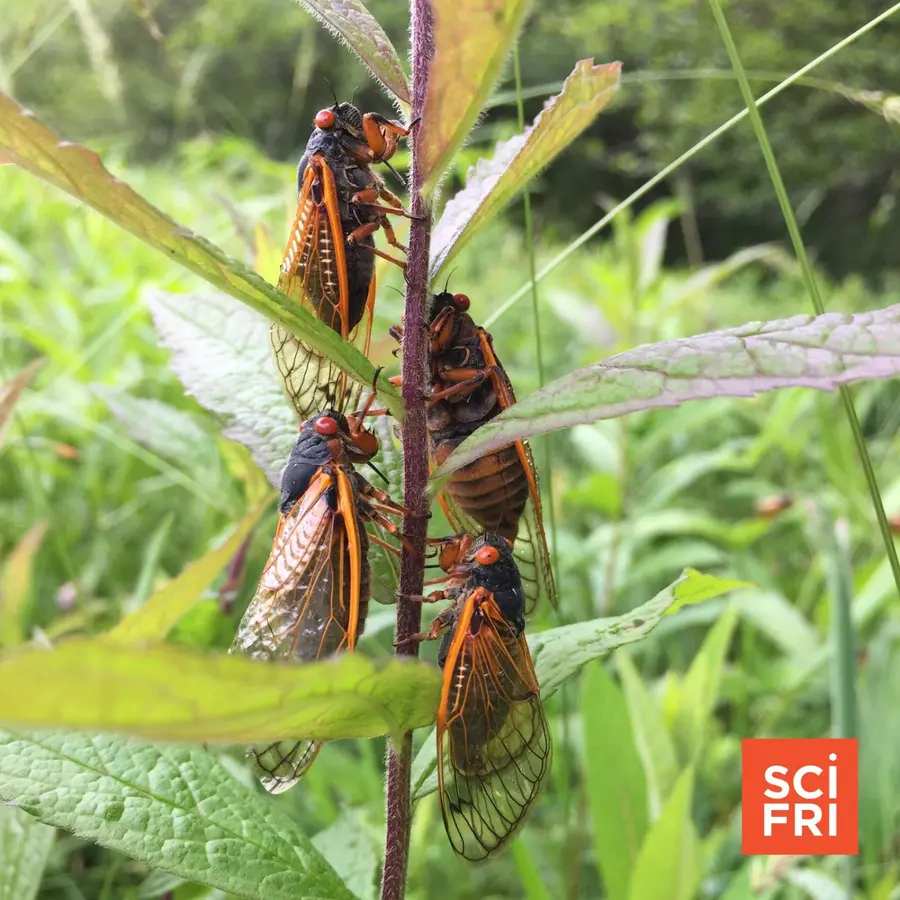
Planning To Go See Cicadas? Here’s What To KnowIn parts of the American South and Midwest, two broods of cicadas are emerging: Brood XIX, known as the Great Southern Brood, and Brood XIII, called the Northern Illinois Brood.
The dual emergence of these two particular broods is a rare event, since the Great Southern Brood emerges on a 13-year cycle and the Northern Illinois Brood emerges on a 17-year cycle. The last time they were seen together was in 1803. The two could overlap this spring in parts of Illinois and Iowa, where cicada enthusiasts will gather in parks to observe the emergence.
“Plan to spend an afternoon or two,” recommends entomologist Dr. Laura Iles from Iowa State University. “Here in Iowa it tends to be pretty patchy even within a park, so talk to someone, a ranger, about what path to hike on and the best places to go see them.”
Ira Flatow speaks with Dr. Iles about the fascinating life cycle of cicadas, how best to approach cicada tourism, and why gardeners should hold off on planting new trees this year.
Transcripts for each segment will be available the week after the show airs on sciencefriday.com.
Subscribe to this podcast. Follow our show on Instagram, TikTok, Facebook, and Bluesky @scifri and sign up for our newsletters. Got a science question that’s keeping you up at night? Call us: 877-472-4374
Hosted by Simplecast, an AdsWizz company. See pcm.adswizz.com for information about our collection and use of personal data for advertising.
QUICK LINKS

This is an episodic podcast, so you can listen to it in any order, but episode one is a great place to start.
Listen to episode one hereScience Friday is in Ames, Iowa, home to prairies, greater prairie chickens, and an array of wildlife. Also, the co-emergence of two periodical cicada broods is underway. Scientists have tips for how to experience the event.
Science From Iowa’s PrairiesThis week, SciFri is coming to you from Ames, Iowa. We’re kicking off the sciencey Iowa celebrations by spotlighting some of the plants, animals and unique ecosystems of the Hawkeye state. Ira talks with Charity Nebbe, host of the “Talk of Iowa” at Iowa Public Radio, about the state’s largest prairie restoration project, the conservation of prairie chickens, and its rebounding wildlife.
Planning To Go See Cicadas? Here’s What To KnowIn parts of the American South and Midwest, two broods of cicadas are emerging: Brood XIX, known as the Great Southern Brood, and Brood XIII, called the Northern Illinois Brood.
The dual emergence of these two particular broods is a rare event, since the Great Southern Brood emerges on a 13-year cycle and the Northern Illinois Brood emerges on a 17-year cycle. The last time they were seen together was in 1803. The two could overlap this spring in parts of Illinois and Iowa, where cicada enthusiasts will gather in parks to observe the emergence.
“Plan to spend an afternoon or two,” recommends entomologist Dr. Laura Iles from Iowa State University. “Here in Iowa it tends to be pretty patchy even within a park, so talk to someone, a ranger, about what path to hike on and the best places to go see them.”
Ira Flatow speaks with Dr. Iles about the fascinating life cycle of cicadas, how best to approach cicada tourism, and why gardeners should hold off on planting new trees this year.
Transcripts for each segment will be available the week after the show airs on sciencefriday.com.
Subscribe to this podcast. Follow our show on Instagram, TikTok, Facebook, and Bluesky @scifri and sign up for our newsletters. Got a science question that’s keeping you up at night? Call us: 877-472-4374
Hosted by Simplecast, an AdsWizz company. See pcm.adswizz.com for information about our collection and use of personal data for advertising.
Sound Carrot is your source for Family Podcast Discovery. Verified awesome, 0% boring.
Distraction free website, no flashing banners or adverts to steal your attention.
(Some shows do contain their own ads however).
At first I made this site for my kids, but like any dad I got a little over excited. I hope you find it as useful as they do.
Whether you want to listen to them together in the car, or alone in your room - the content is all safe for younger ears.