Install SoundCarrot
Add it to your home screen for quick access.
Listened
In progress
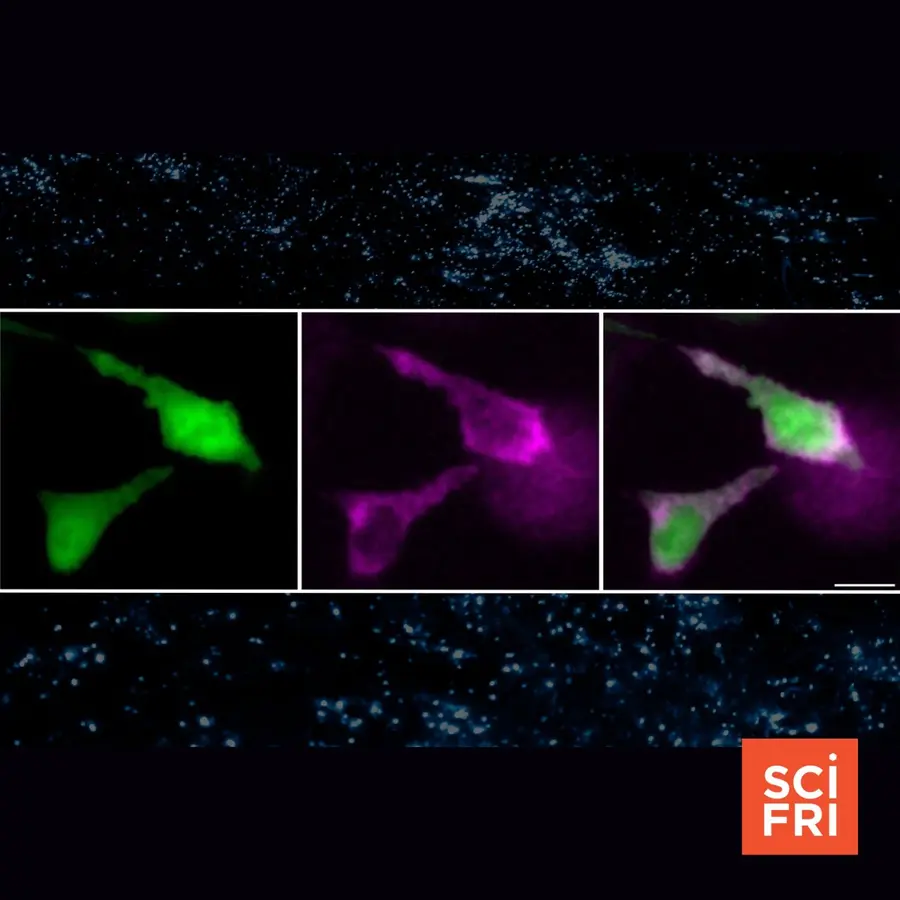
The inner workings of our bodies, particularly what’s happening inside our cells, can be kind of a black box—with countless tiny molecules constantly working and churning to keep us alive. A new technology that blends bioluminescence with cellular machinery may shine some light on the details of their comings and goings and interactions that can be hazy.
Scientists had the bright idea to take that same enzyme that makes fireflies glow and tie it to RNA, the molecule that reads the genetic information in DNA. This developing technology has been used on mice, with the hope that these light-up molecules can help illuminate how viruses replicate or even how memories form in the brain.
The inner workings of our bodies, particularly what’s happening inside our cells, can be kind of a black box—with countless tiny molecules constantly working and churning to keep us alive. A new technology that blends bioluminescence with cellular machinery may shine some light on the details of their comings and goings and interactions that can be hazy.
Scientists had the bright idea to take that same enzyme that makes fireflies glow and tie it to RNA, the molecule that reads the genetic information in DNA. This developing technology has been used on mice, with the hope that these light-up molecules can help illuminate how viruses replicate or even how memories form in the brain.
Flora Litchtman talks with Dr. Andrej Lupták, professor of pharmaceutical sciences at the University of California Irvine and Dr. Jennifer Prescher, professor of chemistry at the University of California Irvine, about their research on the topic.
Transcripts for each segment will be available after the show airs on sciencefriday.com.
Subscribe to this podcast. Follow our show on Instagram, TikTok, Facebook, and Bluesky @scifri and sign up for our newsletters. Got a science question that’s keeping you up at night? Call us: 877-472-4374
Hosted by Simplecast, an AdsWizz company. See pcm.adswizz.com for information about our collection and use of personal data for advertising.
QUICK LINKS

This is an episodic podcast, so you can listen to it in any order, but episode one is a great place to start.
Listen to episode one hereThe inner workings of our bodies, particularly what’s happening inside our cells, can be kind of a black box—with countless tiny molecules constantly working and churning to keep us alive. A new technology that blends bioluminescence with cellular machinery may shine some light on the details of their comings and goings and interactions that can be hazy.
Scientists had the bright idea to take that same enzyme that makes fireflies glow and tie it to RNA, the molecule that reads the genetic information in DNA. This developing technology has been used on mice, with the hope that these light-up molecules can help illuminate how viruses replicate or even how memories form in the brain.
Flora Litchtman talks with Dr. Andrej Lupták, professor of pharmaceutical sciences at the University of California Irvine and Dr. Jennifer Prescher, professor of chemistry at the University of California Irvine, about their research on the topic.
Transcripts for each segment will be available after the show airs on sciencefriday.com.
Subscribe to this podcast. Follow our show on Instagram, TikTok, Facebook, and Bluesky @scifri and sign up for our newsletters. Got a science question that’s keeping you up at night? Call us: 877-472-4374
Hosted by Simplecast, an AdsWizz company. See pcm.adswizz.com for information about our collection and use of personal data for advertising.
Sound Carrot is your source for Family Podcast Discovery. Verified awesome, 0% boring.
Distraction free website, no flashing banners or adverts to steal your attention.
(Some shows do contain their own ads however).
At first I made this site for my kids, but like any dad I got a little over excited. I hope you find it as useful as they do.
Whether you want to listen to them together in the car, or alone in your room - the content is all safe for younger ears.