Install SoundCarrot
Add it to your home screen for quick access.
Listened
In progress
In nature, enzymes are the catalysts that make much of biology work. They jumpstart chemical reactions that either wouldn’t happen, or would happen super slowly. They break down food, build other molecules, extract energy, and more. What if we could harness evolution to engineer designer enzymes that do other specific jobs that benefit us?
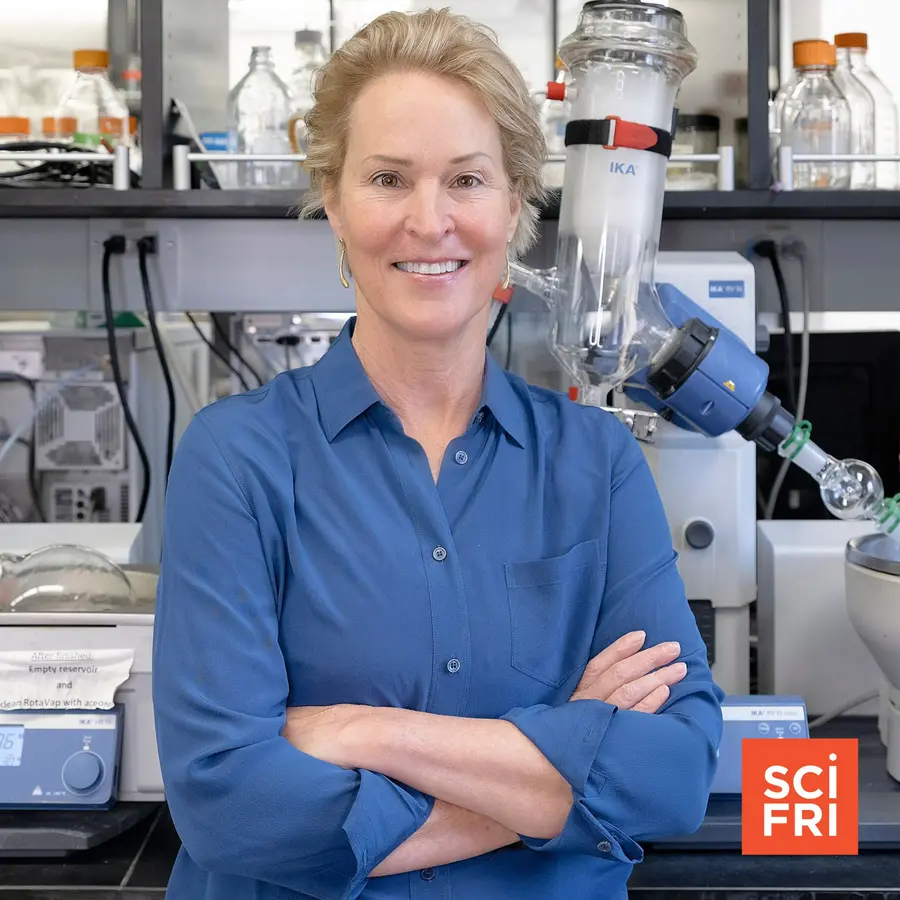
Putting that idea into practice changed the game for chemistry, and earned Frances Arnold the Nobel Prize prize in 2018. She called it “directed evolution.” Today, thousands of labs use her methods to coax enzymes into doing things no one ever thought of. She joined Host Flora Lichtman in March 2026 to talk about where she sees this approach going in the future, and the personal evolution that brought her into science.
In nature, enzymes are the catalysts that make much of biology work. They jumpstart chemical reactions that either wouldn’t happen, or would happen super slowly. They break down food, build other molecules, extract energy, and more. What if we could harness evolution to engineer designer enzymes that do other specific jobs that benefit us?
Putting that idea into practice changed the game for chemistry, and earned Frances Arnold the Nobel Prize prize in 2018. She called it “directed evolution.” Today, thousands of labs use her methods to coax enzymes into doing things no one ever thought of. She joined Host Flora Lichtman in March 2026 to talk about where she sees this approach going in the future, and the personal evolution that brought her into science.
Guest:
Dr. Frances Arnold is the Linus Pauling Professor of Chemical Engineering, Bioengineering and Biochemistry at the California Institute of Technology in Pasadena, California.
Other episodes you may enjoy:
Enzymes Are Taking On Our Plastic Problem
Even Nobel Prize Winners Deal With Imposter Syndrome
The transcript for this episode is available at sciencefriday.com.
Subscribe to this podcast. Follow our show on Instagram, TikTok, Facebook, and Bluesky @scifri and sign up for our newsletters. Got a science question that’s keeping you up at night? Call us: 877-472-4374
Hosted by Simplecast, an AdsWizz company. See pcm.adswizz.com for information about our collection and use of personal data for advertising.
QUICK LINKS
This is an episodic podcast, so you can listen to it in any order, but episode one is a great place to start.
Listen to episode one hereIn nature, enzymes are the catalysts that make much of biology work. They jumpstart chemical reactions that either wouldn’t happen, or would happen super slowly. They break down food, build other molecules, extract energy, and more. What if we could harness evolution to engineer designer enzymes that do other specific jobs that benefit us?
Putting that idea into practice changed the game for chemistry, and earned Frances Arnold the Nobel Prize prize in 2018. She called it “directed evolution.” Today, thousands of labs use her methods to coax enzymes into doing things no one ever thought of. She joined Host Flora Lichtman in March 2026 to talk about where she sees this approach going in the future, and the personal evolution that brought her into science.
Guest:
Dr. Frances Arnold is the Linus Pauling Professor of Chemical Engineering, Bioengineering and Biochemistry at the California Institute of Technology in Pasadena, California.
Other episodes you may enjoy:
Enzymes Are Taking On Our Plastic Problem
Even Nobel Prize Winners Deal With Imposter Syndrome
The transcript for this episode is available at sciencefriday.com.
Subscribe to this podcast. Follow our show on Instagram, TikTok, Facebook, and Bluesky @scifri and sign up for our newsletters. Got a science question that’s keeping you up at night? Call us: 877-472-4374
Hosted by Simplecast, an AdsWizz company. See pcm.adswizz.com for information about our collection and use of personal data for advertising.
Sound Carrot is your source for Family Podcast Discovery. Verified awesome, 0% boring.
Distraction free website, no flashing banners or adverts to steal your attention.
(Some shows do contain their own ads however).
At first I made this site for my kids, but like any dad I got a little over excited. I hope you find it as useful as they do.
Whether you want to listen to them together in the car, or alone in your room - the content is all safe for younger ears.