Install SoundCarrot
Add it to your home screen for quick access.
Listened
In progress
Rejoice, amateur and professional astronomers: This January is a fantastic time for looking up at the sky.
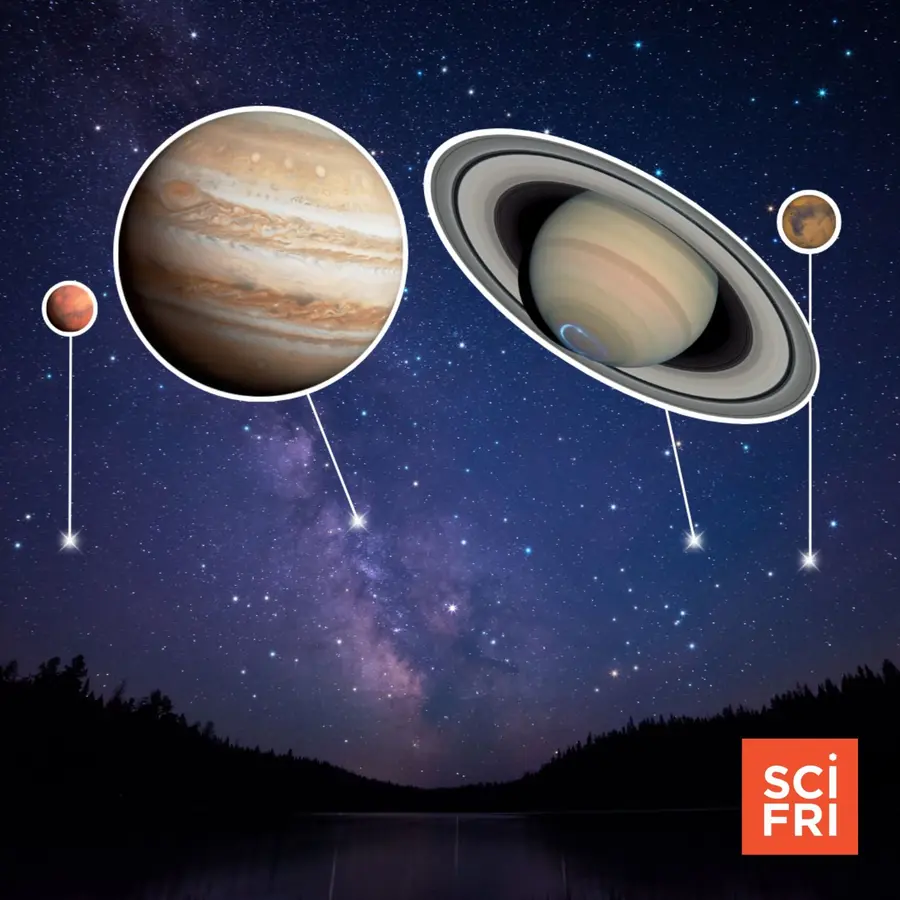
The flashiest event of the season is also one of the easiest to see without binoculars or a telescope. A “parade of planets”—Venus, Saturn, Jupiter, and Mars—will be visible, and recognizable by their incredible brightness against the night sky. Uranus and Neptune will also be visible, but with a telescope. This string of planets will be visible for all of January.
Rejoice, amateur and professional astronomers: This January is a fantastic time for looking up at the sky.
The flashiest event of the season is also one of the easiest to see without binoculars or a telescope. A “parade of planets”—Venus, Saturn, Jupiter, and Mars—will be visible, and recognizable by their incredible brightness against the night sky. Uranus and Neptune will also be visible, but with a telescope. This string of planets will be visible for all of January.
Additionally, the ATLAS comet, discovered last year by NASA’s Asteroid Terrestrial-impact Last Alert System, has come close enough to the sun—8.3 million miles away—to be visible with binoculars or a telescope. Be careful, though: looking at sunrise or sunset could hurt your eyes.
Astronomer Dean Regas, host of the podcast “Looking Up with Dean Regas,” joins Ira from Cincinnati, Ohio, to discuss the best things the winter night sky has to offer this year, with or without a telescope.
Transcripts for each segment will be available after the show airs on sciencefriday.com.
Subscribe to this podcast. Follow our show on Instagram, TikTok, Facebook, and Bluesky @scifri and sign up for our newsletters. Got a science question that’s keeping you up at night? Call us: 877-472-4374
Hosted by Simplecast, an AdsWizz company. See pcm.adswizz.com for information about our collection and use of personal data for advertising.
QUICK LINKS
This is an episodic podcast, so you can listen to it in any order, but episode one is a great place to start.
Listen to episode one hereRejoice, amateur and professional astronomers: This January is a fantastic time for looking up at the sky.
The flashiest event of the season is also one of the easiest to see without binoculars or a telescope. A “parade of planets”—Venus, Saturn, Jupiter, and Mars—will be visible, and recognizable by their incredible brightness against the night sky. Uranus and Neptune will also be visible, but with a telescope. This string of planets will be visible for all of January.
Additionally, the ATLAS comet, discovered last year by NASA’s Asteroid Terrestrial-impact Last Alert System, has come close enough to the sun—8.3 million miles away—to be visible with binoculars or a telescope. Be careful, though: looking at sunrise or sunset could hurt your eyes.
Astronomer Dean Regas, host of the podcast “Looking Up with Dean Regas,” joins Ira from Cincinnati, Ohio, to discuss the best things the winter night sky has to offer this year, with or without a telescope.
Transcripts for each segment will be available after the show airs on sciencefriday.com.
Subscribe to this podcast. Follow our show on Instagram, TikTok, Facebook, and Bluesky @scifri and sign up for our newsletters. Got a science question that’s keeping you up at night? Call us: 877-472-4374
Hosted by Simplecast, an AdsWizz company. See pcm.adswizz.com for information about our collection and use of personal data for advertising.
Sound Carrot is your source for Family Podcast Discovery. Verified awesome, 0% boring.
Distraction free website, no flashing banners or adverts to steal your attention.
(Some shows do contain their own ads however).
At first I made this site for my kids, but like any dad I got a little over excited. I hope you find it as useful as they do.
Whether you want to listen to them together in the car, or alone in your room - the content is all safe for younger ears.