Install SoundCarrot
Add it to your home screen for quick access.
Listened
In progress
Did you know that almost every star you see in the night sky has at least one planet orbiting it?
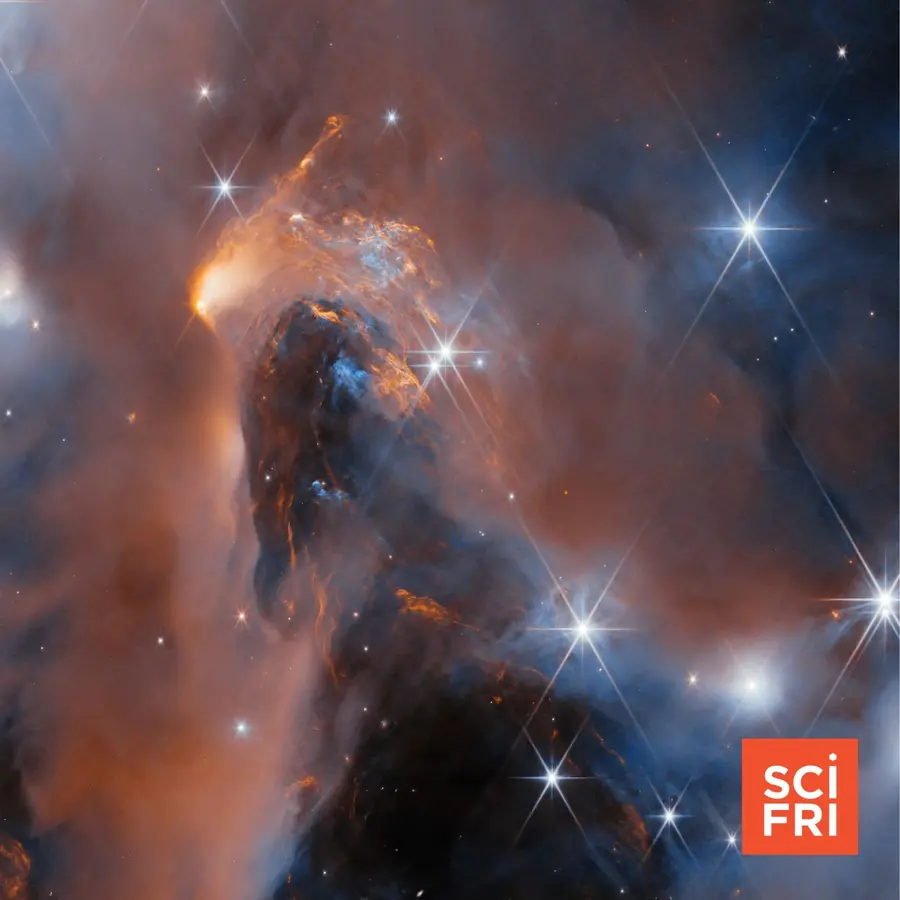
Here’s something even wilder: There are some celestial bodies that look a lot like planets, but just float around freely in the cosmos, unattached to any particular star. They’re called rogue worlds. With data from the James Webb Space Telescope, astrophysicists just identified six right here in our own Milky Way galaxy.
Did you know that almost every star you see in the night sky has at least one planet orbiting it?
Here’s something even wilder: There are some celestial bodies that look a lot like planets, but just float around freely in the cosmos, unattached to any particular star. They’re called rogue worlds. With data from the James Webb Space Telescope, astrophysicists just identified six right here in our own Milky Way galaxy.
So what can we learn from these rogue worlds? Can they teach us anything about how stars and planets are formed? Guest host Rachel Feltman talks with two authors of the recent study: Assistant Research Scientist Dr. Adam Langeveld, and Professor of Physics and Astronomy Dr. Ray Jayawardhana, both of Johns Hopkins University in Baltimore, Maryland.
Transcripts for each segment will be available after the show airs on sciencefriday.com.
Subscribe to this podcast. Follow our show on Instagram, TikTok, Facebook, and Bluesky @scifri and sign up for our newsletters. Got a science question that’s keeping you up at night? Call us: 877-472-4374
Hosted by Simplecast, an AdsWizz company. See pcm.adswizz.com for information about our collection and use of personal data for advertising.
QUICK LINKS
This is an episodic podcast, so you can listen to it in any order, but episode one is a great place to start.
Listen to episode one hereDid you know that almost every star you see in the night sky has at least one planet orbiting it?
Here’s something even wilder: There are some celestial bodies that look a lot like planets, but just float around freely in the cosmos, unattached to any particular star. They’re called rogue worlds. With data from the James Webb Space Telescope, astrophysicists just identified six right here in our own Milky Way galaxy.
So what can we learn from these rogue worlds? Can they teach us anything about how stars and planets are formed? Guest host Rachel Feltman talks with two authors of the recent study: Assistant Research Scientist Dr. Adam Langeveld, and Professor of Physics and Astronomy Dr. Ray Jayawardhana, both of Johns Hopkins University in Baltimore, Maryland.
Transcripts for each segment will be available after the show airs on sciencefriday.com.
Subscribe to this podcast. Follow our show on Instagram, TikTok, Facebook, and Bluesky @scifri and sign up for our newsletters. Got a science question that’s keeping you up at night? Call us: 877-472-4374
Hosted by Simplecast, an AdsWizz company. See pcm.adswizz.com for information about our collection and use of personal data for advertising.
Sound Carrot is your source for Family Podcast Discovery. Verified awesome, 0% boring.
Distraction free website, no flashing banners or adverts to steal your attention.
(Some shows do contain their own ads however).
At first I made this site for my kids, but like any dad I got a little over excited. I hope you find it as useful as they do.
Whether you want to listen to them together in the car, or alone in your room - the content is all safe for younger ears.