Install SoundCarrot
Add it to your home screen for quick access.
Listened
In progress
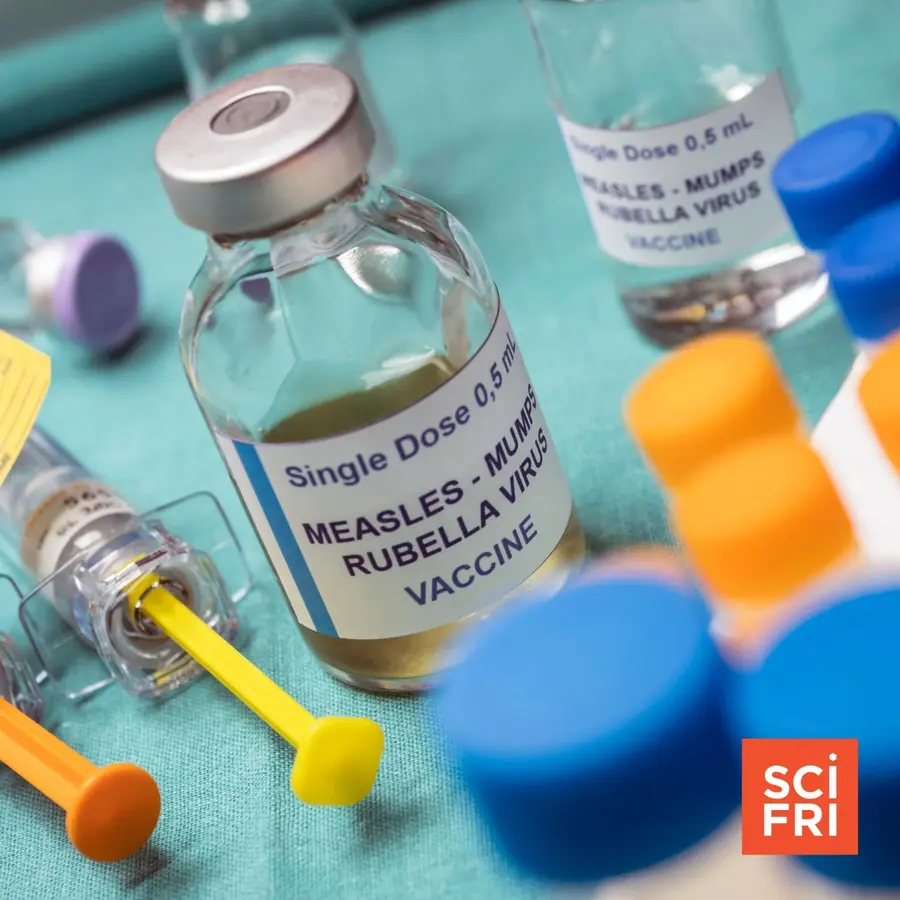
The United States eliminated measles back in 2000, but it still pops up every now and then. According to the Centers for Disease Control and Prevention, a total of 35 measles cases across 15 states had been reported this year as of February 22. Early last month, a measles outbreak began at an elementary school in Broward County, in southern Florida. As of February 28, the Florida Department of Health reported 9 cases for Broward County—out of 10 for the whole state.
Measles is one of the most infectious diseases in the world, and it has a safe and effective vaccine called MMR—for measles, mumps, and rubella—that saves lives. Kids usually get the vaccine early in life, and it provides lifelong protection.
The United States eliminated measles back in 2000, but it still pops up every now and then. According to the Centers for Disease Control and Prevention, a total of 35 measles cases across 15 states had been reported this year as of February 22. Early last month, a measles outbreak began at an elementary school in Broward County, in southern Florida. As of February 28, the Florida Department of Health reported 9 cases for Broward County—out of 10 for the whole state.
Measles is one of the most infectious diseases in the world, and it has a safe and effective vaccine called MMR—for measles, mumps, and rubella—that saves lives. Kids usually get the vaccine early in life, and it provides lifelong protection.
But childhood vaccination rates have declined in some areas, so preventable diseases like measles are on the rise. In Florida, the state’s surgeon general, Dr. Joseph Ladapo, has been criticized for how he’s handling the outbreak—for example, by not explicitly encouraging parents to get their kids vaccinated.
So how did the measles outbreak in Florida get to this point? And is it a reflection of a broader public health risk?
Ira talks with pediatrician Dr. Rana Alissa, who is vice president of the Florida Chapter of the American Academy of Pediatrics, and an associate professor at the University of Florida in Jacksonville. He is also joined by Dr. Paul Offit, pediatrician and director of the vaccine education center at the Children’s Hospital of Philadelphia.
Transcripts for each segment will be available after the show airs on sciencefriday.com.
Subscribe to this podcast. Follow our show on Instagram, TikTok, Facebook, and Bluesky @scifri and sign up for our newsletters. Got a science question that’s keeping you up at night? Call us: 877-472-4374
Hosted by Simplecast, an AdsWizz company. See pcm.adswizz.com for information about our collection and use of personal data for advertising.
QUICK LINKS
This is an episodic podcast, so you can listen to it in any order, but episode one is a great place to start.
Listen to episode one hereThe United States eliminated measles back in 2000, but it still pops up every now and then. According to the Centers for Disease Control and Prevention, a total of 35 measles cases across 15 states had been reported this year as of February 22. Early last month, a measles outbreak began at an elementary school in Broward County, in southern Florida. As of February 28, the Florida Department of Health reported 9 cases for Broward County—out of 10 for the whole state.
Measles is one of the most infectious diseases in the world, and it has a safe and effective vaccine called MMR—for measles, mumps, and rubella—that saves lives. Kids usually get the vaccine early in life, and it provides lifelong protection.
But childhood vaccination rates have declined in some areas, so preventable diseases like measles are on the rise. In Florida, the state’s surgeon general, Dr. Joseph Ladapo, has been criticized for how he’s handling the outbreak—for example, by not explicitly encouraging parents to get their kids vaccinated.
So how did the measles outbreak in Florida get to this point? And is it a reflection of a broader public health risk?
Ira talks with pediatrician Dr. Rana Alissa, who is vice president of the Florida Chapter of the American Academy of Pediatrics, and an associate professor at the University of Florida in Jacksonville. He is also joined by Dr. Paul Offit, pediatrician and director of the vaccine education center at the Children’s Hospital of Philadelphia.
Transcripts for each segment will be available after the show airs on sciencefriday.com.
Subscribe to this podcast. Follow our show on Instagram, TikTok, Facebook, and Bluesky @scifri and sign up for our newsletters. Got a science question that’s keeping you up at night? Call us: 877-472-4374
Hosted by Simplecast, an AdsWizz company. See pcm.adswizz.com for information about our collection and use of personal data for advertising.
Sound Carrot is your source for Family Podcast Discovery. Verified awesome, 0% boring.
Distraction free website, no flashing banners or adverts to steal your attention.
(Some shows do contain their own ads however).
At first I made this site for my kids, but like any dad I got a little over excited. I hope you find it as useful as they do.
Whether you want to listen to them together in the car, or alone in your room - the content is all safe for younger ears.