Install SoundCarrot
Add it to your home screen for quick access.
Listened
In progress
If you want to predict the color of something, you can talk about wavelengths of light. Light with a wavelength of around 460 nanometers is going to look blue. If you want to predict what something sounds like, frequencies can be a guide—a frequency of around 261 Hertz should sound like the musical note middle C.
Predicting smells is more difficult. While we know that many sulfur-containing molecules tend to fall somewhere in the ‘rotten egg’ or ‘skunky’ category, predicting other aromas based solely on a chemical structure is hard. Molecules with a similar chemical structure may smell quite different—while two molecules with very different chemical structures can smell the same.
If you want to predict the color of something, you can talk about wavelengths of light. Light with a wavelength of around 460 nanometers is going to look blue. If you want to predict what something sounds like, frequencies can be a guide—a frequency of around 261 Hertz should sound like the musical note middle C.
Predicting smells is more difficult. While we know that many sulfur-containing molecules tend to fall somewhere in the ‘rotten egg’ or ‘skunky’ category, predicting other aromas based solely on a chemical structure is hard. Molecules with a similar chemical structure may smell quite different—while two molecules with very different chemical structures can smell the same.
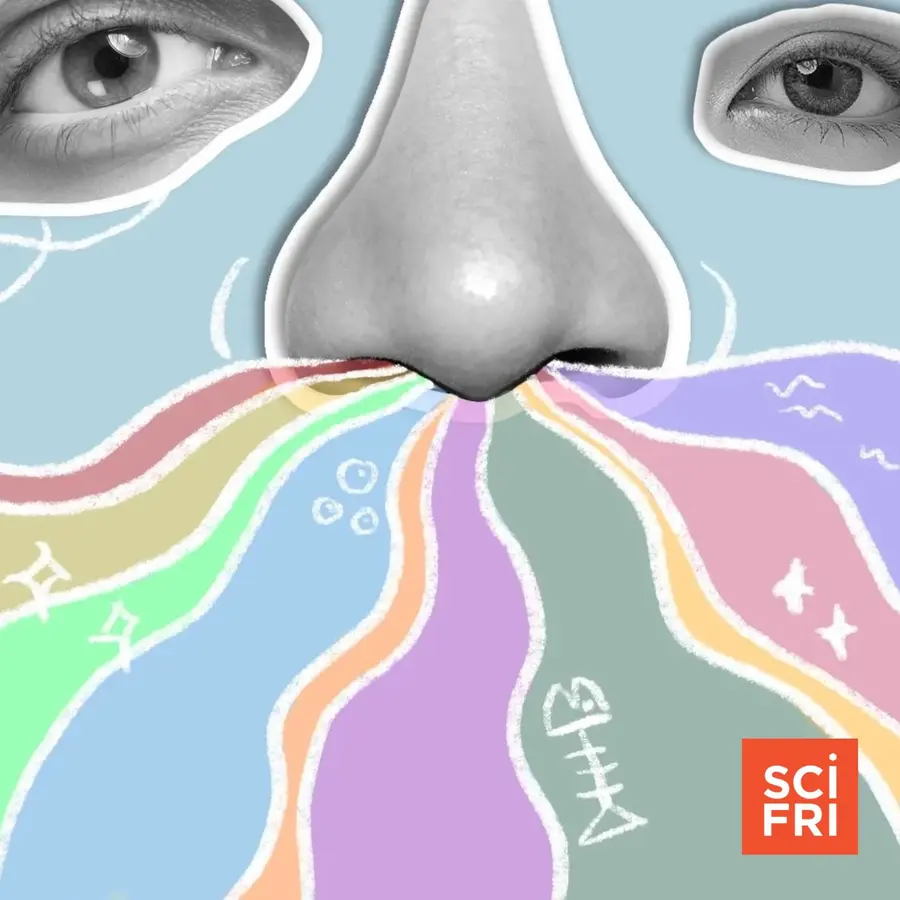
This week in the journal Science, researchers describe developing an AI model that, given the structure of a chemical compound, can roughly predict where it’s likely to fall on a map of odors. For example, is it grassy? Or more meaty? Perhaps floral?
Dr. Joel Mainland is one of the authors of that report. He’s a member of the Monell Chemical Senses Center and an adjunct associate professor in the department of neuroscience at the University of Pennsylvania in Philadelphia. Mainland joins Ira to talk about the mystery of odor, and his hope that odor maps like the one developed by the AI model could bring scientists closer to identifying the odor equivalent of the three primary colors—base notes that could be mixed and blended to create all other smells.
To stay updated on all things science, sign up for Science Friday’s newsletters. Transcripts for each segment will be available after the show airs on sciencefriday.com.
Subscribe to this podcast. Follow our show on Instagram, TikTok, Facebook, and Bluesky @scifri and sign up for our newsletters. Got a science question that’s keeping you up at night? Call us: 877-472-4374
Hosted by Simplecast, an AdsWizz company. See pcm.adswizz.com for information about our collection and use of personal data for advertising.
QUICK LINKS

This is an episodic podcast, so you can listen to it in any order, but episode one is a great place to start.
Listen to episode one hereIf you want to predict the color of something, you can talk about wavelengths of light. Light with a wavelength of around 460 nanometers is going to look blue. If you want to predict what something sounds like, frequencies can be a guide—a frequency of around 261 Hertz should sound like the musical note middle C.
Predicting smells is more difficult. While we know that many sulfur-containing molecules tend to fall somewhere in the ‘rotten egg’ or ‘skunky’ category, predicting other aromas based solely on a chemical structure is hard. Molecules with a similar chemical structure may smell quite different—while two molecules with very different chemical structures can smell the same.
This week in the journal Science, researchers describe developing an AI model that, given the structure of a chemical compound, can roughly predict where it’s likely to fall on a map of odors. For example, is it grassy? Or more meaty? Perhaps floral?
Dr. Joel Mainland is one of the authors of that report. He’s a member of the Monell Chemical Senses Center and an adjunct associate professor in the department of neuroscience at the University of Pennsylvania in Philadelphia. Mainland joins Ira to talk about the mystery of odor, and his hope that odor maps like the one developed by the AI model could bring scientists closer to identifying the odor equivalent of the three primary colors—base notes that could be mixed and blended to create all other smells.
To stay updated on all things science, sign up for Science Friday’s newsletters. Transcripts for each segment will be available after the show airs on sciencefriday.com.
Subscribe to this podcast. Follow our show on Instagram, TikTok, Facebook, and Bluesky @scifri and sign up for our newsletters. Got a science question that’s keeping you up at night? Call us: 877-472-4374
Hosted by Simplecast, an AdsWizz company. See pcm.adswizz.com for information about our collection and use of personal data for advertising.
Sound Carrot is your source for Family Podcast Discovery. Verified awesome, 0% boring.
Distraction free website, no flashing banners or adverts to steal your attention.
(Some shows do contain their own ads however).
At first I made this site for my kids, but like any dad I got a little over excited. I hope you find it as useful as they do.
Whether you want to listen to them together in the car, or alone in your room - the content is all safe for younger ears.