Install SoundCarrot
Add it to your home screen for quick access.
Listened
Did you know that American bison help prevent grasslands from turning into forests by body-slamming young trees? And that they once lived in herds so enormous they stretched all the way to the horizon?
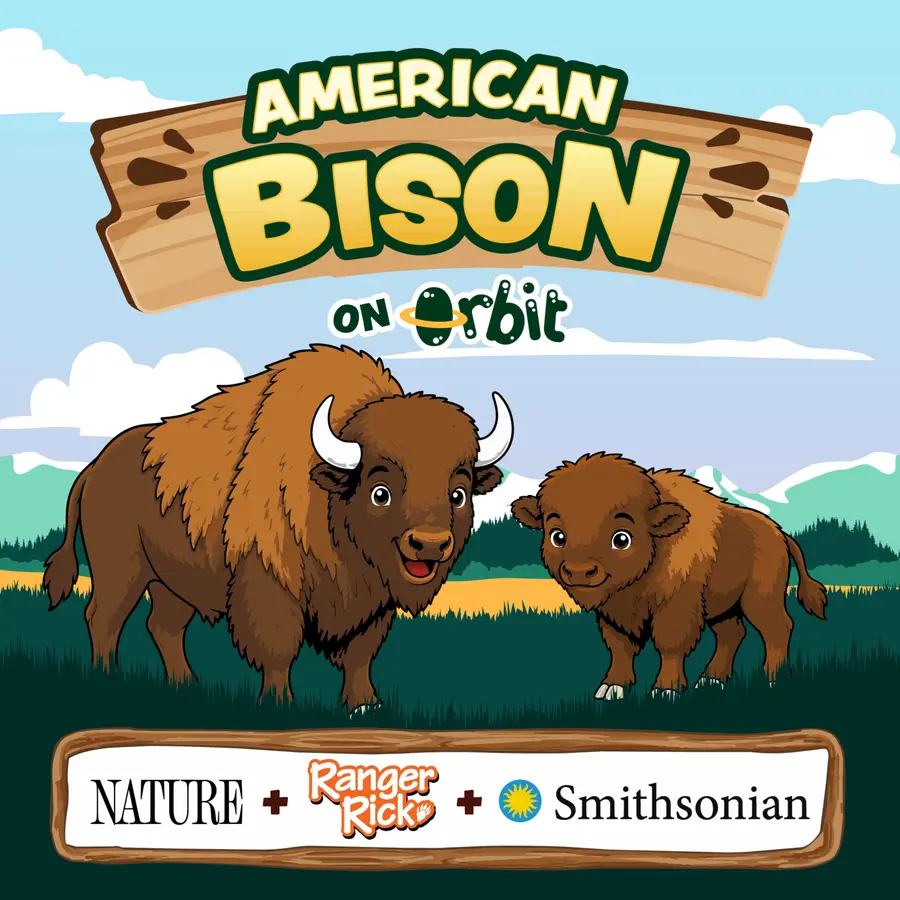
This week, we travel to the grasslands of Montana with Dr. Andy Boyce, a research ecologist at the Smithsonian's National Zoo and Conservation Biology Institute. Discover why bison live in herds, how they defend themselves from predators, and why scientists call them a keystone species. Along the way, you'll learn how these giant mammals help shape entire grassland ecosystems simply by grazing, digging, dust bathing, and being itchy!
Did you know that American bison help prevent grasslands from turning into forests by body-slamming young trees? And that they once lived in herds so enormous they stretched all the way to the horizon?
This week, we travel to the grasslands of Montana with Dr. Andy Boyce, a research ecologist at the Smithsonian's National Zoo and Conservation Biology Institute. Discover why bison live in herds, how they defend themselves from predators, and why scientists call them a keystone species. Along the way, you'll learn how these giant mammals help shape entire grassland ecosystems simply by grazing, digging, dust bathing, and being itchy!
➡️ Part of the Wild Critters USA series, created with PBS Nature and the National Wildlife Federation https://linktr.ee/wildcritters
➡️ Learn more about American bison from the Smithsonian National Zoo: https://nationalzoo.si.edu/animals/american-bison
🖍️ Free Wild Critters USA coloring pages: https://www.cumbrekids.org/color-along
💬 Submit your kids' questions! https://www.cumbrekids.org/questions
💛 Support this podcast by joining The Curious Club: https://www.cumbrekids.org/curious-club
Orbit Family Conversation Starters!
If you could have one bison superpower, which would you choose and why?Why do you think animals like bison choose to live in groups instead of by themselves?How can one animal help create homes for many other species?Continue learning as a family!
Think about a prairie ecosystem compared to a forest ecosystem. What plants and animals might live in each? What are some examples of predators and prey that live in the wild - similar to grizzly bears and bison! Visit a local zoo to see bison in person and observe how they move, eat, and interact with one another. ➡️ Explore the Smithsonian's Great Plains Science Program: https://nationalzoo.si.edu/conservation/great-plains-science
➡️ Visit the Smithsonian's "Bison: Standing Strong" exhibit: https://naturalhistory.si.edu/exhibits/bison-standing-strong
➡️ Learn more about American Prairie and bison conservation: https://americanprairie.org/
More from Cumbre Kids
🎧 More podcasts by Cumbre Kids in English and Spanish: https://www.cumbrekids.org
👨👩👧👦 A message for parents about our values: https://www.cumbrekids.org/our-values
QUICK LINKS

This is an episodic podcast, so you can listen to it in any order, but episode one is a great place to start.
Listen to episode one hereDid you know that American bison help prevent grasslands from turning into forests by body-slamming young trees? And that they once lived in herds so enormous they stretched all the way to the horizon?
This week, we travel to the grasslands of Montana with Dr. Andy Boyce, a research ecologist at the Smithsonian's National Zoo and Conservation Biology Institute. Discover why bison live in herds, how they defend themselves from predators, and why scientists call them a keystone species. Along the way, you'll learn how these giant mammals help shape entire grassland ecosystems simply by grazing, digging, dust bathing, and being itchy!
➡️ Part of the Wild Critters USA series, created with PBS Nature and the National Wildlife Federation https://linktr.ee/wildcritters
➡️ Learn more about American bison from the Smithsonian National Zoo: https://nationalzoo.si.edu/animals/american-bison
🖍️ Free Wild Critters USA coloring pages: https://www.cumbrekids.org/color-along
💬 Submit your kids' questions! https://www.cumbrekids.org/questions
💛 Support this podcast by joining The Curious Club: https://www.cumbrekids.org/curious-club
Orbit Family Conversation Starters!
If you could have one bison superpower, which would you choose and why?Why do you think animals like bison choose to live in groups instead of by themselves?How can one animal help create homes for many other species?Continue learning as a family!
Think about a prairie ecosystem compared to a forest ecosystem. What plants and animals might live in each? What are some examples of predators and prey that live in the wild - similar to grizzly bears and bison! Visit a local zoo to see bison in person and observe how they move, eat, and interact with one another. ➡️ Explore the Smithsonian's Great Plains Science Program: https://nationalzoo.si.edu/conservation/great-plains-science
➡️ Visit the Smithsonian's "Bison: Standing Strong" exhibit: https://naturalhistory.si.edu/exhibits/bison-standing-strong
➡️ Learn more about American Prairie and bison conservation: https://americanprairie.org/
More from Cumbre Kids
🎧 More podcasts by Cumbre Kids in English and Spanish: https://www.cumbrekids.org
👨👩👧👦 A message for parents about our values: https://www.cumbrekids.org/our-values
Sound Carrot is your source for Family Podcast Discovery. Verified awesome, 0% boring.
Distraction free website, no flashing banners or adverts to steal your attention.
(Some shows do contain their own ads however).
At first I made this site for my kids, but like any dad I got a little over excited. I hope you find it as useful as they do.
Whether you want to listen to them together in the car, or alone in your room - the content is all safe for younger ears.