Install SoundCarrot
Add it to your home screen for quick access.

Curious kids never stop asking questions - and “why” is one of their favourites. These are the episodes that lean right into that curiosity, each one opening with a big “Why”. Brilliant for inquisitive minds who want to understand how the world really works.

In a lab in the Rocky Mountains, a group of scientists is hard at work trying to find answers across biology, physics, and engineering: They’re looking into things like the hydrodynamics of insect pee and the physics of sheepdog herding, and working to designi…

This Week’s Big Questions!
🍌 Who do YOU think bananas belong to? 🤭🐵 Join today's hilarious fairy tale and see if you can guess how one silly adventure changed monkey history forever! 🌞✨
How does Skunk spray protect them? Are Skunks dangerous? Where do Skunks live?
In this episode, Shiying asked us why our brain is in our head and the answer took us back more than 500 million years to some of the earliest animals with a clear front end and back end. It's an interesting question, one which we don't often answer because we…
Join the Curious Kids Club: SupportCuriousKids.com
How does a cheetah use its incredible speed to catch food? Discover how its long legs, flexible spine, gripping claws, balancing tail, sharp eyesight, powerful lungs, and strong heart work together during a high-speed chase. We'll also learn where cheetahs liv…
In today's episode, we explore what snoring is and why some people snore more than others!
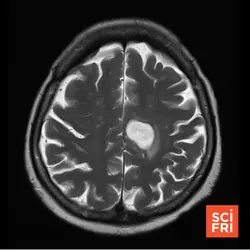
Brain cancers are rare, but devastating. Patients face short life expectancies after diagnosis. Brain tumors are often impossible to remove completely. And radiation and chemotherapy don’t always stop them from spreading.
In this episode, we learn...

This Week’s Big Questions!
Why do we laugh when we hear a silly joke or when someone tickles us? In this episode, we explore what happens in the brain and body when we laugh, why laughter helps us feel good, and how it brings people closer together. You'll also learn why doctors sometim…
Join us on a tour of our solar system with John O’Meara, chief scientist at the W.M. Keck Observatory in Hawaii. We’ll answer all of your questions about planets! How were the planets in our solar system made? Why are some planets made of gas and others are ma…
What are essential Minerals? What do Minerals do in your body? What happens if you don't get enough Minerals?
In the last couple months, Vermont, Alabama, and Oklahoma have passed data privacy laws. Massachusetts is negotiating its own version. Meanwhile, congressional lawmakers have introduced national privacy bills that would preempt these state laws.
Why does the sun look like it goes down every evening? In today's episode, we discover that the sun isn't really moving across the sky the way it appears. Instead, Earth is constantly spinning! We'll learn how Earth's rotation creates day and night, why sunset…
Where was Bubble Tea invented? How did Bubble Tea become so popular? What are Boba made of?
This Week’s Big Questions!
Did you know the welding arc can get even hotter than the surface of the Sun? 🔥
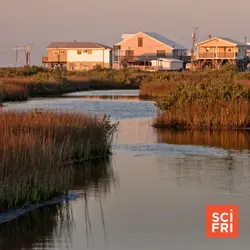
Back in May, a paper published in Nature Sustainability reignited a decades-old debate about coastal Louisiana: Should people leave? Climate researchers wrote that due to rising sea levels, coastal Louisiana has crossed the point of no return and that governme…
Leta asks: Why Do Cats Have Whiskers? We've all seen them and they look so cool, but WHY are they there? Mike and Chanel are all set to answer Leta's question and talk all about cat whiskers with Gretchen Lohse and Thomas Hughes of Carol Cleveland Sings!
JOIN THE CURIOUS KIDS CLUB to participate in future episodes: SupportCuriousKids.com
Can music really make you feel happy, sleepy, or even sad? In today's episode, we explore how different kinds of music can change your mood! From bouncy pop songs to quiet piano tunes, you'll hear how sound and emotion are connected in some interesting ways!
In today's episode, we explore why crabs look so funny when they move, and why that sideways walk is actually the smartest way for them to get around.
Yamal and Messi aren’t the only stars of the World Cup finals. If you’ve been watching any of the games, you’ve probably stared directly at a huge, unsung hero: the turf. Turf grass science is a real thing, and it’s John Sorochan’s area of expertise. He’s a sc…
Grab your imaginary passports, Culture Kids! In this episode, Kristen and Asher welcome their friend Senna into the kitchen to cook up a Korean side dish called sukju namul (숙주나물), better known in English as seasoned mung bean sprouts. But this isn't just a co…
In this episode, we learn what happens when a banana, apple, peach, or pear gets bumped or squeezed. We talk about tiny fruit cells, oxygen, and the browning reaction that can make bruised fruit turn dark.
Our brains are amazing machines, but they are also very delicate. We have to wear helmets when we bike, skate, or do other activities where we might bang our skulls. Why is the brain so sensitive? Turns out, it’s a soft blob a lot like tofu, but that softness …

In the summer of 2026, the United States caught World Cup fever, just as we do every four years.
In this episode, we learn all about zebras and some of the ways their stripes might help them!
When and how was Soccer invented? What makes Soccer/Football so popular worldwide? What makes Soccer such a unique sport?
Did you know that American alligator moms build nests, guard their eggs, carry their babies to the water, and come running when their little ones call for help? They might just be contenders for Wild Critter Mom of the Year!
Al Gordon and his incredibly itchy knees, join Tiernan this week to talk pigeons and pigeon poop.
This Week’s Big Questions!

Milo asks: Why Are the Middle Fingers of Aye-Ayes So Long? What a fascinating question about a fascinating animal! Mike and Chanel are joined by ecologist Tim Eppley, the Chief Conservation Officer for Wildlife Madagascar, to answer Milo's question and teach u…
JOIN THE CURIOUS KIDS CLUB to participate in future episodes: SupportCuriousKids.com
Did you know that American bison help prevent grasslands from turning into forests by body-slamming young trees? And that they once lived in herds so enormous they stretched all the way to the horizon?
Parent note: I use the words "farting" and "pooting" once each just to describe different words for flatulation. I keep this discussion very clinical and avoid crudity. The actual sound of flatulance is not used.
How big is the Pentagon? What goes on inside the Pentagon? What are the different armed forces?
In this episode, we're tackling all the mosquito questions that have been bugging our listeners. Why do they bite? Why do the bites itch? Is scratching them a good idea? Why do some people seem to be more delicious to mosquitoes? How can we keep them away from…
In this episode, we learn how pretzels are made from ropes of dough and why their exact origin story is hard to prove!
There is a LOT happening under your scalp! Today, we learn about hair follicles, keratin, and why haircuts don't hurt even though you're TECHNICALLY cutting off a part of your body!
In this episode, we learn why certain plants make berries that can make animals or people sick and why you should never eat a wild berry unless a grown up knows exactly what it is!
Parent Note: "Fertilized eggs" are mentioned several times throughout which may invite questions about how the process starts.
This Week’s Big Questions!

Maybellene asks: Why Do Red-Eyed Tree Frogs Have Multiple Eyelids?That's such a great question. It's a good thing that Chanel has the answer, plus a few extra red-eyed tree frog facts for Maybellene, Mike, and special guest John Sazaklis, author of My Life as …
In this episode, we learn how your body balances water and salt and why your brain tells you when it's time for a drink!

Sports and soccer fans, this one’s for you! In a brand-new episode of Wow in the World, Mindy, Guy Raz and the crew gather for the biggest event in Bee-Ball history… the Boo Boo Beenie Bopper Bee Ball World Saucer Championships! As the Buff-Tail Buzzers face o…
Ep. 151 - Kids Ask Dr. Friendtastic: An apology is an expression of caring | Friendship advice for kids
What's really happening inside a volcano before it erupts? Today, we learn about the amazing world of magma, lava, and underground pressure to discover the science behind one of nature's most dramatic shows!
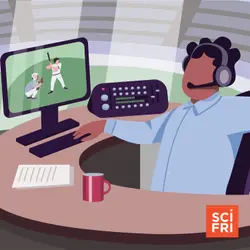
If you watch sports, whether the recent NBA finals or the ongoing World Cup matches, you may have noticed that the athletes aren’t the only ones putting on a show. The announcers seem to be playing a beautiful game of their own, capturing the excitement and pl…
Two tiny transforming robots landed on the moon! These baseball-sized bots accompanied Japan's first successful lunar lander. They rolled out of SLIM as balls and transformed into a rover. The bots cracked down the middle to reveal a little camera in the cente…
What are Slugs? Are Slugs helpful or harmful to the environment? Why should you never eat a Slug?
In this episode, we figure out why on earth we have hair in our noses!
Today we discover how a sloth's leaf-based diet and slow digestion work together to make it one of the slowest animals on Earth!
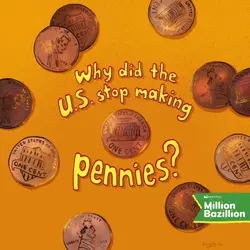
Bridget and Ryan are approached by a big film producer to write the next summer blockbuster — a movie all about the penny! The timing couldn’t be better because so many of you have been wanting to know: why did the U.S. stop making pennies? The answer comes do…
The Earth is spinning right now, so why doesn't it feel like we're moving? In today's episode, we learn how Earth's rotation works and why our bodies notice changes in motion more than steady movement!
🔥 Why Are Some Flames Blue? 🔥
Until this week, the United States hadn’t approved a new sunscreen ingredient in over 20 years. That changed Tuesday, when the FDA approved a new chemical for U.S. sunscreens. It’s called bemotrizinol, and NPR science correspondent Maria Godoy joins us to tell…

‘Tis the season for porch beers and happy hours, and we’re taking on listener questions about how alcohol affects us. Like, is a glass of wine at dinner really good for you? And why do sugary drinks give us hangovers?

Henley asks: Why Do Tigers Have Stripes? Tigers do have such a distinct look, so let's find out why! Mike and Chanel welcome tiger expert Megan Hagedorn to the Podcast to answer Henley's question and tell us all even more about our stripey feline friends.
n this episode, we learn that a sheep's "baa" is called a bleat, and sheep use those sounds to communicate. We discover how sheep call to their flock, and how mother sheep and lambs recognize each other's voices.
For years, scientists have puzzled over one of the most famous features in dinosaur history. Were those little arms useful? Were they a mistake of evolution? Or did they serve a secret purpose?
In this episode, we learn what happens when a muscle tightens and has trouble relaxing!
What is your Brain made of? How does your Brain work? What are the different parts of the Brain?
In this episode, we learn how tears, eyelids, the cornea, nerve endings, and pH all work together to help protect our eyes!
This Week’s Big Questions!
As Brains On fast approaches 400 episodes, we wanted to re-visit this one. Not only is it our milestone episode 100, but our pal Gungador goes from Most Epic Fighting Battle Realm to a much more challenging setting: high school. We ask why people seem to love …
Healthy forests help combat climate change, provide humans with drinking water and even improve mental and physical health. But it’s hard to imagine an entire forest in the middle of a big city. That’s where micro-forests come into play — public forests on a s…
You pick up your phone to do one quick task, and suddenly 20 minutes have flown by without you even noticing. How do apps do that to you? Science journalist Michaeleen Doucleff felt like her phone had superglue on it, holding her on it for hours each day while…
Why do humans love puzzles? In this episode, we explore why riddles, mazes, jigsaw puzzles, and tricky logic problems can feel so satisfying! We try to figure out some tricky puzzles in this episode, too.
In this episode, we learn how baby kangaroos, called joeys, are born very tiny and continue growing inside their mother's pouch! The animal kingdom is AMAZING!
Why do Cicadas only come out in warm weather? Where do Cicadas live? Are Cicadas dangerous to Humans?
JOIN THE CURIOUS KIDS CLUB to participate in future episodes: SupportCuriousKids.com
Why do kids grow taller and why do grown ups eventually stop growing? In this episode, we explore how bones grow, what growth plates are, and how hormones help send messages through the body that keep you growing!
You probably know someone who has a condition that, until last week, was known as PCOS, or polycystic ovary syndrome. It affects one in eight reproductive-aged women. But despite it being such a common disorder, patients are often misdiagnosed and have delayed…
Brilliant author and maker of cutlery to go with the tectonic plates, Anna James joins Tiernan this week to answer a question about a booming car.

Bucket hats. Low-rise jeans. Track suits. As you might’ve noticed, Y2K fashion is in right now. People say that fashion moves in 20-year cycles, and it turns out…it does! At least according to math.
When bedtime goes totally sideways, the whole little world turns into one big giggle-chase! Kids, get ready for a silly, noisy adventure that proves even the grumpiest sleepyhead can make everyone laugh. 😂
Why are french fries called french fries? In this episode, we explore why the history of fries is connected to both France and Belgium!

Welcome to Science Quest! 🚀 This week, we’re going from viral owlets to the edge of our solar system, with a few stops in between to figure out why your body makes weird noises and how to build a bridge that won't fall down.
When bedtime goes totally sideways, the whole little world turns into one big giggle-chase! Kids, get ready for a silly, noisy adventure that proves even the grumpiest sleepyhead can make everyone laugh. 😂
In this episode, we learn how your joints work and what synovial fluid does (and why it sometimes goes POP!).
In this episode, we explore how bats are uniquely designed to sleep upside down! Their claws are amazing!
It might sound like a wacky treatment, but recently, the fecal microbiota transplant has emerged as an effective way to help reshape our gut microbiomes. There are a lot of ideas on how to use this emerging therapy, so to help us sort through the misinformatio…
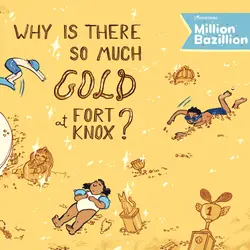
Today, we’re resharing an important episode from our archive! We’re answering Sadie’s question about why there is so much gold at Fort Knox. (And, we’re releasing a special new episode next week all about gold too. We can’t wait for you to hear it!)
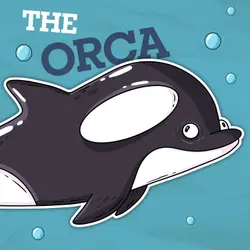
Eva asks: Why Are Orcas So Deadly? Great question, Eva. Are killer whales truly KILLER WHALES? Luckily, Mike and Chanel are joined by Orca conservationist, Kendra Nelson.
A recent study caught our eye: salmon on cocaine. Or really, researchers giving salmon cocaine…for science. See, scientists know human drugs pollute aquatic environments – past studies have shown even anti-anxiety drugs can change how fish act. But illicit dru…
Parent Note: We keep this explanation very clinical and non-specific. However, it may still invite questions concerning how the rooster fertalizes the egg in the first place.
In this episode, we learn that cows moo to communicate with each other, their calves, and sometimes the people who care for them!
If you were on a merry-go-round that was spinning super fast, you’d feel it. But the Earth is always spinning and we don’t feel a thing. Why is that? Join Molly and Reean as they explore the science of spin. Plus we find out how liquid sloshing around in our e…
In this week’s Science Short, we explore how cats pull off this incredible trick without pushing off anything at all. It’s all thanks to something called the air-righting reflex, and a clever two-step twist that lets them rotate their bodies in mid-air.
Why is there traffic? How do traffic lights work? How do they know when to turn red and green? Why does green mean go and red mean stop? Why are cars able to go faster than they are allowed to go with the speed limit? Why do we drive on the right side of the r…
Why do streets crack and how does a small damaged spot turn into a pothole?! In this episode, we learn how heat, cold, water, heavy vehicles, and shifting ground can all wear down pavement over time.
In this episode, we learn that an animal's whiskers help sense touch, nearby objects, tiny air movements, and the space around their faces!
It’s super common for a country to have a national anthem. That’s an official song that is sung at special events and is supposed to bring people together. The United States of America’s anthem is called The Star Spangled Banner. But it took a long time, and a…
JOIN THE CURIOUS KIDS CLUB to participate in future episodes: SupportCuriousKids.com
How was Tennis invented? How has Tennis evolved over the years? What are the different shots you can make in Tennis?
Why are so many old movies and TV shows in black and white? In this episode, we explore how early cameras worked, and why color was harder and more expensive to capture!
In the mid-1970s, primatologist Jane Goodall witnessed something that changed her opinion of chimpanzees forever: A four-year conflict amongst the chimpanzees she was studying in Tanzania. Chimpanzees that knew each other started killing each other. It was ess…

This Week’s Big Questions!
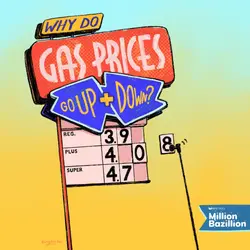
If you’re anything like “Million Bazillion” listener, Elijah, you may have noticed gas prices change from one day to the next, sometimes by a few pennies, sometimes by a lot more. Why does that happen? Ryan and Bridget’s search for answers turns into a much bi…
In this episode, we explore why some bugs bite us and why some bugs sting when we get too close!
Universe traveller Sharifa Butterfly joins Tiernan this week to talk about beans and bananas.
We often think of yawning as something that happens when we're tired but the answer is much more mysterious. Nij and the kids meet Dr Kathleen Maddison at the Centre for Sleep Science for an adventure that starts all the way back in caveman times!

If you *choose* to listen to this episode, you’ll learn all about the science of making decisions! 🧠✨ We’re joined by Dr. Marco Palma from the Texas A&M Human Behavior Laboratory, as we seek to understand how the brain makes decisions, why we sometimes make b…

This week, Amber sits down with digital producer and internet culture veteran Matt Silverman for a real talk about algorithms, slop, screen addiction, and why being a little bit skeptical online might be the most important skill a kid can have right now.

A game is loading, a video looks fun, and then a screen pops up demanding your birthday. Why does an app need your age, and what happens if you type it in without thinking? I dig into the real reason age questions show up so often and why that “quick little fo…
When did Girl Scout Cookies start? How did Girl Scout Cookies become so popular? What are some flavors that no longer get made?
How do we know what we know? That's where science comes in—it gives us a method for testing our ideas and getting trustworthy results. But some researchers have warned that many scientific studies can't be replicated.
Why are some People Hairier than others? Why do Humans have Body Hair? Why do some People lose their Hair?
How do your Reflexes help you? What would happen if you had no Reflexes? How do your Reflexes work without you thinking about them?
In today's episode, we explore why some apples are green and some are red and why they taste differently!
In a new National Geographic docuseries, viewers get a look inside a bee hive. The series is called Secrets of the Bees — and since there’s nobody we know who loves bees more than entomologist Sammy Ramsey, we brought him on the show to share some of these sec…
In this episode, we explore why some birds travel to different places during different seasons. We learn how birds can use clues like the sun, stars, and even Earth's magnetic field to help them find their way.
In today's episode, we explore why people forget things and why you don't remember being a baby!
NASA’s Artemis II mission is set to launch this week, which could bring humanity close to the moon for the first time since 1972. It’s a mission that’s over twenty years in the making – and even though it’s not the first venture out to the moon, it still invol…

This Week’s Big Questions!

Agatha asks: Why Are Moray Eels' Faces So Long? Seriously - they're SO LONG! But why? Mike and Chanel answer Agatha's question with the help of actor Derrick Baskin, who played Jetsam in Disney's The Little Mermaid on Broadway. Together, they discuss scientifi…
Why do humans have chins… and no other animals do?
In today's episode, we explore why you are more likely to hear frogs calling after the sun goes down!
In today's episode, we explore why cakes and other baked treats rise in the oven. We learn how baking powder and baking soda create tiny gas bubbles, and how the cake "sets" so it stays tall and fluffy when it is done baking.
In today's episode, we explore why people sometimes talk in their sleep. We learn what somniloquy is and why a partially-awake brain can accidentally turn on the "talking" parts while the rest of the body stays asleep.
In today's episode, we explore why sodas spray everywhere after you shake them. We learn what the fizz is made of and what causes the reaction!
Scottish storyteller Cara Silversmith shares a How and Why story from the US which explains why bears hibernate. The little animals are going hungry because a big brown bear is rather too fond of food. Happily, a fox, a squirrel, a mouse and a hare team up to …
In today's episode, we explore why crabs look so funny when they move, and why that sideways walk is actually the smartest way for them to get around.
What keeps Planets in their Orbits? Do Planets ever leave their Orbits? Could two Planets ever collide?
In today's episode, we find out how your body uses a cough reflex to protect your airway! We learn learn what your brain and nerves do to start it and why a burst of air helps clear irritation so breathing stays nice and easy!
Do you have a favorite stuffed animal? Maybe it’s a unicorn, or an axolotl, or a classic stuffed bear. Whatever it is, you can thank a former U.S. President for helping make stuffies a thing. Join Joy and co-host Luke as they learn about the origins of the Ted…
In today's episode, we explore why your stomach can feel fluttery when you get nervous. We learn how your brain and belly communicate and what the fight-or-flight response does to digestion.
This week Tiernan is joined by top cauliflower detector Hannah Warman, who is able to answer all cheeseburger poo hair based questions.

This Week’s Big Questions!
In today's episode, we explore why penguins walk with that famous waddle. We'll talk about how penguin legs are placed farther back on their bodies to help them swim powerfully and why short steps can help on slippery ice and snow!
In today's episode, we figure out why liquid can stay inside a straw when you cover the top with your finger, and why it falls out the moment you let air back in. It's all about air pressure!
In today's episode, we answer why frozen water sometimes makes cracking and popping sounds when it hits your drink.
Grace Jarvis joins Tiernan this week to talk about rhinoceros rat snakes and answer questions about the Earth being hot and cold.
In today's episode, we figure out why donuts have holes! We talk about how heat moves through dough while it cooks and why thick dough can stay undercooked in the middle. Warning: You will want a donut by the end of this episode!
From sports shirts and washing machines to sea salt and seafood, tiny pieces of plastic are travelling through our world in ways scientists never expected.
In today's episode, we explore why flamingos often stand on one leg while resting in water. We learn how special leg joints allow these birds to balance efficiently with very little muscle effort.
This Week’s Big Questions!
Every spring we set our clocks one hour forward. Every fall we move them one hour back. It’s a strange ritual when you think about it, so why do we do it? Join Molly and co-host Ava as they explore the seasons and why days are shorter in the winter and longer …
JOIN THE CURIOUS KIDS CLUB: SupportCuriousKids.com

Sloane asks: Why Do Centipedes Have So Many Legs? Seriously, there's SO MANY! Mike and Chanel get down to the bottom of Sloane's question, explain the difference between centipedes and millipedes, and invite special guest Chuck Duke to talk about his experienc…
In today's episode, we learn why your fingers can go numb in cold weather and how your body redirects blood flow to protect important organs.
In today's episode, we discover why moving your body through exercise can improve your mood and release special chemicals in your brain that help you feel good.
In today's episode, we learn why glass looks almost invisible! We discover why certain materials let light travel through while others block or reflect it.
In today's episode, we explore why some stars look brighter than others, and we learn how distance, size, and weather conditions all affect what we see when we look up at the night sky.
Despite major advances in our understanding of the biology of mental health disorders, there’s no blood test or brain scan that will confirm if you have depression, anxiety, PTSD, or any other psychiatric illness.
In today's episode, we explore why grown ups get more grey or white hair as they get older!
In today's episode, we explore why you might hear a faint ringing or high tone when the room gets extremely quiet, and what your brain and hearing system are doing in the background even when there is no obvious sound!
In today's episode, we explore why your face can feel hot and look red when you get embarrassed, and how your brain and blood vessels work together to change blood flow in your cheeks.
Nat Luurtsema is back on Radio Nonsense to talk broken ankles and answer questions about foxes.
How was the Hamburger invented? Which fast food Burger chain was the first? How did Hamburgers become so popular?
In today's episode, we talk about why it hurts when a bright light hits your eyes, and why do you sometimes see little spots when you close your eyes afterward. We explore how your eyes control incoming light and why your vision sometimes needs a moment to res…
This Week’s Big Questions!
In today's episode, we explore why snakes shed their skin! We learn qhy shedding helps snakes grow and stay healthy.
In today's episode, we find out why a balloon can get smaller over time even if it never pops!
The evolutionary purpose of kissing has long eluded scientists. Smooching is risky, given things like pointy teeth, and inherently gross, given an estimated 80 million bacteria are transferred in a 10 second kiss. And yet, from polar bears to humans, albatross…
In today's episode, we figure out why you sometimes get a little zap when you touch things, especially in the winter. We explain how electrons can build up on your body and why touching metal can make that charge move all at once.
In today's episode, we figure out why you have a belly button. We learn how a baby gets oxygen and nutrients before being born, and why your belly button is a tiny reminder of how you grew before you ever took your first breath.
Victoria is back with us this week and she kicks things off with a doozy of a story about a species of bark lice that has undergone a complete swapping of genitals between males and females. It's a very cool story but has frank discussions of reproductive part…

This Week’s Big Questions!
Our stomachs are full of a powerful acid, one that can burn your skin and even melt metal. So why doesn’t this stuff burn a hole through our bellies? We’ll find out how our stomachs protect the rest of us from this acid. Plus, we’ll learn about some of the wil…
In today's episode, we explore what snoring is and why some people snore more than others!
In today's episode, we explore why your voice sounds louder (and strange!) when you cover your ears. We learn that sound is made of vibrations, and that you hear your own voice in two ways: through the air and through vibrations traveling through your head!
In today's episode, we figure out why markers dry out so fast when the cap is left off. We learn what marker ink is made of and how evaporation slowly steals the liquid that makes the color flow.
Why are brothers and sisters so annoying? Why do siblings often look a lot alike? Why do siblings fight? Can your sister be your best friend? Why do we fight with our siblings even if we love them? But Why takes a look at the sibling relationship with Susan Do…
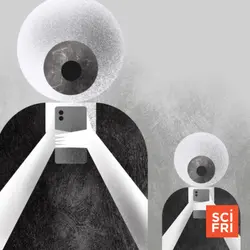
As ICE cracks down in Minneapolis and across the country, reporters and privacy advocates have drawn attention to how the agency is using technology: scanning people’s faces without consent, using private health records to make arrests, tracking people’s locat…
In today's episode, we explore what's really happening when your nose gets stuffy, and why it can feel like it refills with mucus right after you blow it!

This Week’s Big Questions!
JOIN THE CURIOUS KIDS CLUB: SupportCuriousKids.com
PFAS make pans nonstick, clothes waterproof and furniture stain resistant. They're so ubiquitous, they're even inside of us. Now, researchers are looking for more insights in firefighters' blood.
In today's episode, we talk about why you can watch the hour hand for a long time and still never catch it moving, even though it is always on the move. We explore how slowly the hour hand turns, how gears inside a clock control the speed of each hand, and why…

https://www.patreon.com/c/natureandscience4kids
In today's episode, we explore why animals hibernate and how slowing down helps them survive cold winters when food is hard to find.
What does a Meteorologist do? What does 50% chance of rain mean? How accurate are Weather Forecasts?
In today's episode, we explore a question that seems simple but is surprisingly tricky: why is water wet? We talk about what "wet" actually means and how your skin senses water.
Feeling overwhelmed by climate change and disconnected from nature? What if the solutions we need have been here all along, in the wisdom our ancestors knew, in the plants growing in our backyards?

Text me and let me know any topics you would love for me to talk about on the show! I can't wait to hear! xo, Laura
On this week's show Andrew Barnett Jones returns to discuss oranges, boranges and doranges, and also help Tiernan answer a question about minty poops.
In today's episode, we explore what pimples are and what your skin is trying to do when a pore gets clogged. We also talk about oil glands, bacteria, and why even babies can sometimes get pimples while their skin is still adjusting to life on the outside!

Fitz asks: WHY DO SLOTHS POOP ON THE GROUND? Hosts Mike Bennett and Chanel Hason answer Fitz’s question, share some other cool sloth facts, and discuss Mike’s iconic sloth Slow Down signs.
In today's episode, we explore why cacti are so sharp and how those prickly spines help them survive in hot, dry deserts.
In today's episode, we explore why the power sometimes goes out and how electricity travels from faraway power plants to your home. We learn how weather, accidents, heavy electricity use, and safety systems can all play a role in power outages.
Note to Parents: The word "poop" is used only once to clarify that this is what is meant by the more clinical term "feces." This episode avoids crude humor.
What makes the Dark so scary? How do you get over being afraid of the Dark? How does your eye adjust to darkness?
In today's episode, we talk about PERSPECTIVE and PERCEPTION! We explore why things look tiny when they are far away, even though their real size never changes.
In today's episode, we explore why winter makes your lips feel dry and cracky, and why your knuckles can sometimes split and bleed. We'll learn what cold, dry air does to your skin and why lips struggle more than other skin!
How does memory work? Why can’t we remember things that happened when we were babies? Why do we forget? Why are some people forgetful? Why do elephants have such good memories. What’s this episode about? I forgot! Oh yeah, how does our memory work! Our guest i…
In today's episode, we explore why you can breathe on Earth but not in outer space... and how gravity holds the key!
It’s a new year which means many of us are focusing on resolutions designed to take better care of our bodies as we age. But, even those conducting research on healthy aging find it a complicated concept to define. To help navigate the topic, Dr. Samantha Yamm…
NOTE TO PARENTS: This episode is very clinical and avoids explaining how the process begins, but it may invite questions about how exactly Mom and Dad "share DNA" in the first place.
Skunks can stink, no doubt about it. But that stink is actually a superpower! Join Molly and co-host Diya as they find out how these critters use their smell to scare away enemies, what the smell is made of, and how to make your own de-skunking potion. Plus, W…
In today's episode, we explore why a "brain freeze" can hurt so suddenly when you eat something very cold, and why it feels like the pain is in your forehead even though it starts in the roof of your mouth!
In today's episode, we explore why it gets dark earlier in the winter, and what's really happening with the Sun and the Earth when days feel shorter! It's all about the Earth's TILT!
In today's episode, we learn how Earth acts like a giant magnet and how that helps a compass always point north!
Why do we get goosebumps when we’re cold, scared, or moved by music?
Have there been a lot of Shipwrecks? Do Shipwrecks contain valuable objects? What are the most famous Shipwrecks?
In today's episode, we explore why a cozy rumbling sound can mean more than one thing, and how cats create their distinct purring!
Where does the New Year happen first? Why do we use noisemakers to celebrate? How is NYE celebrated around the world?
In today's episode, we explore why lizards can drop their tails on purpose and how their bodies are able to grow them back. We learn how a wiggling tail can distract predators and why regrowing a tail takes time and energy!
In today's episode, we explore what batteries actually do and why they eventually stop working. We learn what's happening inside a batter and why different toys need different kinds and numbers of batteries.
Text me and let me know any topics you would love for me to talk about on the show! I can't wait to hear! xo, Laura
Kratom and 7-OH products are available in many smoke shops. But earlier this year, the FDA recommended certain 7-OH products be scheduled alongside opioids. This isn’t the first time kratom has come under scrutiny. Nearly a decade ago, the DEA wanted to make c…
In today's episode, we explore what headaches are and what your body might be trying to tell you when your head starts to hurt.
In today's episode, we explore why clothes shrink in the dryer and what is really happening to the tiny fibers inside your favorite shirts and pants.
In today's episode, we explore why your fingers get wrinkled and pruny after spending time in the bath or swimming pool, and how your nerves and blood vessels work together to make it happen!
Scientists in the Arctic are catching the exhaled breaths of whales to better understand their health. How? Drones. Whales breathe through their blowholes, which are the equivalent of nostrils on their heads. By studying the microbes in exhaled whale breaths, …
Why do some Months have more or less Days? Where do the names of the Months come from? Is the Calendar actually...wrong?
In today's episode, we explore why some trees stay green all year long, even during cold winter months when most trees lose their leaves.
In today's episode, we explore why vitamins are good for your body and how these tiny nutrients help you grow and stay healthy.
Written by Jo Lambert, ‘Hold The Hope’ is now being used as suicide prevention training material by the UK’s National Health Service Mental Health Trust. Emily Kwong speaks with Rhitu Chatterjee about the inner strength of those who live with suicidality, how …
In today's episode, we explore why dogs lick people and what those licks might actually mean. From saying hello and showing affection to calming themselves down or getting attention, we learn how dogs use licking as a way to communicate.
In today's episode, we explore why candy tastes so good, why our brains love sugar, and why it is not a great idea to eat sweets ALL the time!
Have you ever heard a fox scream at night and thought it was a human? And why, when goats bleat, do they sometimes sound like human babies? Animals can sometimes make similar noises but not because they’re feeling the same things. It often has more to do with …
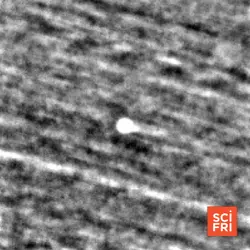
This year, comet 3I/Atlas broke into our solar system, but also the zeitgeist. This dirty snowball is a visitor from another solar system, and it’s only the third interstellar object we’ve ever spotted. And today, it's closer to us than ever before—just 170 mi…
Allergies are estimated to affect upwards of 30% of people globally, so why are they so often swept under the rug? People in restaurants lie about their allergies, food labelling is difficult to understand, and those with the allergies are often forced to be t…
In today's episode, we explore what fevers are and why your body raises its temperature to fight germs!
In today's episode, we explore why some people feel sick in the car and why that strange feeling usually disappears as soon as the ride ends. We learn how the eyes, inner ears, and brain work together to sense motion and keep everything on track.
In today's episode, we explore why humans cry when they feel sad, happy, overwhelmed, or stresse, and we learn about the three different types of tears our bodies make!
What is Curiosity? How has Curiosity helped humans survive? How can you become more Curious?
Discover how a tiny, clever mouse surprises all the big animals in a magical contest — and ends up choosing who should lead the whole world!
We all know it’s important to use sunscreen in the hot Australian sun, but what exactly is sunscreen? And how does it work? Nij and the kids are joined by dermatologist Professor Pablo Fernández-Peñas for a slippery, summery and sparkling journey.
Ever wonder what happens in your brain while we sleep? Or why we need to sleep at all? In this episode, Dr. Daniel Davila-Williams - a pediatric neurologist from Texas Children's Hospital - joins Orbit to discuss the science of sleep, including:
For many people, bubonic plague is an illness that seems squarely situated in medieval times. But each year, a handful of human cases pop up in the western United States. Plague can be treated successfully with modern medicine. But why does it still exist, and…
In today's episode, we explore why some people sleepwalk and what is happening inside the brain when it occurs. We learn about deep sleep, how the brain controls movement, and why sleepwalking is more common in children!
Join the animals, birds, and even tiny mice in a fun contest to decide who should be the boss of the whole Earth — and discover why the smallest creatures can be the most important of all!
In today's episode, we explore why your body makes sweat (and what it's made of!). We learn about evaporation, sweat glands, temperature control, and why sweat sometimes smells different.
The comet 3I/ATLAS is taking a long holiday journey this year. It’s visiting from another solar system altogether. Those interstellar origins have the Internet rumor mill questioning whether 3I/ATLAS came from aliens. Co-hosts Emily Kwong and Regina G. Barber …
In today's episode, we explore why Play-Doh dries out when you leave the lid off. We learn why water is the key to keeping it soft and squishy!
What do all Pets have in common? Which animals should never be Pets? What are some crazy Pets people have had?
In today's episode, we find out why skunks have such a powerful smell and how their stinky spray helps keep them safe from predators!

A good workout can make you feel triumphant. And even if that isn’t your relationship with exercise, you’ve probably heard that working out can lift your mood, fight depression, and make you more resilient when life knocks back. But why exactly does exercise i…
This week Anna Soden calls in from inside a giant glove and helps Tiernan answer questions about Jonny Maclaughlins.
In today's episode, we explore why the sky shows beautiful reds, oranges, pinks, and purples during sunrise and sunset, and why it usually looks blue the rest of the day. We learn how light scatters, why the angle of the sun matters, and how dust, water, and c…

The grass is wet, but there’s been no rain, and the skies are clear... What explains the dampness covering everything on a cool morning? It's called dew!
What does Thanksgiving symbolize? Do other countries have a Thanksgiving? What foods were served at the first Thanksgiving?
In today's episode, we explore why elephants have such big, flexible trunks and how this incredible tool helps them smell, eat, drink, communicate, swim, and stay cool. Plus, we learn how many muscles are inside a trunk! It's way more than you think!
In today's episode, we explore all the strange details on a dollar bill. We learn what dollar bills are made of, why they are green, and what the serial number means!
Watch this episode on YouTube.
In today's episode, we explore why your throat gets red and it hurts to swallow when you have a "sore throat!"
In today's episode, we explore how your ears make wax and why this strange substance actually protects your ears!
Expert at pushing things over in a really annoying way, Jonny Awsum, joins the podcast this week to help Tiernan answer a question about apples and doctors.
In today's episode, we explore why dolphins leap out of the water and what those amazing jumps tell us about how they live, breathe, hunt and communicate.
In today's episode, we explore how horses are able to sleep while standing up, why their legs don't buckle beneath them, and how their bodies are specially designed for both safety and rest.
Join Costa, the Gardening Australia Junior crew and an enormous ladybird as they find out why some plants sting.
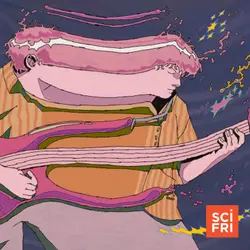
The band Phish has toured for over 40 years. One of the draws of their legendary live shows—which can go on for 8 hours—is finding moments of “flow,” when the band members lock into an improvised jam, finding new musical ideas in real time.
Hooray! Laura Lexx returns to the show to talk about inventing chairs and answer questions about wib wobs and grub gubs.
In today's episode, we explore why fans make you feel cool, even though they don't actually lower the temperature. Learn how air movement and your body's own cooling system work together to create that refreshing breeze on a hot day.
Text me and let me know any topics you would love for me to talk about on the show! I can't wait to hear! xo, Laura
In today's episode, we're taking a sweet trip from the rainforest to the candy aisle to discover how chocolate is really made! From cacao pods growing on trees to beans being roasted and turned into bars, we'll follow every step of chocolate's delicious journe…
In today's episode, we learn how sunglasses protect your eyes from sunlight, why everything looks darker when you wear them, and why not ALL light is visible!
In today's episode, we find out why different sticks make different sounds when you swing them! We examine how air, speed, and shape work together to create those whoosh, whip, or swish sound! Each one is unique!
In today's episode, we explore why your legs sometimes feel tingly or "fall asleep" after sitting in one position for too long. What's really happening inside your body when that weird feeling kicks in?
Imagine This host Dr Nij joins Costa and the Gardening Australia Junior crew to find out why worms are so good for the garden.
Around 250 million years ago, one of Earth’s largest known volcanic events set off The Great Dying: the planet’s worst mass extinction event. The eruptions spewed large amounts of greenhouse gases into the atmosphere, temperatures rose globally and oxygen in t…
In today's episode, we're finding out why cars need gas to move! From the gas pump nozzle to the tiny explosions inside an engine, we explain how fuel turns into motion and what happens if you ever run out of gas.

It’s Skimbleshanks’ birthday bash and Bridget and Ryan head to the two-dollar general store for party supplies. When they get back, they tackle Harper’s question about why $2 bills exist if nobody uses them. With a little help from two ghostly guests from hist…
Octopus, more like ROCK-topus! Because these creatures bring the excitement. They can shape shift to match their surroundings. They have three hearts and teeth on their tongues! And they are super smart. Join fill-in host Rosie duPont and co-host Izumi as they…
In today's episode, we explore why the ocean is never truly flat. From wind that transfers energy into the sea, to tides caused by the Moon and Sun, to special cases like tsunamis... today, we're talking all about OCEAN WAVES!
In today's episode, we explore why we feel pain and discover how it's actually your brain's warning system keeping you safe. You'll learn how nerves send signals to the brain and why pain actually helps you heal!

We've figured out how to harness renewable energy from many natural systems, like solar, wind, and geothermal power. But what about the ocean’s waves? It might seem like converting wave power into electricity on a large scale would’ve been figured out by now, …
What’s your favorite color? Where do colors come from?Why do people see colors? Does everyone see colors the same way? How many colors are there in the world? We learn about colors with Kassia St. Clair, the author of a book called The Secret Lives of Color. W…
In today's episode, we're finding out why fire ants sting and why it burns so much! We explain how fire ants protect their colonies, how their venom works, and why they bite first before stinging. You'll also learn where fire ants came from!
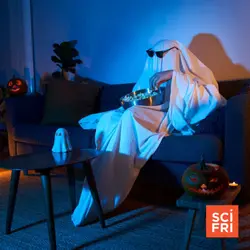
At first blush, the plots of many horror movies don’t seem particularly appealing. Take “The Shining”: A murderous psychopath tries to kill his family in a haunted, secluded hotel. But horror movies have had devoted fans for as long as they’ve been around, and…
You may have noticed that electric cars sound different from gas powered cars. The engine doesn’t rumble; instead, it might sound like a hum or even a song. Why is that? Ride along as we learn how electric cars work and why there is so much shush in their woos…
In today's episode, we find out what really happens when you erase something you wrote with a pencil! Discover how graphite, friction, and a little bit of rubber work together to make your writing disappear... and why it doesn't work with pen ink!
Is everyone Ticklish? What happens when you are Tickled? Why does Tickling make you laugh (or cry?)
In today's episode, we find out what really happens when you get a sunburn. Why does it hurt and how does your body fix it? We explain how ultraviolet (UV) light from the sun affects your skin and why sunscreen is so important for protection.
Watch this episode on YouTube.
In today's episode, we find out why food "goes bad" and what's really happening when milk sours, fruit turns brown, or bread grows mold. We explain how bacteria and mold eat food to get energy and help recycle nutrients back into nature... and why the foods th…
In today's episode, we explore how earthquakes happen! You'll discover how energy builds up underground and why some parts of the world shake more than others. We'll also talk about famous earthquake zones like the San Andreas Fault and the Ring of Fire, and e…
Watch this episode on YouTube.
In today's episode, we're talking about teeth! Why are some sharp and pointy while others are flat and wide? We explain how each type of tooth has its own job to do to make sure you can eat your food!
In today's episode, we explore what happens when your muscles sometimes feel sore after playing hard or trying something new. Let's find out why soreness means your body is getting stronger!
Marijuana is decriminalized or legal in some form in multiple states. But, because it’s illegal on the federal level, states have had to build their own regulatory infrastructure. Without a centralized body to guide them, regulations in one state can look vast…
In today's episode, we explore why spinning around makes us feel dizzy. From the inner ear's semicircular canals to the fluid that keeps sloshing even after you stop, discover how your body gets tricked into thinking the world is still spinning!
PARENT NOTE: This episode avoids crudity (and the noise of a burp itself). It's pretty clinical while still being fun and engaging.
In this Squiz Kids Science Short: from trapped air and gassy bacteria to the reason they make different sounds (yes, even the squeaky ones), you’ll find out what’s really going on in your guts.
Weather in the tropics is decidedly different than it is in the middle latitudes. It turns out, so are the weather systems – the factors that create things like the daily temperature and humidity! Historically, most weather forecasting models have been based o…
Where and when was Ice Hockey invented? How has Ice Hockey evolved? What are the rules of Ice Hockey?
John Cooper takes a break from teaching his passive martial art, Air-ate, to help Tiernan answer a question about goldfish. Also: Chutney.
In today's episode, we're stretching our necks up high to learn about giraffes! Why do these incredible animals have such long necks and how does it help them survive? We'll explore how giraffes use their height to eat, fight, and stay safe!
Bridget and Ryan are at the Podcast Hosts for Youths Sleepaway Camp, but Ryan just can’t fall asleep. That’s when they meet Dougie Pickles, host of the Cozy Critters sleepy time podcast, with a surprising bedtime trick. Together, they unpack the world where an…
In today's episode, we discover why leaves change colors in the fall. From chlorophyll breaking down to hidden pigments like carotenoids and anthocyanins, you'll learn how trees prepare for winter with one last colorful display!
In today's episode, we explore why our brains sometimes forget things. From fading memories and interference to the power of sleep and emotions, we discover how forgetting actually helps us manage the flood of information we experience every day.
Why are horses so big? Why do horses have tails and manes? How do their legs move? Are their bones in their hooves? What do they eat and how do they run and jump? We tackle those questions and more in this episode all about horses. We’ll also learn a little bi…
In today's episode, we explore turtle lifespans and discuss why some turtles can live for 150 years. It's a mixture of their shell, metabolism, slow-pace, and more!
Worldwide, populations of scavenging animals that feed on rotting carcasses are declining. Scientists are finding that this can seriously hurt human health. NPR science reporter Jonathan Lambert has been looking into how human health is intertwined with scaven…
Why do humans Walk upright? How does Walking affect your body & brain? How has Walking changed History?
In today's episode, we stretch wide and take a deep breath to explore the science of yawning. We have guesses, but no one knows for sure! We discuss whether they're about tiredness, getting more oxygen, cooling the brain, or maybe just contagious behavior!

You had lots of travel related money questions! So, Bridget and Ryan are on a money mission. While racing through the airport on their way to the San Fran Fin Lit Pod Con, they get to the bottom of why stuff costs more at airports than at regular stores, how c…
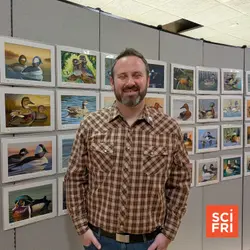
In mid-September, artists from around the country convened in Laurel, Maryland, for one of the splashiest events in the wildlife art world: the Federal Duck Stamp Art Contest. At the annual event, artists compete to have their excruciatingly detailed waterfowl…
You’ve probably heard of PTSD, post-traumatic stress disorder. But what about its counterpart, post-traumatic growth?
In today's episode, we flip the switch on light bulbs to see how they shine. From glowing filaments to exciting electrons, we explore the science that makes a bulb light up and figure out why they eventually burn out.
In today's episode, we travel across the desert to discover why camels have those tall, lumpy humps. We learn how the hump stores fat (no water!), how camels survive long stretches without food, and why their bodies are perfectly designed for desert life.
In today's episode, we explore the mystery of dust: what it is, where it comes from, and why it always seems to reappear in our homes. From tiny skin flakes to particles floating in from the outdoors, we uncover how dust builds up and why no house ever stays d…
The world's second best speaking clock, Jennifer Carss joins Tiernan this week to talk about time, toast and answer Gianna's questions about fries and horses.
In this episode, we explore what scientists have discovered about the sleeping brain. We discuss how vivid dreams most often happen during REM sleep, why the brain stays busy at night, and how dreaming relates to memory sorting, emotions, problem solving, and …
Have you ever looked in a mirror and wondered how it actually works? Today we're exploring the science of reflections! We'll talk about how mirrors bounce light back to create images, why things look reversed, and how the whole thing is a big trick being playe…
This week on Squiz Kids Science Shorts:
Aaliyah is worried. Sometimes her mom feels really sad and doesn’t want to play, so Aaliyah wonders if she’s the reason why. With help from Rebecca, the Teddy Twins, and special guest Toby Hemingway, we explore this tender question about what to do when someon…
Why do we laugh when we hear a silly joke or when someone tickles us? In this episode, we explore what happens in the brain and body when we laugh, why laughter helps us feel good, and how it brings people closer together. You'll also learn why doctors sometim…
Why do birds sing? Is it just for fun, or is there a reason behind all those chirps, whistles, and songs you hear in the morning? Today, we explore how birds use songs to defend their territory, attract mates, stay connected with their flock, and even learn ne…
This week on Squiz Kids Science Shorts:
Why do people sneeze so much during allergy season? Today, we explore what allergies are, why the immune system gets confused by pollen, and how things like histamine cause runny noses, watery eyes, and sneezes.
Have you ever wondered why we actually need to brush our teeth? Did you know that there's a whole science behind how brushing protects your teeth and gums from bacteria, plaque, and cavities? In this episode, we explain what's happening inside your mouth and w…
This week on Squiz Kids Science Shorts:
Danielle wonders why people have different skin colors. With help from Rebecca, the Teddy Twins, and special guest Dr. Ann-Louise Lockhart, she learns that our differences make us unique, and that kindness, curiosity, and respect help us celebrate each other.
Have you ever wondered why some people have freckles and others don't? In today's episode, we explore what freckles really are, why they appear more in the sun, and how your genes play a big role. Whether you have lots of freckles or none at all, you'll learn …
Why do our teeth chatter and our bodies shake when we get really cold? And why does it sometimes happen when we're nervous, too? In this episode, we explore how shivering helps our bodies warm up and why it's not always about the weather.
The United Nations estimates that there were over 1.5 million new cases of skin cancer in 2022. That number might have you reaching for the nearest tube of sunscreen. And it might also have you wondering what truth there is to the hype around Korean and Europe…
How do Countries pick their National Symbol? What are some popular National Symbols? What are the weirdest ones?
Where do Sloths live? Are Sloths strong? Why do Sloths always look like they're smiling?
Today, we uncover why some months have 31 days, others have 30, and why February is the shortest with 28 (and sometimes 29!). We trace the story from early sky watching to Julius Caesar's calendar reform, explain how leap years keep us aligned with the Sun, to…
Have you ever gotten a cut and seen your bright red blood? Why is it that color? And why is it sometimes DARK red, instead? In today's episode, we're diving into the world of red blood cells, hemoglobin, and oxygen to find out why our blood is red.
Have you ever seen a puffin? With their bright beaks, orange feet and black and white coloring, these birds are very cool to look at. And we’ve gotten a lot of questions about them! In this episode, we talk with Don Lyons, an educator and avian ecologist with …
Why do some dogs drool more than others? What causes dogs to drool?Does dog drool have magic healing powers?
Tonight, your little one can drift off with a cute little panda called Bao, who has a very important question: why do pandas eat bamboo? With soothing rhymes, soft sounds and repetitions, your tots will sleep soundly through the night.
Bug bites can be so annoying... especially when they itch like crazy! In today's episode, we find out why mosquito bites itch and what your body is actually doing when it starts to swell and turn red. You might be surprised to learn that it's not just the mosq…
☀️🌙 Ever wonder why Sun and Moon live in the sky? 🐦💦
A Chinese scientist, He Jiankui, made a shocking announcement to the world in 2018: He had secretly engineered the birth of the first gene-edited babies. The birth of the twins was seen as reckless and unethical by the scientific community. That’s because, amo…
Have you ever played the blinking game? You know, where you try to go as long as you can without blinking? It's tricky, isn't it? In today's episode, we explore why blinking is so important! And how it keeps our eyes safe, healthy, and focused, even when we do…
The human brain tends to slow down as we age — even healthy brains shrink. That can make learning and memory harder as people age. But some people’s brains shrink more slowly than their peers. This lucky group is called “SuperAgers.” They’re people aged 80 or …
With the James Webb Space Telescope, we are seeing the early universe like never before. Webb produces beautiful images and detailed scientific data that leave astronomers in awe. In this episode, Mic Bagley, a NASA scientist on the Webb team, guides us throug…
How tall is the Eiffel Tower? How was the Eiffel Tower built? What is at the top of the Eiffel Tower?
A grayscale ballerina who appears to be moving. A human who can fit in a doll box. A black-and-white prism that appears to change shape when viewed from three different directions. Those are the top winners of the 2024 Best Illusion of the Year Contest, open t…
What happens if you are bit by a Tick? How much do Ticks eat? Are there different kinds of Ticks?
ACHOO! Have you ever let out a huge sneeze and wondered why it even happens in the first place? In today's episode, we're taking a closer look at one of the body's fastest and funniest reflexes: sneezing. Find out what causes a sneeze, how fast it can travel, …
What causes Lightning? What does it mean when Thunder & Lightning happen together? Which is louder, Thunder or Lightning?
In July 1925, the Scopes “Monkey” Trial captivated the nation. On its face, the case was relatively straightforward: A Tennessee biology teacher named John Scopes was accused of teaching human evolution to his students. At the time, that was against state law.…
How does a Blimp work? Why do we even have Blimps? What's it like to fly on a Blimp?
Why do roller coasters make your stomach feel funny or like you're floating right out of your seat? In this exciting episode, we explore the weird and wonderful forces that affect your body when you ride roller coasters, drop towers, and spinning rides. We dis…
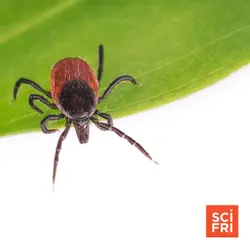
It’s shaping up to be one of the worst tick years yet, and concerns about Lyme disease—which is transmitted through the bites of some species—are high. Aside from a short-lived vaccine released in the late 1990s, people have not had the opportunity to get vacc…
Have you ever felt your ears pop when flying in an airplane or climbing a mountain? In today's episode, we find out why that happens and what's going on inside your head when it does.

Listener Cecilia wrote in to ask: “Why does organic food cost more than non organic food?” And she's right! Certified organic foods do usually cost more than other options. Bridget and Ryan dive into the question with the help of Stephanie Hughes, Marketplace'…
Why do turtles carry their shells around everywhere they go? In today's episode of Curious Kids Every Day, we explore how a turtle's shell is part of its body, how it keeps them safe, and why these slow-moving animals are built for survival.
Ever get the hiccups and wonder what's going on in your body? In today's episode of Curious Kids Every Day, we find out what causes hiccups, why they sound the way they do, and what your diaphragm has to do with it.
Why does the moon look different from night to night? In today's episode of Curious Kids Every Day, we explore how the moon's phases work, why it seems to change shape, and how it all comes down to light, shadows, and motion in space.
On the podcast this week Tiernan is joined by extreme sandwich artist Myles Mcleod to discuss questions about oranges.
Who invented Doorbells? What did early Doorbells sound like? How does your Doorbell work?
Why does your heart beat, and what is it doing all day long? In today's episode of Curious Kids Every Day, we follow the journey of blood, oxygen, and a muscle that never sleeps. Learn how your heart keeps your body working and why it never takes a break!
Note to Parents: I tell a personal story from my childhood about my parents leaving a prize under my pillow after I lost my first tooth. I honestly forgot about the Tooth Fairy when making this episode, and it is not mentioned at all, but if your family enjoys…
Happy Independence Day, Short Wavers! Do you have plans outdoors this weekend and want to figure out just how swampy it's gonna feel? For that kind of mental preparation, we're revisiting an episode in which some meteorologists are telling us to pay more atten…
Why does your shadow always seem to follow you? In today's episode of Curious Kids Every Day, we shine a light on how shadows are made, why they change shape, and what makes them stretch or shrink. It's all about blocking light and a little science magic!
In today's episode of Curious Kids Every Day, we dive into the noisy world of your digestive system to find out why your stomach makes rumbling sounds. Spoiler: It's not yelling at you. It's working hard!
Who designed the first Piano? How does a Piano work to make music? Is the Piano capable of making the most sounds of any instrument?
Have you ever tried to tickle yourself—and it just didn't work? In today's episode of Curious Kids Every Day, we explore how your amazing brain knows the difference between a surprise tickle and one you try yourself. Get ready for some laughs and lots of curio…
Ever wondered why some spices burn your throat while others tickle your nose? Or why some of us live for spicy foods while others sweat at the mere thought of a habanero? How do pickles stay crunchy if they’re sitting in brine for weeks on end? And why do we h…
Mason feels scared after seeing upsetting news on TV and worries that something bad might happen near him, too. With help from Rebecca, the Teddy Twins, and special guest Brooks Jaroz, he learns how to manage those big feelings, and that it's okay to feel afra…
Rigatoni Runi aka Runi Talwar is the guest on Radio Nonsense this week as he talks to Tiernan about pasta based clothes and answers questions about singing oranges.
Have you ever gotten goosebumps and wondered why they show up? In today's episode of Curious Kids Everyday, we explore the tiny muscles hiding in your skin and what they're doing when your arms get bumpy. It's a chilly, exciting, and fascinating journey throug…

The TV show Columbo, about a loveable schlub detective, is internationally beloved. But Hungary has an extra special relationship with the show, dating all the way back to the 1970s when the communist government banned most other American shows.
Why do stars seem to sparkle instead of shining steadily? In this episode of Curious Kids Everyday, we explore how Earth's atmosphere bends starlight, making distant stars appear to flicker. Learn the science behind twinkling and find out why planets don't shi…
Ever wonder why we have spring, summer, fall, and winter? In this episode, we explore how Earth's tilt and orbit around the sun create the seasons we experience each year—and why it feels different depending on where you live.
We are in the thick of multiple sports seasons: the NBA finals are happening, and baseball and soccer are in full swing. For devoted fans, emotions can run pretty high during a game. Cognitive anthropologist Dimitris Xygalatas has long been fascinated by that …
This week Tiernan is joined by chair speaker Sunjai Arif to discuss green peas in ears and questions about green.
Some balloons rise while others fall—but why? This episode reveals the science of helium, air, and hot air balloons. Learn how the gases inside a balloon determine whether it soars or sinks!
Bubbles are full of fun and full of science too! This episode explains why bubbles pop and what makes them so magical, from surface tension to evaporation.
The skunky smell of cannabis may be going out of style. NPR's science correspondent Pien Huang visited the grow facility for District Cannabis, which sells weed in Washington D.C. and Maryland. On her tour, she learned why cannabis smells the way it does. Plus…
Why does rain fall from the sky? In this episode, kids explore evaporation, condensation, and precipitation as they learn all about the amazing water cycle, and why it's nothing to cry about!
It’s summer and that means slathering yourself with sunblock before you’re allowed to go run around outside. Not everyone loves that ritual: sunscreen can be cold or sticky. Sometimes it gets in your eyes, and it always feels like it’s time to reapply JUST as …
https://www.patreon.com/c/natureandscience4kids
What do the numbers on a Clock mean? Who decided how to divide up Time? Why are hours & minutes measured by 60?
What danger do Spotted Lanternflies pose? What happens if you don't squish them? Do all Lanternflies look alike?
Sleep might seem like a time when nothing's happening—but your brain and body are working hard! In this episode, we find out how sleep helps you grow, stay healthy, and even get creative. Plus, we mix in some fun games to make learning even more exciting!
Air is all around us—but have you ever wondered why we can't see it? In this episode, we explore what air is made of, how it moves, and how we know it's there even when it's invisible. Join the fun as we ask big questions and play some interactive games along …
Happy Snake Week! Every episode this week explores a different question about our slithery friends. Here’s a mind blower for you: did you know the ancestors of snakes used to have legs? Somewhere along the zigzag path of evolution, they traded in their lizar…
Depending on what time it is, your body responds differently to an injury or infection. During the day, you're likely to heal faster and fight infection better than at night. And historically, scientists weren't entirely sure why. That picture is starting to c…
Happy Snake Week! Every episode this week explores a different question about our slithery friends. Snakes come in all sizes and colors, but they have one thing in common: no arms or legs! In fact, one might argue they kind of look like sticks. We asked snake …
Mike Rampton joins the podcast this week to answer questions about scabs and talk about his brilliant book 'Become a Genius In a Year'.
The roadside dinosaur has been part of the Americana cannon since the 1930s, and we’ve got theme parks and Sinclair gas station mascots as a result. Today, Places Editor Diana Hubbell and producer Johanna Mayer head to two spots on opposite ends of the United …
Some people have allergic reactions to foods like peanuts, sesame, and raw eggs. But when people with egg allergies eat cooked eggs, there’s no reaction. What’s up with that? We asked pediatrician Liz Placzek to help us find the answer.
When you’re sick, it’s important to get plenty of rest to help your body heal. But it can be hard to sleep when your brain keeps showing you bizarre fever dreams (Like being chased by a giant fireball! Or swimming in nacho cheese!) Why do we have strange dream…
Have you ever wondered why the sun comes up once rooster starts crowing?
What causes you to Smile? How does a Smile work? Can you tell if someone is faking a smile?
This story is a selection from: ‘The Best of Super Great Kids’ Stories.
Dogs come in so many different sizes, from the tiniest teacup terrier to the giant Great Dane. How did we get such a delightful assortment of these furry best buddies? We asked Brains On producer and archaeologist Anna Goldfield to help us find the answer.
When were Traffic Lights first invented? What were early Traffic Lights like? Where did the idea for Traffic Lights come from?
Some planets have lots of moons. Others have none. Earth has just one moon, but it’s a really great one. It can glow bright and white and sometimes it’s shaped like a big round ball. Other times it’s skinny like the white tip of a fingernail. Makes you wonder,…
Why do walrus look the way they do? Why do they have such long tusks? Do they have other teeth? Do walruses migrate? We learn all about these majestic giants with Adam Ratner of the Marine Mammal Center in Sausalito, California.
Have you ever wondered why the sea is salty? All you need is one hungry girl, a rich but mean brother and a sprinkling of magic.
The sounds of the ocean are so relaxing… the waves crashing on the sand, the gentle roar of the surf. And if you pick up a big seashell and put it to your ear, you can almost hear the ocean there too! One of our listeners wanted to know why, so we asked physic…
All living things on Earth are related. To help keep track of how close those relationships are, scientists organize life on Earth into groups using a system called taxonomy. Sometimes, taxonomy can be surprising – like, did you know that humans are more close…
Bilal Zafar returns to the podcast to talk about swimming in jelly and answer Blazer's question about taking a dump.
Why is the center of a raging storm so… calm? Tumble listener Lydia wants to know what’s really going on in the eye of a hurricane. To find out, we’re flying into the storm — literally — with meteorologist Shirley Murillo! Shirley is a real-life “hurricane hun…
A fish walks into a pharmacy ... well, not exactly. Fish aren't being prescribed anti-anxiety drugs. But they are experiencing the effects. Researchers have found more than 900 different pharmaceutical ingredients in rivers and streams around the world, though…
Top crayon farmer Joz Norris joins Tiernan this week to talk jet packs and stinky hippos.
Beans are delicious. From edamame to lentils, there’s a bean for everyone! But they can also make us a little tooty. Why is that? We asked pediatrician Wendy Hunter to help us find the answer.
If you get a cut or scratch that goes deep enough into your skin, your body will form a scar. But why don’t scars themselves heal and go away? We asked dermatologist Liz Farhat to help us find the answer.
Have you ever looked out at the ocean and wondered… why is it so blue? In today's episode, we dive into the science behind ocean color, explore what sunlight has to do with it, and then play some games! It's a fun and curious journey into one of Earth's bigges…
Agent to the actual stars and some planets, Charlie Vero Martin, joins Tiernan to answer Tobin's question about why poo doesn't talk anymore.
The unusual-looking Price Tower, a 1-of-1 from starchitect Frank Lloyd Wright, has been the pride of Bartlesville, Oklahoma for more than 60 years. But the challenge of maintaining the skyscraper as a historic piece of art has made it difficult for the buildin…
Have you ever peeled the leaves off of an ear of corn and noticed the white hairy-looking stuff tucked inside? What is that, anyway? We asked chef and cookbook author Kenji Lopez-Alt to help us find the answer.
Rachel and Ruby aka the brilliant sketch group Shelf return to the podcast to talk whisky duelling and help Tiernan answer Horse Dude's question.
If you ask us, donuts are one of the most delicious treats in the world. Chocolate frosted with rainbow sprinkles, cinnamon twists, powdered sugar, strawberry jelly-filled, we love them all! But why are they called donuts? We asked food historian Sarah Lohman …
Researchers are studying psychedelics as a possible treatment for conditions like depression, PTSD and substance use disorders. But they don't know exactly how these drugs work.
What is cardboard made out of? How was Cardboard invented? Did Olympic Athletes sleep on Cardboard beds?
Cotton is soft and strong. It comes from cotton plants, and gets turned into everything from t-shirts to cotton balls. But why is cotton so fluffy? We asked biologist Candace Haigler to help us find the answer.
Kids grow super fast and get taller and taller and taller and then – all of the sudden they stop! How do our bodies know when it’s time to stop? Why don’t we just keep growing until we reach the sky? We asked Dr. Frank Rhame to help us find the answer.
Heads up! Your hair is always growing. Like your fingernails, hair is a part of our body that will grow and grow unless you cut it. But how come we don’t feel it growing? We asked pediatrician Dr Wendy Hunter to help us find the answer.
Where does Salt come from? Where does Pepper come from? How do Salt & Pepper affect a food's flavor?
Fish swim. Frogs hop. Birds fly. Well, not all birds. Penguins and ostriches, for instance, can’t spread their wings and soar. So then, why do they have wings? We asked paleontologist Jingmai O’Connor to help us find the answer.

All of you are familiar with the ABCs. It is one of the very first things that children are taught.
The very funny Steffan Alun is the guest this week, and he talks to Tiernan about ghost transport, beans and helps to answer Bob's question about dog poo.

You may know that some animals have exoskeletons, but why would a human want to build an exoskeleton? Perhaps if robots are involved. Take a listen to Bill Billotte, executive director of the Exo Technology Center of Excellence as he talks to us about the usef…
Onions add zesty flavor to lots of different foods, like soups, salads, omelets, and much more! But sometimes, chopping them up can make your eyes water – ugh! Why does that happen, anyway? We asked chef and cookbook author Kenji Lopez-Alt to help us find the …
Whether you have a dog, want a dog, don’t like dogs, or are a dog…one thing's for sure. Dogs can’t eat chocolate! Why is it so bad for them? We asked Cassie Panning, a certified veterinary technician from the University of Minnesota, to help us find the answer…
You might have seen someone faint in a movie. It usually happens after they see something shocking. They close their eyes and suddenly fall to the ground. In real life, people faint for many different reasons, not just shock. We asked pediatrician Dr. Wendy Hu…
Who invented Daylight Saving Time? Does everyone in the world set their clocks back/ahead? Is Daylight Saving Time still a good thing?
Spinning around in circles is really fun right? And then a weird thing happens. When you stop, it’s like the world is turned upside down and you don’t know which way you’re facing and you feel dizzy and sometimes even fall down! We asked infectious disease phy…
Helen Duff takes a break from piano spotting to chat to Tiernan all about mole rats and onions.
Lots of people talk in their sleep, especially kids! Have you ever heard anyone babbling away in the middle of the night? Or maybe someone has told you that you do it? Sleep talking is totally normal, but why do we do it? We asked sleep specialist Chris Wi…
Did your Belly Button once keep you alive? Why do some people's Belly Buttons look so different? What does your Belly Button do now?
In this episode, we’ll discover why yawning isn’t just about being tired—it helps cool your brain and can even be contagious! We’ll explore the nature of time and why building a time machine isn’t as simple as it sounds. We’ll also uncover why eating salty foo…
Kirk kicks things off the the Medlar, an ancient fruit with a decidedly NSFW nickname. Maybe this one isn't for the kids.
Lots of people love a good cuddle. Whether it’s snuggling with a teddy bear, or cozying up with family – cuddles can make folks feel safe and comfortable. But why is that? Why do people cuddle? We asked brain expert India Morrison to help us find the answer.
Why do some animals play - and some don’t? That’s what Meredith wants to know. In this special collaboration with Outside/In, we investigate how and why animals - and people! - of all shapes and sizes play. Play scientists Junyi Chu and Jackson Ham help us ask…

It’s been an unusually tough winter virus season. Rates of flu-like infections are higher than they’ve been in nearly 30 years. And for the first winter since the start of the COVID-19 pandemic, flu deaths have surpassed COVID deaths. Add to that a higher-than…
Have you ever been on an airplane and noticed that pressure in your ears? And then, as you’re taking off…they pop! Just like a balloon or a bubble or a freshly opened can of dough! Why does that happen? We asked infectious disease physician Dr. Frank Rhame to …
Rachel tells us an astounding fact, the metal of the Titanic is being eaten by bacteria and could collapse in just 6 years.
If you’ve ever grabbed a flaming hot bowl of soup out of the microwave and then slurped a spoonful of icy liquid from the middle of it, you’re not alone. In fact, it feels like one of life’s great mysteries! Why does this happen to food in the microwave? We as…
Why do some countries drive on the left? Do more places drive on the left or right? When did most countries switch?

Ever wonder how artificial intelligence can revolutionize education? In this episode, we sit down with the incredible Dr. Nneka McGee, an educator, researcher, and advocate dedicated to integrating AI into schools. As a former teacher turned district leader, D…
Why do capybaras have such big teeth? Adrian had to know! To get to the bottom of this, we spoke to a biologist named Santiago Herrera Alvarez. Capybaras are Internet sensations, and Santiago can't get enough of them! Santiago's questions were even bigger than…
When you've got a crush on someone, it can feel a bit overwhelming. All of a sudden, you might have butterflies in your stomach! And maybe you find yourself acting differently than you normally would. Why does our brain do this to us anyway? In this episode, w…

Why should we care about bugs? They are SO important to our ecosystems, our atmospheres, or very planet. We couldn't live without them. Take a listen to our FUN and fascinating guests, The Bug Chicks-- Kristie Reddick and Jessica Honaker, as they discuss the r…
Mold is a type of fungus, which means it’s related to mushrooms. And it can be kind of pretty, if you’re not grossed out by it. Sometimes mold is green or white or even pink! Why does it have so many colors? We asked professor Jonathan Schilling from the Unive…
What happens during a Yawn? Are Yawns really contagious? Do all animals Yawn?
How do trains work? We went to Union Station in Washington, DC to answer a whole wagonload of questions with Amtrak's Patrick Kidd.
How does a Fever actually help you? Why do you get a runny nose? How does your Immune System work?
If you’ve ever gotten a cut or a scrape, you might’ve noticed that your skin feels itchy while it’s healing. Why does that happen, anyway? We asked pediatrician Dr. Emma Gerstenzang to help us find the answer.
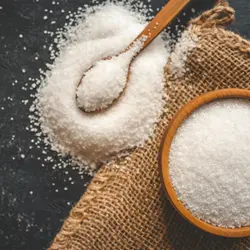
Salt is made up of tiny crystals! Under a microscope, some salt crystals look like pyramids, staircases, or even snowflakes. But why do these salty little crystals make food so tasty?Join Molly and co-host Yasmin as they explore the science of salt. They’ll he…
Sometimes we get questions from listeners that are so intertwined that we just have to include them both in one episode, and today is one of those days! Cardiologist Dr. Courtney Jordan Baechler helps us figure out the answer to two questions – why does blood …
Black holes are notorious for gobbling up, well, everything. They're icons of destruction, ruthless voids, ambivalent abysses from which nothing can return — at least, according to pop culture. But black holes have another side: Astrophysicists have seen power…
Radio Nonsense returns from its new location of...er...a cold beach. Katie Pritchard joins Tiernan to talk banning hats and answer Caitlin's Q about AI.
What do your Armpits do? How do they help keep you cool? What are lymph nodes?
So far, only adults have been to space. But there are plenty of kids who’d love to travel to space, so what gives? Why can’t kids walk on the moon? Or visit the International Space Station? We asked NASA engineer Varoujan Gorjian to help us find the answer.
On this week's show, Victoria kicks things off with a discussion of Chirality and how the study of the "handedness" of molecules could actually lead to the creation of completely new forms of life. It's a bizarre thought experiment with very real and dangerous…
We love when our listeners send in super unique questions. We also love robots. So we had to answer this head-scratcher of a question from listener Lucas: why aren’t robots ticklish? We asked pediatrician Emma Gerstenzang to help us find the answer.
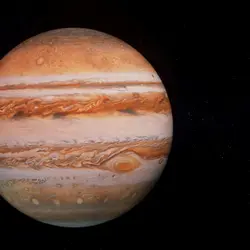
Jupiter is the oldest planet in the solar system. It’s also the biggest. Some call it “Earth’s bodyguard” because it keeps asteroids and comets from hitting our planet. But is Jupiter really protecting Earth?
If you’ve ever taken a dog on a walk, or let them run around the woods, you know that they LOVE to roll around in stinky stuff! And it’s one heck of a mess to clean up. Why do they do that? We asked researcher Elizabeth Carranza from the Arizona Canine Cogniti…
Editors at scientific journals are quitting in droves. According to Retraction Watch, a watchdog publication, there have been at least 20 mass resignations since 2023.
The Moon’s South Pole is a bizarre landscape. Mountain ridges glow in perpetual sunlight while deep craters freeze in billion-year-old shade. Yet hidden in the depths of those shadowed craters, under temperatures almost three times colder than the frostiest da…
How do Plants grow? Can Plants tell time? How do Plants eat?
https://www.patreon.com/c/natureandscience4kids
Have you ever noticed how sometimes when you wash and dry a piece of clothing, it comes out a little smaller? Why does that happen? We asked science professor Dr. Mark Lorch to help us find the answer.
A fruit salad feast ends with a tumultuous flight through a banana plantation. Join Costa, the Gardening Australia Junior crew, a fruit bat and a fruit fly on a wild ride that requires thick skin.
Are your ears burning? ‘Cause we’ve been thinking about them. Sure, they’re an incredible self-cleaning marvel that we can wax poetic about all day. Sure, they’re a great place for dads to store all kinds of hairs. But do ears have bones? We asked Olivia Berm…
Have you noticed that there’s a kind of cheese that’s holier than all the rest? Swiss! Why does it have all those holes anyway? We asked Jenny Eastwood of Small Goods to help us answer this delicious question.Hungry for some answers? Send your questions to Bra…
There are all different kinds of trees in the world, from towering redwoods to tiny willow trees smaller than an action figure. Why are there so many different sizes of trees, anyway? We asked tree expert Jake Miesbauer to help us find the answer.
Have you ever picked up a peach in the supermarket and noticed that its skin is covered in soft fuzz? What’s that about? Should we be taking our peaches to barbershops? And what about kiwis? They’re covered in scratchy hairs! Why do some fruits have fuzz while…
How is New Year's Eve celebrated around the world? Why do people use noisemakers? Which is the first country to experience the New Year?
In pop culture, squirrels are often seen as jerky, excited critters on the hunt for nuts to stuff themselves with and tuck away for later. But squirrels are on the hunt for something a bit meatier in the California Bay Area. Their target: local voles. The enti…
The stench of rotten meat is wafting from a rocket-shaped fungus in the garden. Join Costa, the Gardening Australia Junior crew and a fleet of blowflies as they find out why some plants reallllllly stink.
A desert sandstorm ends with a climb up a skyscraper-sized cactus. Join Costa, the Gardening Australia Junior crew and a giant rat as they discover why cacti are covered in spines.
AI uses a lot of power. Some of the next generation data centers may use as much power as one million U.S. households. Technology companies like Microsoft, Google, Amazon and Meta hope nuclear power will offer a climate solution for this energy use. Nuclear po…
Where did the Friday the 13th legend start? What makes 13 an 'unlucky' number? Should you stay home on Friday the 13th?
The chap hop master and newly voted Emperor of the World Professor Elemental joins Tiernan to answer Douglas's question about cats.
Flowers transform into trampolines and tunnels with a sprinkle of magic compost! Join Costa, the Gardening Australia Junior crew, a long-tongued moth, and a blue-banded bee as they explore all the different shapes of flowers.
Have you ever noticed that when you eat something salty, you feel extra thirsty for a while afterwards? Ever wondered why? Turns out, scientists are wondering why as well, and it’s a perfect example of how science is always changing how we understand the world…
Bread! It’s good stuff, no matter how you slice it. But why do slices of bread have holes in them? Are there bread moles who tunnel through baguettes? Invisible worms in the whole wheat? Chipmunks chewing on the ciabatta? We asked food scientist David Domingue…
This Cyber Monday, a meditation on holiday sales. A quick trip to pick up presents can turn into an hours-long shopping spree thanks to all the ways stores use research from fields like consumer neuroscience and neuromarketing to entice you. Retailers create u…
Who invented socks? What were the earliest socks like? Did early humans actually stuff leaves and grass in their shoes?
Why can’t animals talk to us? Are humans the only animals that can talk? Can different species of animals communicate with each other? We learn about animal communication with Arik Kershenbaum, author of Why Animals Talk: The New Science of Animal Communicatio…
When you picture a lion, what do you see? If you thought of a big fluffy mane, you’re not alone! But how come mountain lions don’t have manes? We asked conservation biologist Imogene Cancellare to help us find the answer.
Why do people wear Hats? What do different Hats mean? How long ago did people start wearing Hats?
Incredible actor who can play anything, Thom Tuck, joins Tiernan this week to answer Palpatine Boring's question about cheese.
Friends rule! The best ones are those that are always there to help you out, embark on a strange adventure, make you laugh so hard you cry and appreciate all the weird and wonderful things that make you… you! We love our friends! But do we humans need them as…
Where were Bananas first grown? Are Bananas secretly, berries? Are Bananas going extinct???
The Old Bailey is the nickname for the court that hears the most serious criminal cases in England and Wales.
Whether you’re a fan or not, one thing is for sure - most of us have had an encounter with a daddy long legs. They’ve got super duper long legs, and a TON of nicknames, including cellar spider, carpenter spider, daddy long-legger, vibrating spider, gyrating sp…

Have you ever been stuck in traffic and thought, if only this highway was a little wider so it could fit more cars? You aren’t alone.
It seems universal that when a person - old or young - is tired, they rub their eyes. It’s even a way that babies communicate to their adults that they are ready for bed. Are we just born understanding that signal? Or is there something going on with our eyes …
Ostriches are super neat! They’re the world’s heaviest birds, and they lay the largest eggs of any bird on Earth. They grow up to 8 feet tall, and can run as fast as 45 miles per hour. But you know what they don’t do? They don’t stick their heads in the ground…
Why do we worry and how can we deal with it? Why do we get anxious? Where does anxiety come from? Anxiety or worry is a hard feeling to overcome, but it’s a universal human emotion. In this episode, we explore anxiety with clinical psychologist Eileen Kennedy-…
We all have a belly button. Right there, in the middle of our belly, there’s a nub. Some go in, some stick out, but what exactly are they for? We asked pediatrician Emma Gerstenzang to help us find the answer.

Ryan and Bridget are back in the studio to host another live call-in show to answer the quick but not always easy questions listeners have about money. Together, they break down the difference between credit and debit cards, explain why pennies exist and show …
A mosquito bites you. Your grandma knits you a scratchy blanket. Your friend tickles you with a feathery cat toy. What do all of these things have in common? They make you itch! Listener Samantha was wondering just why that is, and neuroscientist Sonali Mali s…
Pugs! They’re adorable! The internet loves them for their sassy personalities and squishy faces. But how did the pug’s face get so smushed? Why are pug noses different from terrier sniffers or German shepherd snoots? We asked animal geneticist Jeffrey Schoeneb…
Where exactly is The Bermuda Triangle? How many planes & ships have gone missing? Is there a scientific explanation to The Bermuda Triangle?
A volcano forms when the hot melted rock deep under the Earth’s crust bubbles to the surface and breaks through. Sometimes, a volcano will go from active to dormant, meaning it doesn’t erupt anymore. How does that happen? We asked geochemist Kelsey Woody to he…
If sharks were around in the time of dinosaurs, how are they still here today when dinosaurs have gone extinct? Were some just really, really good at hiding from the asteroid that hit Earth? For this episode, we talked to Karen Chin, a professor of Geological …
A volcano forms when the hot melted rock deep under the Earth’s crust bubbles to the surface and breaks through. Sometimes, a volcano will go from active to dormant, meaning it doesn’t erupt anymore. How does that happen? We asked geochemist Kelsey Woody to he…
Joy’s ready for some Halloweeny fun, but her jack-o’-lantern pal Lionel wants to skip the whole thing. He doesn’t understand why carving pumpkins is such an important Halloween tradition! Why don’t we just paint faces on bananas and call it a day?Lucky for Lio…
Alasdair Beckett King joins Tiernan this week to help answer Liam's important question about hair, and he talks about his new Montgomery BonBon book 'Mystery At The Manor'.
Host Regina G. Barber talks with Rosalyn LaPier about ethnobotany--what it is and how traditional plant knowledge is frequently misunderstood in the era of COVID and psychedelics. And, how it's relevant and important for reproductive health today. (encore)

🍁Grab your blankets and get ready to cozy up for this autumn adventure!🍁

Shark scientist Jasmin Graham joins the show to talk hammerheads. Plus, Amanda explains why your crush on a fictional character is actually ok, and Rachel goes in on saving the vultures.
The mighty Bec Hill returns to talk about being part gecko and of course to answer cowmoo7's question about school.
Years ago, astronomy professors started noticing something that troubled them: Many of their students didn't understand climate change and the science supporting it. So a small group of professors decided to do something about it — teach climate change in thei…
Stuart Heritage returns to the podcast to answer Repose Ocelots question about shower heads and shower bodies, and also talk ODD Squad Book 2: Attack of Aunty Enchanty.

How are science and art connected and why should we even consider putting them together? Dr. Emily Rice, Associate Professor of Astrophysics at at Macaulay Honors College of the City University of New York (CUNY), and owner of Startorialist, a space and scienc…
Molly and Carl have just found out that some people earn a lot more money than they do, and this just makes no cents (pun intended). So how do we decide what different types of jobs should be paid? What about if those jobs are dangerous? If they take many year…
There are lots of reasons to sneeze - you have a cold, you get a whiff of pepper or someone tickles your nose with a feather! But why is it that dust makes us sneeze? We asked otolaryngologist Laura Orvidas to help us find the answer.
Sometimes when we get sick, our body reacts by cranking up our internal temperature to make a fever. This helps get rid of invading bacteria or viruses. But sometimes when you have a fever, you feel cold instead of hot. What’s up with that? We asked ER doctor …
Hermit crabs carry their shells with them wherever they go…but they don’t make their own shells! Unlike other species of crab, hermit crabs use shells from other animals for protection. So why aren’t they born with shells of their own? We asked crab researcher…
What foods freak out Picky Eaters? Is being a Picky Eater dangerous? Will you ever outgrow being a Picky Eater?
Are you left-handed or right-handed? Chances are you’re right handed, because more people are (though if you’re left-handed, that’s cool too!). So why are more people right-handed? We asked paleontologist Alexander Claxton to help us get to the bottom of this …
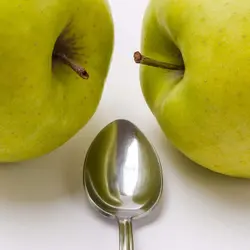
https://www.patreon.com/c/natureandscience4kids
It’s impressive to see a gorilla beat its chest. But why do they do it? We’ve tackled this question before, but there’s a new scientific scoop about this primate percussion! We asked primatologist Andrea DiGiorgio to tell us about it.
Lots of plants are smooth to the touch, and some are even soft and feathery like flowers! So why are cactuses prickly and sometimes even painful? We asked botanist Rachel Jabaily from Colorado College to answer this spine-tingling question.

About 1 out of 13 kids has a food allergy. Some are allergic to peanuts, others can’t eat dairy or shellfish or – you name it! So, why do some of us have food allergies and others don’t?Join Molly and co-host Gemma as they learn all about food allergies. First…
Have you ever looked at the keyboard on a phone or computer and wondered why the letters are arranged the way they are? The English alphabet starts with A-B-C-D-E, so why do keyboards start with Q-W-E-R-T-Y? We asked historian and museum curator Kristen Galler…
You don’t see most horses wearing pants, jackets or hats but one thing is for sure - they’re almost always wearing shoes! You know, those u-shaped things attached to their hooves. Why is that? Large animal surgeon Whitney Cutrone helps us find the answer.
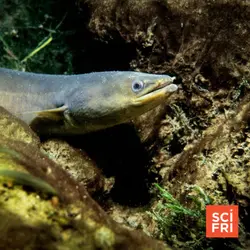
Eels have fascinated humans for thousands of years, even captivating big thinkers like Aristotle and Freud. Despite having been around for some 200 million years, eels are still rather mysterious creatures. For example, scientists still aren’t sure exactly how…
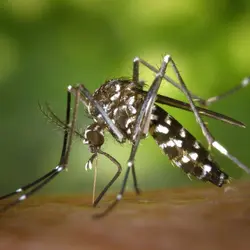
https://www.patreon.com/c/natureandscience4kids

Eyes are incredible. But sometimes they need a little help to see clearly. Enter: glasses! In this episode, we'll hear how eyes take in light and paint a picture of the world around us. We'll take a peek inside the eye to see why sometimes vision can be blurry…
Lizzie Daykin, pickle defender, joins Tiernan this week to answer Mollie's important question about grass vs spinach.
Mammals have hair to help keep warm in the cold, and in some cases - to look awesome! But why do raspberries have those little hairs all over them? They don’t get cold - do they? We asked Emily Hoover from the University of Minnesota to help us understand.
Sometimes people dream about similar things, like losing teeth, being chased by monsters, or forgetting to study for a test. Why are there some kinds of dreams that people share? We asked dream researcher Tore Nielsen to help us find the answer.
Ahhh! There is nothing worse than waking up in the middle of the night after a nightmare. Your heart is pounding, you’re all sweaty and suddenly your room seems so dark. Sometimes, you’re almost too scared to close your eyes and try to fall back asleep. What…
Who was bigger, Herbivores or Carnivores? How did Herbivores keep from being food? Which Dinos were Herbivores?
Have you ever noticed your tummy sometimes makes a little grumbly rumbly sound when it’s time for a snack? What’s up with that? We asked Dr. Lily Dara to help us find the answer.
Every year we get older… we have birthday parties and eat cake but what is happening in our bodies? Why do we get taller and grow more teeth? And why do we eventually stop growing? Nij and the kids meet Dr Lindsay Wu to follow the microscopic lives of our cell…
What crazy foods can you find at Fairs? Why are there so many foods on a stick? What is cotton candy made of?
It may seem like everyone is either getting COVID-19 this summer, or knows someone who has. That’s because for the fourth year in a row, COVID cases are experiencing a summer surge.

More than half our planet is covered in seawater. There are about six teaspoons of salt in every litre. So, where did it all come from? Nij and the kids meet Dr Katharina Fabricius to follow the journey of salty seawater and their first stop is… the clouds?
Nails – we clean them, trim them, paint them, and sometimes even wear fake ones! But why do we have them in the first place? We talked to paleontologist Alexander Claxton about the evolutionary reasons behind having nails.

“Cancer” is a dreaded word in the doctor’s office. But about 40% of us will be diagnosed with cancer at some point during our lives, the most common being breast, prostate, and lung cancer, according to the National Institutes of Health.
For the most part, flowers smell really great, right? They give off scents that are sweet, syrupy, perfumy and fresh. But they don’t all smell the same. We asked botanist Josh Felton from Colorado College why that is.
Our sun is a big fiery ball of gas. It is very bright and very hot. So hot that we can’t even send spacecraft there without them burning up! But how does the sun make all that heat? We asked physics grad student Raj Katti help us find the answer.
For over 1000 years, Rome, either in its Republican or Imperial form, was the dominant power in the Mediterranean.
According to this Cherokee legend, Unetlanvhi, The Great One, created little corn people to help the first woman on earth, with the chores. The corn people were very beautiful, but spent more time admiring their reflection, than helping out. The Creator was no…
There are lots of things we can do to relax and get ready for bed at the end of the day: take a warm bath, curl up with a book, or even sip a steaming mug of chamomile tea! But why does chamomile tea make us feel so sleepy? We asked brain doctor and sleep expe…
How do Crickets make that noise? Why do Crickets only 'sing' at night? Do Crickets wrestle each other?
If you’ve tried to get prescriptions filled in the last year or so, a pharmacist may have told you, “Sorry, we don’t have that drug right now.” That’s because there are some 323 active and ongoing drug shortages in the United States. That’s the highest number …
If you’ve ever had a ball tossed at your face, you probably flinched, tried to knock it away from your face, or jumped out of the way, right? That’s called a reflex, and most humans have them including tiny babies. We asked physical therapist Karen Litzy why t…
Have you ever been threading one leg through a pair of pants in the morning and wondered…why do we wear clothes anyway? Or wondered why pockets in clothing designed for girls are sometimes smaller than the pockets in clothing designed for boys? In this episode…
Have you ever noticed how we usually wear lighter colors in the warmer months, and darker colors once it gets cold? Like how your black shirt is perfect at keeping cozy in the winter, but far too sweaty for the summer. But why is that? We asked physicist Dr. D…
Lots of people talk in their sleep, especially kids! Have you ever heard anyone babbling away in the middle of the night? Or maybe someone has told you that you do it? Sleep talking is totally normal, but why do we do it? We asked sleep specialist Chris Wi…
A nosebleed is just what it sounds like: it’s when blood comes out of your nose. Lots of people get nosebleeds, but what causes them? We asked pediatrician Emma Gerstenzang to help us find the answer.
Why do you get Goosebumps? Why do your fingers get Wrinkly in water? Why do you have a (not so) Funny Bone?
Kirk once again takes us back to space this week to talk about Schloz's Star. Incredibly, scientists discovered that 70,000 years ago, this star actually passed THROUGH our solar system.
Are all Butterflies colorful? How does a Caterpillar turn into a Butterfly? What happens inside a Cocoon?
Have you ever tried stirring a liquid really fast with a spoon? Sometimes, it looks like it creates a tiny tornado in the cup! Why does that happen? We asked mechanical engineer Jacy Bird to help us find the answer.
Have you ever experienced the term "time flies when you’re having fun"? It’s an unfortunate reality of life that time seems to crawl by when we’re waiting for something to happen, and go too fast when we’re having a blast. We asked Ruth Ogden, a psychologist a…
If you’ve ever been caught in the rain, it probably wasn’t a big deal, right? Lucky for us, rain typically falls from the sky in small droplets. Listener Joe was wondering why that is, so we reached out to Monique Robinson of Mississippi State University to he…
The very funny Abby Wambaugh joins Tiernan this week to talk toilet rocks and answer Parker's very important question about falling asleep.
Have you ever started to fall asleep and then suddenly – whoa! – you jolt awake? What’s up with that? We asked sleep specialist Chris Winter to help us find the answer.
Where does Snot come from? Why are your ears so Waxy? Why do your eyes get Crusty while you sleep?
Let’s say you’re watching a bunch of people run a marathon. The runners are pumping their legs, sure. But they’re also swinging their arms. Why is that? And why do we swing them when walking too? We asked Rachel Adenekan of Stanford University to help explain…
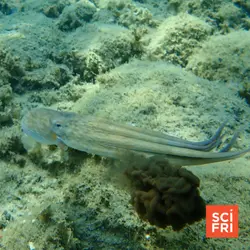
The most wonderful time of the year has arrived: Cephalopod Week, Science Friday’s annual tradition of spotlighting all things octopus, squid, and cuttlefish.
In fall we like to change up our wardrobe from shorts and T-shirts to pants and sweaters. And guess what, trees do that too! Except they change the color of their leaves. Why is that? We asked Marlyse Duguid from the Yale School of the Environment to help us f…
Matt Kirshen joins the podcast once again, to talk all about his pasta computers and answer NINA's Q about farts. Even though he's never done one. Sorry about the er...technical errors on this show...ahem.
Why do oranges have peels? Why is the inside of an orange segmented? Why are lemons and limes so sour? Why do lemons have seeds but limes don’t? Why does fruit have juice? How many oranges are in a gallon of juice? How do seedless oranges reproduce? How are or…
Humans are mammals, which means that we have hair on our bodies and heads. Sometimes, as people get older, they lose some of that head hair. How does it happen? Do hair goblins come at night and sneak away with those silky strands? Ok, it’s probably not that. …
Joro spiders are spreading across the east coast. They are an invasive species that most likely arrived in shipping containers from eastern Asia. Today, we look into why some people find them scary, why to not panic about them and what their trajectory illustr…
Popcorn is a buttery, tasty treat. You can find it everywhere, from circuses to sports games. But it’s probably best known for its starring role as a movie theater snack! So why do we eat popcorn at the movies anyway? Why not pizza or peanuts or potato chips?
If you’ve ever taken a close look at a beehive you can see that it is covered in tiny hexagons! But why is that? We asked bee researcher Jessica Kevill to help us find the answer.
Bones! We’ve got lots of them. Leg bones, arm bones, face bones, even ear bones! But…not all animals even have bones inside their bodies. So what are our skeletons for? Why do we have them? We asked pediatrician Dr. Emma Gerstenzang to help us find the answer…
Have you ever stayed up late talking to your friends while watching movies, or yelled for your teammates at a soccer match, or screamed at the top of your lungs walking through a haunted house? Maybe you woke up the next day with a hoarse, scratchy voice that …
Lots of people love sparkly, pretty things – especially precious stones, like diamonds. But who decides which stones are precious? And what makes diamonds so special? We asked geologist Marc M. Hirschmann to help us find the answer.
June 6, 1944 the Allied Forces stormed the beaches of Normandy and took the Nazis by surprise in the largest sea-to-land invasion in history. This would be remembered as D-Day and would ultimately lead to the end of World War II in Europe. However, this planne…
Have you ever been tempted to lick something frozen? Hopefully not, because your tongue could get stuck! But don’t worry, we talked to engineer Alexis Noel all about why our tongue sticks to ice, and what to do about it if that happens to you!
This spring, trillions of periodical cicadas are emerging from the ground, where they’ve spent 13 or 17 years feeding on xylem (basically, tree juice). The two specific broods emerging this year have not come out at the same time since 1803, and kids may be h…

Have you ever wondered, "Why do languages matter?"Dr. Victor Santos, author of What Makes Us Human, a poetic riddle about language, history, and culture released in partnership with UNESCO for the International Decade of Indigenous Languages, helps us uncover …
Pee is super cool! It’s 95% water. It’s sterile. And it can be a window into our overall health. But why is it yellow? We asked mechanical engineer Patricia Yang to help us find the answer.
All different kinds of giant prehistoric creatures used to walk the Earth, from 20-foot-tall sloths to sharks longer than a school bus.. They all seem huge in our imaginations, but were animals in the past actually bigger than animals on Earth now? We asked pa…
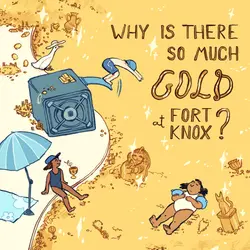
It’s our final episode of the season, Million Bazillionaires! Today, we’re answering Sadie’s question about why there is so much gold at Fort Knox. It’s one of the most secure places in the world, and Bridget and Ryan are determined to get inside! But just as …
If there’s one thing that’s generally known about sharks, it’s that they have sharp teeth. But have you heard they have to keep moving to stay alive? Why is that? In this episode we talk to shark scientist Melissa Cristina Marquez about this very question.
What would you ask for if you were granted one wish? In this Native American tale told by Cherokee storyteller Lisa LaRue Baker, the animals are each rewarded with a wish for good behaviour. All is going well, until Owl is overcome with curiosity and breaks th…
If you’ve ever banged your knee pretty badly, you might have noticed the knee swells up to larger than its normal size. To ease your pain and make the swelling go down, maybe someone handed you an ice pack. But why is it ice that does the trick to reduce swell…
https://www.patreon.com/c/natureandscience4kids
Lots of people love spicy food for that tongue-tingling feeling. But where does it come from? What’s happening in our mouths when we bite down on a jalapeño or chili flake? We asked taste and smell researcher Arthur Zimmerman to help us find the answer.
What are the different tools a Dentist uses? What is that suction thing for? What does a Hygienist do?
Earth is always moving around the sun, but does the sun move too? Or is it fixed in one place in the cosmos? In this episode, we talk to astrophysicist Brittany Kamai to get to the heart of this issue!
Most of our major divisions of time are based on some sort of natural event.
Greedy Anansi is at his tricks once again. Can he trick his friends so he can share everyone’s dinner without having to help them? Or will it backfire? Listen to storyteller Emily Hennessey tell this fun ‘How and Why’ story and find out. A good story to learn …
Tinnitus, a condition commonly described as a persistent ringing in the ears, affects millions of people around the world. In the US, the prevalence of tinnitus is estimated at around 11% of the population, with 2% affected by a severe form of the condition th…
Welcome to Episode 18 of Season 7 everyone! Everything Under The Sun has been nominated for Best British Podcast in the kids category, has moved to Bali, Indonesia, and the paperback book of Everything Under The Sun is OUT NOW!!
Bees are incredible! There are 20,000 species, and so much to learn about them. But have you ever wondered why they are black and yellow? Such a specific color palette, right? We asked Entomologist Dan Cariveau to help us find the answer.
Good morning! Rise and shine! Time to stretch and yawn and…blech! What is that taste? What is that smell?? Morning breath can be especially stinky, even if you brush your teeth the night before. What’s up with that? We asked Dr. Michael Eggert, who teaches in …
If you’re an adventurous eater you might have tried spicy cuisine, or maybe added hot sauce to your meals. Did your eyes water? Did your nose run? If so, that’s a totally normal response, and Otolaryngologist Erich P. Voigt is here to help us understand why t…
Have you ever looked at a bird turd? Like, really looked at it? If so, you might’ve noticed there’s a lot of white in there. But what is that white stuff? We asked bird expert Amanda Bender to help us find the answer.
Is Cinco de Mayo Mexico's Independence Day? What foods should you eat on Cinco de Mayo? What's the difference between a Festive Day & a Holiday?
Ryan feels a little down about not winning a podcasting award. When they get Malin’s question about why it feels so good to spend money, Bridget suggests they go on a shopping spree to cheer him up! And it works — thanks to some brain chemicals and Ryan’s Emot…
The very funny Sarah Mills takes a break from teaching worms to dance and helps Tiernan this week with an excellent question from Oona all about stink bugs.
How are Tears formed? Are there different kinds of Tears? Why are Tears salty?
How did cicadas evolve to go underground for so long? Why do cicadas spend so much of their lives underground? That’s what listeners Gus and Zachary want to know. This spring, up to a TRILLION cicadas will emerge across 16 states in the U.S., in an event that …
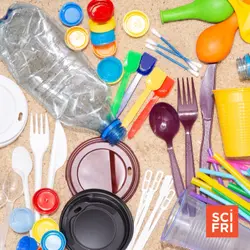
One of the biggest environmental issues in our modern world is plastic, which has become integral in the manufacturing of everything from electronics to furniture. Our reliance on plastic has led to a recycling crisis: A vast amount of plastic that winds up in…
Andrew Barnett Jones takes a break from making his anti-anti-perspirant and writing on all the TV shows (Mr Bean, Lloyd of the Flies, Boy Girl Dog Cat Mouse, Numberblocks and more) to help Tiernan answer Ave's important question about bananas.

Have you ever wondered why whales are important to the planet? On our special Earth Day edition of the podcast, we talk with Dr. Emme Devonish, an Amelia Island Whale Ambassador, as she discusses how whales contribute so many things to our ecosystem. You can …
We already know that bats are amazing creatures. They are the only mammals that can fly. The bones in their wings resemble our fingers. They account for about one in five of all mammals living on the planet. And some can fly up to 99 miles per hour! But have y…
Have you ever watched a bee flitting from flower to flower? It zips through the air like a tiny plane, making a buzz-buzz-buzz sound. But why do bees buzz, anyway? We asked bee scientist Alina Niño to help us find the answer.
https://www.patreon.com/c/natureandscience4kids
Why do people dance? Where did ballet come from? How do you make pointe shoes for ballet? How does practice make you better at things? But Why visited Dance Theatre of Harlem to get answers to these questions with company artists Derek Brockington and Lindsey …
Welcome back to Everything under the Sun everyone! We've missed you! We've been taking a little break but now we are BACK and ready for another fantastic episode.
Bread is the best. But you know what makes bread even better? Toasting it. That brown crunchy exterior with the springy chewy center can’t be beat. But how does a toaster transform bread into toast? We asked food scientist David Dominguez to help us find the a…
Governor of nits Katie Mitchell kindly helps Tiernan answer a question all about donuts.
Joe Wells takes some time out of finding the ends of rainbows to help Tiernan answer Elin's question about smell hippos.
Skara Brae is one of the oldest historical sites in the world, but its also one of the oldest mysteries. Just why did people abandon this Stone Age community way back in 2500BC? Tiernan and Athena excavate all the information for our Chief Detectives - that's …

Hop aboard the Story Train with Birdie for a whimsical journey as she uncovers the age-old tale of Rupert Rabbit's cleverness and Barry Bear's first long winter nap.
If you’ve ever jumped right out of your seat when watching a scary movie, you know that sometimes your body has a reaction to being surprised or frightened. One of our listeners wanted to know why that happens, and we asked neurologist Sarah Benish to help us …

Laughter is like a language and humans are really good at understanding it.
We’ve all suffered with chapped lips in the winter: itchy, flaking, sometimes even bleeding. Yikes! One of our listeners wanted to know how this happens, so we asked dermatologist Roxana Daneshjou to explain.
Why was the Statue of Liberty built? How is the Statue of Liberty related to the Eiffel Tower? What happens if Lady Liberty is struck by lightning?
Today our magic jeep visits our friend Hyena, who is determined to win the Queen’s special prize – a magical flute that plays on its own! The only problem is that in order to do so, he must find out what the secret phrase is. How will Hyena figure it out? Come…
Toes! They’re short and chunky, sometimes smell funky… but without them, we’d be toe-tally out of luck! We asked evolutionary anthropologist Darcy Shapiro to walk us through why we have toes, and what they help us do!
Air – we can’t breathe without it, we can’t live without it, we know it’s made up of molecules, so why is it invisible? Chemist Vicky van der Geer-Bock will help us answer this question.
Say cheese! But if you’re lactose intolerant maybe don’t eat it? Cuz any kind of milk based food will probably give you a tummy-ache! But why? We asked pediatrician Dr. Anjuli Gans why some people are lactose intolerant… and she helped us understand what it is…
How come Tails come in different sizes & shapes? Which animals rely on their Tails the most? Did Humans ever have Tails?
The sound of crickets on a warm summer evening is just so soothing, isn’t it? All those little insects in the grass, talking to each other about… well, we don’t really know! In fact, we don’t know why they chirp at all. We asked neurobiologist Jon Lambert to t…
Have you ever noticed that the moon looks different at different times of the month? Not just the shape, whether it’s full and round or a tiny sliver – but the color also looks different sometimes. Maybe it’s dark orange, or silvery white, or even a bluish tin…
How do glasses work? Why do some people need glasses and other people don’t? Why do we have different eye colors? We answer your questions about glasses and eyes in the second of two episodes with Dr. Sujata Singh, a pediatric ophthalmologist at the University…
Toothpaste is something that lots of people use to keep their teeth clean. It makes our mouths smell nice and fresh, but that’s not the only thing it does! So, why do we use toothpaste? We asked dentist Dr. Jean Star to help us find the answer.
Welcome to Episode 13 of Season 7 everyone! Everything Under The Sun has been nominated for Best British Podcast in the kids category, has moved to Bali, Indonesia, and the paperback book of Everything Under The Sun is OUT NOW!!
Today our magic jeep visits Father Anansi and his son Keku, who have a very scary encounter with a dragon! When it snatches them away and locks them up in its castle, the clever Keku must find a way to save everyone. What will his plan be?
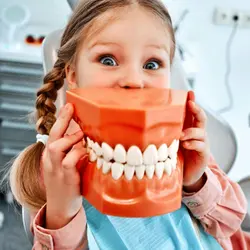
Your teeth are like a squad of superheroes inside your mouth. They help you crunch on carrot sticks, nibble popcorn and chew bubblegum. You’ve probably heard it’s important to brush your teeth to prevent cavities. But what is a cavity? And how do dentists fix …
In the winter, most of us are used to seeing bare tree branches – but some trees, like firs, pines, and spruces, don’t usually lose their needles when it gets cold. We asked forest ecologist Diana Macias to help us understand why.
There are 195 different countries in the world, and they all have different flags. Why is that? And where did flags come from? We asked flag expert Michael Green to unfurl the answers.
Why are some people Hairier than others? Why do people lose their Head Hair but not Body Hair? Are Humans Hairier than some Animals?
Ep. 47 - Kids Ask Dr. Friendtastic: Friends matter. Here's why.
If you open a book, you’ll see lots of letters that come together to make different words. Sandwiched in between the words are little dots, lines and squiggles called punctuation marks. But why do we need those, when they don’t make any sounds at all? We asked…
Have you ever noticed that when you say the same word over and over, it starts to sound funny? It’s like the word loses its meaning and just becomes weird, disconnected sounds. One of our listeners wanted to know why, and we went to linguist Shohini Battasali …
This week very funny poet Joshua Seigal takes a break from trying to play giant jenga with huge buildings to join Tiernan and answer Gavin's tricky question about age ratings.
Today our magic jeep takes us to where a Warthog has built a nice big house. But the Warthog sees the Lion from one of our old stories and he becomes very scared. The Warthog runs into his home and decides to try out an old trick he heard from the Jackal, not …

Have you ever wondered how scientists learn about the ocean? They do science at sea! We have Science Communicator Erin Winick Anthony who is currently onboard the Joides Revolution ship as the scientists study cores of the ocean floor to learn about climate ch…
What shape are our eyes? What are they made of? How do they work? What’s the point of having two eyes if we only see one image? Why do we blink? What’s the point of tears and why are they salty? We answer your questions about eyes in the first of two episodes …
Goats are extremely important animals for lots of cultures around the world – they provide milk, meat, and even warm wool. Have you ever noticed that their eyes are unusual? Instead of round pupils like you and me, their pupils are shaped like horizontal lines…
Bamboo is a type of grass that grows into big clusters of long, straight stalks. Those stalks are super strong, and are useful for making lots of things, from instruments to gardening tools, to building materials. And when a breeze blows through a bunch of bam…
Rachel kicks off this week with a bizarre tale of a parasite that invades the nests of red ants, pretends to be their queen, works the ants to death, and eats their young all in a quest to become a beautiful butterfly.
It seems like water always falls down. Rain and snow fall down from the sky. Watering cans pour water down on plants. Waterfalls – well, the water falls down! But when water is steam, it rises up. Why is that? We asked aerospace engineer Nicole Sharp to help u…
The excellent author and comedian Iszi Lawrence returns to Radio Nonsense to talk hermit crabs and help answer Beatrix's question about cupcakes.
If you’ve ever been on a long car trip, you may have noticed that you start to feel sleepy as the car moves. Is it because the seats are so comfy? Is the radio hypnotizing you? Are the floor mats sprinkled with secret sleepy dust? We asked neuroscientist Auror…
Liz Galalis escapes the depths of the back of the sofa (or couch) to help Tiernan answer Willow's important question. Plus, New Year, New Ewe!
Some teens’ personalities seem to change more frequently than the weather in April! Why is that? What’s going on in the brains and bodies of growing humans that changes how they interact with friends and family? We asked child development expert Dr. Ed Greene …
Picture this: you’re enjoying a perfect day by your favorite lake. The sun is shining, the water is calm, and everything is peaceful … until SPLASH! A fish flies out of the water like a silver torpedo and flops back down into the lake. Why do fish do that, any…
Swimming in the pool can be a blast, whether you’re floating peacefully, splishing and splashing, or doing the doggy paddle. But have you ever wondered why you feel lighter in the water than out of it? We asked physicist Xie Chen to help us find the answer.
In celebration of our 1000th episode, we're wrapping our heads around big numbers. Educational neuroscientist Elizabeth Toomarian talks about why humans' evolutionarily-old brains are so bad at comprehending large quantities–like the national debt and the size…

We visit the bedroom of one of the messiest kids we know, Harriet. She hates cleaning her room more than anything in life and it always looks like someone opened every drawer and threw all the contents into the air. But is it her fault that her room is a pigst…
Do you know how to wiggle your ears? It might seem like one of those things that some people can do and other people just can’t, but neuroscientist Steve Hackley says he thinks anyone can learn – and he’s got your instructions! Plus, he tells us why it’s poten…
Our planet is shaped like a big blue marble. But when we’re standing on the Earth’s surface, the ground looks pretty flat. So why doesn’t the Earth look round to us? We asked astrophysicist Ian Hall to help us find the answer.
When was NYE first celebrated? Why should you make lots of Noise on NYE? How is NYE celebrated around the world?
Every year, people around the world celebrate Christmas on December 25. In many countries, it is the biggest single holiday of the year.

Every morning and every night we have to get the toothpaste and our toothbrushes and clean our teeth... But why? Let's visit dentist Dr Mihiri Silva for a check up and learn why it's so important to look after our teeth.
There’s nothing like a cozy cup of tea. Have you ever noticed that the longer you leave the tea bag in, the more flavorful the tea gets? How does that happen? We asked Dr. Stuart Farrimond, a science writer, doctor and educator, to help us find the answer.
We're back for the ninth episode of Season 7! Everything Under The Sun has been nominated for Best British Podcast in the kids category, has a paperback book of Everything Under The Sun OUT NOW and has moved to Bali, Indonesia!
Malls are designed to overwhelm our brains. Add the stress of holiday shopping, and a quick trip to pick up presents could turn into an hours-long shopping spree thanks to all the ways stores use research from fields like consumer neuroscience and neuromarketi…
Mr Fibbers returns to the podcast, taking a quick break from writing cheesy lyrics about cheese, to help answer Freya important questions about fleas and geese.
What are Picasso's greatest works? Why did Picasso paint such weird faces? Who was Picasso's art rival?
Dandelions are the best! Their sunny, bright yellow blooms make amazing flower crowns. Their leaves are loaded with vitamins and nutrients. And eventually, they turn into adorable puffballs. So why do some people consider them weeds? We asked flower farmer Bo …
Words are wonderful! Pickle, bubble, and hullabaloo are all super fun to say. But some words can be hurtful, like swear words. So if we aren’t supposed to say them, why do swear words exist? We asked linguist Carolin Debray to help us find the answer.
Brilliant author and protector of potted plants Catie Wilkins joins Radio Nonsense this week to answer many important questions that may or may not be from a cat.
Salmon meat can make a delicious meal and, since it has plenty of vitamins and minerals, can be a great part of a nutritious diet. What really makes salmon stand out though is its pinkish-orange color. What's up with that? We asked aquatic biologist Dr. Keega…
Milk! It’s a cookie’s best friend. It’s a key part of a creamy cup of hot chocolate. And it’s delicious, whether it comes from a cow, a goat, an oat, or a coconut. But no matter where your milk comes from, one thing is probably the same – the whitish color. Wh…
Today our magic jeep visits Father Anansi and his son Keku, who have a very scary encounter with a dragon! When it snatches them away and locks them up in its castle, the clever Keku must find a way to save everyone. What will his plan be?
You may have learned that the colors red, yellow, and blue are called primary colors. It’s sometimes said you can use those three to make all the other colors. But can red, yellow, and blue really mix to make any color, or is there more to the story? We asked…
Can you be mixed handed? How many left handed people are there? Why was it once considered bad to be left handed?
We're back for the seventh episode of Season 7! Everything Under The Sun has been nominated for Best British Podcast in the kids category, has a paperback book of Everything Under The Sun OUT NOW and has moved to Bali, Indonesia!
Today’s question was sent in by a curious listener who wondered why fluffy, sugary-sweet cotton candy dissolves on your tongue. We asked food scientist Craig Sherwin to help us find the answer.
A conversation with Rachel Lord from YouTube Australia about their HIT PAUSE series of educational videos - encouraging kids to stop and consider the source of information they're getting online, as well as pausing and thinking about the consequences of pressi…
For the past 50 years, visitors to the Smithsonian National Zoo in Washington, D.C. were able to see giant pandas. But recently, China asked for those pandas back. (Technically, all pandas in the United States are considered “on loan” from China.) With pandas …
We're back for the sixth episode of Season 7! Everything Under The Sun has been nominated for Best British Podcast in the kids category, has a paperback book of Everything Under The Sun OUT NOW and has moved to Bali, Indonesia!
All of the planets in our solar system, and plenty of the moons, are named after gods or other figures from ancient Roman mythology. Have you ever wondered who picked those names? And why is the theme Roman gods, and not famous kings, favorite cartoon characte…
When you’re an only child, it might feel nice to have all the attention for a few years until – DUN DUN DUN! – a little sibling comes along. Sometimes it feels like babies get all the attention. Why is that? To help us find the answer, we asked Dr. Ed Greene, …
Tiger managing, moon visiting Kristina Grosspietsch (writer for the Story Pirates podcast) joins Tiernan this week to answer a very insightful question from Evie about potatoes.

The International Space Station, (ISS) orbits the Earth 16 times every day. But it's so much more than just a spacecraft. The ISS is a laboratory in space that provides awesome information about living and working in microgravity. Listen to Erin Winick Anthony…
Ever find yourself staring at a shiny jewel? Or wowed by the glistening paint on a freshly washed car? Or inexplicably drawn to a magazine with a glossy cover? You are not alone. Humans love shiny things. But why is that? We asked Bauer College professor and m…
The excellently funny top sleep performer Nick Vatterott joins Tiernan this week to talk about bellybutton smells and answer Keira's very important question about ants.
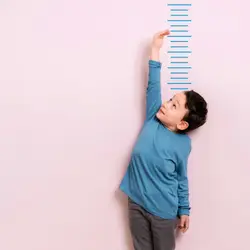
Join Molly Bloom and co-host Ishalo as they learn about the ingredients we need to grow – and why sometimes the growing seems slow! They’ll chat with Dr. Diva de León Crutchlow about sleep and hormones and help Sanden take care of Dwayne the 5-year-old brain. …
Why do we celebrate birthdays? Why do we have birthday cakes? Why do we blow out candles on our birthdays? Why are our birthdays on the same date but a different day of the week each year? This episode has answers to all of your birthday questions - plus we he…
Do you ever have trouble putting away your tablet or turning off the TV? Us, too! Lots of people end hours every day using screens – but why do we like them so much? And why is it so hard to turn them off? We asked University of Minnesota professor Jodi Dworki…
Fall is finally here! For much of the world, that means falling leaves, cozy sweaters, and lots and lots of apples! There are over 7,000 species of apples grown worldwide, and they’re all unique! But how are they able to come in so many different colors? We…
Lee, Rolo and Smitty start tracking down the other members of the Story Pirates in NYC, starting with Meghan, who is starring in her very own Broadway show alongside a theatrical ghost (Heléne Yorke). Featuring two new stories: ‘Why Are There So Many Commercia…
Explore the dark with Molly and co-host Sasha! They’ll chat with psychologist Dr. Sandy Pimentel about why it’s totally normal to be afraid of the dark and hear from Mr. Bonejangles about why it’s the bone-a-fide best! To round out their adventure, producer Ni…
Have you ever put a bag of delicious crunchy apple slices in your backpack, only to discover they’ve turned brown by lunchtime? What’s up with that? We asked fruit tree expert and Washington State University associate professor Lee Kalcsits to help us find the…
As a kid, host Aaron Scott would dress up for Halloween as an older version of himself — complete with a cane, a set of polyester britches and painted gray hair. These days, that costume is becoming a bit more of a day-to-day reality. At least, the gray hair i…
Why do some people like haunted houses and scary movies? What is fear? Why do humans have fear! Why do we get goosebumps, blink a lot and scream when we’re scared? Why are some of us afraid of what’s in our closet or under the bed at night?
That spider you squished? It could have been used for science! Today, we're bringing you Halloween a little early – Short Wave style! Host Regina G. Barber talks to Anil Oza about the scientists reanimating dead spiders: How they do it and why this might one d…
'Why do annoying groan ups not fill your entire plate at lunchtime?' asks Lois. Luckily John Luke Roberts is able to take a few mins away from his successful Beanz supermarkets chain to help answer.
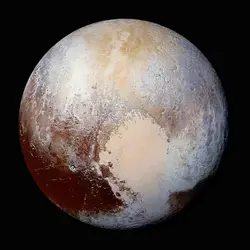
Pluto is tiny, icy, and used to be the ninth planet in the solar system. Used to be. So why isn’t Pluto a planet anymore?
It’s pretty easy to tell when someone didn’t get enough sleep and you may have even felt the warning signs yourself. Simple things might feel annoying, or more difficult and you might not feel like dealing with anything or anyone. Have you ever asked yourself …
Here on Short Wave, we're getting into the Halloween spirit a little early with a look at the world's oldest mummies. They're found in modern-day northern Chile. The mummies are well-preserved, so over the past 7,000 years, some have been exhumed for scientifi…
Today our magic jeep takes us to a dispute between the sun and the water! Many years ago the sun and water were great friends, and both lived on the earth together. So how did their fight impact the way we see the sun and moon today? Listen and find out!

The United States and Canada are like two siblings. They live next to each other, have the same parents, and are a lot alike.
We're back for the fifth episode of Season 7! Everything Under The Sun has been nominated for Best British Podcast in the kids category, has a paperback book of Everything Under The Sun OUT NOW and has moved to Bali, Indonesia!
What exactly are atoms? What are atoms made of? Can an atom be split apart?
Younger people have lots of questions about older people, like: Why do we age? Why do people get gray or white hair? Why do older people have wrinkles? Why do older people have veins that stick up? Why are older people more tired? Why do some people get shorte…
The last several decades have taken a toll on the oceans: Some fish populations are collapsing, plastic is an increasing problem and climate change is leading to coral bleaching — as well as a host of other problems. But marine biologist and World Economic For…
In our previous episode, Bridget promised Ryan she’d take him to Happy Land Theme Park and Resort. And Bridget keeps her promises! It’s the perfect place to answer Henry’s question. He wants to know why some jobs get tips and others don’t. This proves to be a …
What causes mold to grow on certain foods? Is mold bad for you to eat? Should you just scrape the mold off before eating?
Ep. 30 – Michael, Age 10: Why do some kids push others around? | Getting positive versus negative attention
We're back for the third episode of Season 7! Everything Under The Sun has been nominated for Best British Podcast in the kids category, has a paperback book of Everything Under The Sun OUT NOW and has moved to Bali, Indonesia!
What were stuffed animals once stuffed with? How did 'stuffies' become so popular? Who are the most famous stuffed animals?
More than 5,000 square miles of central California coast could soon become the newest national marine sanctuary in the United States. It could also make history as one of the first federal sanctuaries to be initiated by a Native American tribe—the Chumash—and …
In-between saving lost balloons and doing a one person conga, Susan Harrison joins Tiernan to answer Etienne's important question about t-shirts.
It's all about bikes in this episode of But Why? How come bicycles stay up when you're riding, but fall over once you stop? We turn to Andy Ruina, professor of engineering at Cornell University, for the scientific answer. We also learn how a bike chain works a…
The brilliant Chris Grace joins the podcast on his way to Jupiter to answer Matilda's questions about crisps cutting her mouth and the sun burning her eyes.
Today our magic jeep arrives in a place where a bat is going on a journey to visit his father-in-law, but he needs help to carry all of his things. The mother sheep agrees to let her young lamb journey with the bat, but the bat isn’t too kind to his young comp…
Despite being on fire and floating through the sky, the fantastic Helen Arney still has time to join Tiernan in answering questions this week from Kevin, Stella and her mum.
Knock, knock. Who's there? Another episode of Mysteries of Science!
How was the Metric system invented? What are feet and meters based on? Which Measurement system is better?
In which we metaphorically enter the UCLA Language Acquisistion Lab's recording castle, guided by linguistics researcher Dr. Megha Sundara. NPR science correspondent Sydney Lupkin temporarily takes over the host chair to talk to Sundara about all things baby …

If you have ever looked at a map of the Caribbean, you might have noticed that the tiny islands in the Lesser Antilles consist of a whole bunch of tiny, independent countries.

Both in his everyday life and in his videos, comedy content creator Kenzo Mizumoto (@kenzomizumoto) loves to challenge stereotypes in a fun way. Born in Brazil to a family of Japanese descent, and currently living in London, Kenzo has found success on Instagra…
How did flying by Airplane become popular? How are giant Airplanes able to lift off? What are Airplanes made of?
This week, Kirk talks about how Carl Linnaeus thought there were species of Wild humans and Monster humans.
How do Fireflies make light? Do Fireflies communicate by glowing? Are Fireflies energy efficient?
Why is it that some people have allergies when others don’t, even if they’re in the same family? How do allergies work? Can you be allergic to water? Why are some people allergic to cats and dogs? Can you grow out of your allergies? We’re joined by pediatricia…
New gravitational waves, why orcas might be attacking boats and a new robot prototype inspired by animals: it's all in our latest roundup of science news, with All Things Considered host Ari Shapiro, Regina G. Barber and Geoff Brumfiel.

Welcome to The Eagles View: Summer Edition. Alex will be hosting this episode and he will be joined by Bella, Blake, Ruby and Yacoub to reflect on what we learned this past year at Emerson. Here is a taste of what you will hear before you go back and enjoy you…
The absolute villain that is Rufus Hound tries to destroy the podcast this week, while also answering Amy, aged 10's great question about pigs.
What were the first Soda Pops? How do they get the bubbles into Soda? Were early Sodas actually used as... medicine?
Why do people laugh when they get tickled? Why are some parts of you more Ticklish than others? What are the two types of Tickles?

At the end of each day, your arms and legs feel heavy and your eyes begin to close, your mouth stretches open to do a big yawn and you drift off to sleep.... But why? Nij and the kids meet Dr Jasneek Chawla to figure out what makes us sleep and why we have to!
How was the American Flag designed? What does Flag Day celebrate? What do the colors on Flags stand for?
Tom Little takes a break. sort of, from eating peas to help Tiernan answer questions from brother Etienne and Remy about houses looking like drills and colours being called colours.
How did Roblox start? What are the most popular Roblox games? How do you keep from looking like a 'Noob'?
Why is Tesla considered one of the greatest inventors? What were Tesla's coolest inventions? What was the electricity war between Tesla & Edison over?
Why do people spend so much time on social media? But Why answers kids' questions about social media and screen time and we learn about how to be a good citizen online with Devorah Heitner, author of Screenwise: Helping Kids Thrive (and Survive) in Their Digit…
Big questions have been asked by Elise about broccoli. Only one expert can answer such things and that man is Alisdair Trembley-Birchall, who joins the show to help and also talk about wall destroying and storm naming.
Ice in Antarctica is melting really quickly because of climate change. That's driving sea level rise around the world, and the water is rising especially fast in the seaside city of Galveston, Texas — thousands of miles from Antarctica. Why do Antarctica and T…
Children are highly inquisitive and are always asking questions.
Charlotte has asked 'why do leaves change colour in the Autumn?' Luckily the very funny Tess Waters is in New Zealand where it is nearly Autumn so she joins Tiernan this week to explain.

Did you watch the Orion spacecraft come back from its trip around the Moon? Besides the parachutes, what is one key piece of the spacecraft that helps to protect the astronauts upon re-entry? The heat shield!! But just how is a heat shield made and why is it s…
If you were to ask most people what the very first invention that humans came up with is, many of them might say the wheel.
Why do wolves howl at the moon? Do wolves have different howls? How were wolves domesticated into dogs? How do wolves run fast for so long? What kind of habitats do wolves prefer? Why are people scared of wolves? Do they eat people? How do we protect them? But…
Briony Redman and Paul Foxcroft arrive straight from dealing with a foghorn outbreak, to answer Rhys's very serious question about hedgehog etiquette. Plus: An exclusive behind the scenes look at Radio Nonsense. Sort of.
Race is a social construct — so why are DNA test kits like the ones from 23andMe coded like they reveal biological fact about the user's racial makeup? This episode, Short Wave Scientist in Residence Regina G. Barber talks to anthropologist Agustín Fuentes abo…
Text me and let me know any topics you would love for me to talk about on the show! I can't wait to hear! xo, Laura
Why was the Statue of Liberty built? How is the Statue of Liberty related to the Eiffel Tower? What happens if Lady Liberty is struck by lightning?
On this award winning show with Molly Oldfield discover the answers to three questions sent into Everything Under The Sun by children around the world!
A Dying Planet Offers A Peek Into The Future
Is Cinco de Mayo Mexico's Independence Day? What foods should you eat on Cinco de Mayo? What's the difference between a Festive Day & a Holiday?
All of us have some sort of mental map inside our heads for how the world is laid out. North America is north of South America. Europe is west of Asia. et Cetra.
Joz Norris is unable to work out how to leave his room, but luckily he has his podcast kit in there so could help Tiernan answer ???'s question about not jumping jumpers.
Why has Scotland given children the strongest rights in the UK?
Why are babies small and grownups big? Why are babies so helpless, instead of little versions of adults? Do babies know they're babies? How do babies grow? How do babies learn to talk?
On this award winning show with Molly Oldfield discover the answers to three questions sent into Everything Under The Sun by children around the world!
The excellent Bec Hill returns to Radio Nonsense to answer Emma's question of 'why are you so funny?' and also discuss how to wrangle rogue washing machines properly. Plus back at CC4K HQ, Tiernan is reading more of your messages.
How were Blue Jeans invented? What makes Blue Jeans different than other pants? How many styles of Blue Jeans are there?
Do you have a favorite food that your friend doesn't like at all? Do you look at what your parents are eating and say, "No, thank you!" Well, you’re not alone! Lots of people have different food preferences. But why do some people like certain foods and others…

Sharks are known for their big toothy "grins". But what do we really know about shark teeth? Dr. Lisa Whitenack, associate professor at Allegheny College and a shark expert, is here to chat with us about a few of the very interesting shark teeth she has disco…
PalpatineEvil wants to know about flying monkeys. In between dealing with criminal giraffes, Matt Highton is the man that knows all about this so he joins Tiernan to answer all.
One of the things that makes blood so special is we can share it with other people! Scientists and doctors have figured out safe ways to take the blood from one person and put it into the body of a different person who needs it. That’s called a transfusion. Wh…
The phenomenon of zoonotic spillover — of viruses jumping from animals to people — is incredibly common. The question is: which one will start the next pandemic? NPR science desk correspondent Michaeleen Doucleff brings us her reporting on Influenza D, an eme…
To really understand the human brain, scientists say you'd have to map its wiring. The only problem: there are more than 100 trillion different connections to find, trace and characterize. But a team of scientists has made a big stride toward this goal, a comp…
Insects can live almost anywhere: backyards, mountaintops, scorching hot deserts, underwater, even on Antarctica! There are more than a million different species out there, from speedy dragonflies that zip through the air as fast as a car to rainbow-colored be…
Today our magic jeep takes us to visit our old friend Anansi, who seeks the help of a magic mushroom in order to create rain for his dry farmlands. But when Anansi accidentally destroys the magic, he’s left fearing the consequences. How will he wiggle his way …
What is Hibernation? How do bears prepare to hibernate? What happens if you wake up a hibernating animal?
Why do people have blood, what is it, and what does it do? How do our bodies make new blood? Is it red or blue? Why does blood taste like metal? And why do we have different blood types? Our listeners have a lot of questions about blood. We learn about blood w…
A few weeks ago, raw data gathered in Janaury 2020 from Huanan Seafood Wholesale Market in Wuhan, China — the early epicenter of the COVID-19 pandemic — was uploaded to an online virology database. It caught the attention of researchers. A new genetic analysis…

Hey Gen C Changemakers. This is Generation Carbon. The podcast where kids like you, help grownups like us, save the planet.We know you have tough questions about climate change, and we believe you deserve the answers!

Have you heard the expression “dogs are people’s best friend”? Where did it come from? And why are dogs and humans such great pals? Molly and co-host Kha-ai jump back in time to learn how dogs became humans’ best friends, and answer the question why do dogs wa…
How were Doughnuts invented? What shape were early Doughnuts? Why do Doughnuts have holes in the center?
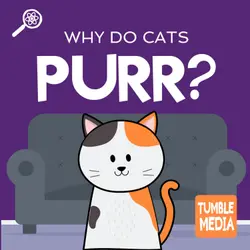
We're working on a special project that we'll announce in our next episode! Enjoy one of our favorite episodes while we make it ready for you.
Fresh from the Big Small Pond and Horrible Histories on CBBC, Ethan Lawrence joins Tiernan to help find out just why oh why, as asked by Ben aged 10, glass is see through. Plus an exclusive documentary about stinky hippos from Glavid Smattenburgcake.
In our final episode of the season, Bridget and Ryan get a question from Will in Ohio and are taking a cross-country road trip to answer it. Will wants to know why there are so many of the same stores. From Starbucks to Home Depot and all the McDonald’s in bet…

Friendship rules! Friends help us work through problems, keep us company and bring joy to our lives. Making friends might have also helped our prehistoric ancestors survive and thrive! Still, friendship can be tough sometimes. In this episode, we’ll answer you…
Who invented the Pencil? Why do Pencils have numbers on them? Do Pencils really contain lead?
For this week’s question, both Henry and Nathanial wanted to know why workers don’t get paid the same. Ryan and Bridget help break down what’s known as the “wage gap” with the help of the Vindicators superhero squad who are on a mission to make pay more fair. …

Gabriel refuses to go down without a fight. Though he also can't help but wonder if all of this trouble is even worth it. Maybe he should never have listened to what grownups always talk about at the dinner table.
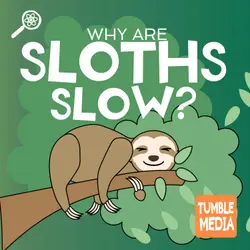
Why are sloths so slow? We’ll find out how one sloth scientist got crafty and discovered why slowness is a sloth’s secret to survival. Rebecca Cliffe, founder of the Sloth Conservation Foundation, shares the story of her quest to study these sneakily stealthy …
Why we have juries and are they a good thing?
The superb fish singing teacher and mole yeller Alasdair Beckett King joins Radio Nonsense to help answer a Royal Pooemoji's question of 'Why????'. Back at CC4K HQ, Tiernan is trying to talk more slowly.
https://www.patreon.com/c/natureandscience4kids
Let's be honest, sometimes listening to grownups talk at the dinner table can be boring. In this story, Gabriel also discovers that listening to grownups talk can lead to strange things, like running for Mayor of the city.
Fresh from rediscovering Atlantis, Sharlin Jahan very kindly joins the podcast to answer Archie's important question about slugs and snails. Back at the HQ, Tiernan reads an epically long joke that has been brilliantly sent in by Amy.
How many different types of Flamingos are there? Why do Flamingos stand on one leg? Do people really eat... Flamingo poop?
On a trip to Washington, D.C., Bridget and Ryan take this question from Oliver in Illinois: Why do different countries use different currencies? There’s the U.S. dollar, the Mexican peso and Japanese yen, just to name a few. This week, we’ll explain why so man…
Season 5 may be over, but the Story Pirates are not going away! Until the debut of season 6 later this year, we are releasing a brand new story every week. This week, we bring you a story about the terrifying truth behind a common phrase, written by a 10 year …

https://www.patreon.com/c/natureandscience4kids
In the wake of the massive earthquake in Turkey and Syria, many scientists have been saying this area was "overdue" for a major quake. But no one knew just when: No scientist has "ever predicted a major earthquake," the U.S. Geological Survey says. Even the mo…
Today our magic jeep visits our old friend Spider, who is up to no good! After lying to his brother about working on a farm, Spider is faced with a problem when he suddenly asks for proof. Will he be able to wiggle his way out of this sticky situation, or will…
What makes a Story... a Bedtime Story? When did people start telling Bedtime Stories to help kids fall asleep? What were the first Bedtime Stories?
Edy Hurst manages to find time away from his complicated horse based court case to come on the podcast and discuss Jared's question 'why is me alive?' Meanwhile, Tiernan is missing a lot of socks.
What do bison, moose, Gila monsters, parrots and snails have in common? Well….nothing, except they all appear in this episode! We’re rounding up some of the animal questions you’ve sent us lately. Why do bison walk slow but run fast? What’s the thing hanging d…
Meghan creates a tech company for Nimene’s inventions. Featuring two new stories: “Why You Should Never Feed a Potato Chip to a Kangaroo,” a cautionary tale about marsupials' quest for world domination, written by Tyson, an 11 year old from Utah, and “The Neve…
Are Fingernails really made from non-living cells? Why is there a white half-moon on your Fingernails? Why do they grow longer than we need them to?
What exactly are lice? How do lice feast on your scalp? How can you get rid of lice (or avoid them in the first place?)
When airplanes were developed in the early 20th century, the technology developed rapidly.
New Year’s Day is not only the day we turn over a new year on the calendar, but also a day where people start resolutions, companies begin new budgets, and everyone screws up writing checks.
We have a very important question this week from Sir Goose Bagel The Third who urgently asks 'Why did a frog turn me into a goose?' Rob Kemp takes a break from his incredible key beeping to join Tiernan in trying to help Sir Goose.
Why are some Farts loud & others quiet? Why do Farts smell? Should you hold in your Farts?

Are you ready to turn back time? Let's wind back the clock with Dino Dome's Fact-o-saurus, Tim Richards, and follow in some ginormous footsteps to learn how dinosaurs got so big!

Sometimes a beach can look full to the brim, other times the sand seems to go for miles. Is the water going somewhere else? Why does it change throughout the day? Let's find Associate Professor Ana Vila-Concejo to find the answers in some stellar places...
'Why don't cars fly?' is this week's question from Not Sus. Hatty Ashdown takes a few minutes away from her coughing and wondering what is in her attic, to give us her wisdom on the matter.
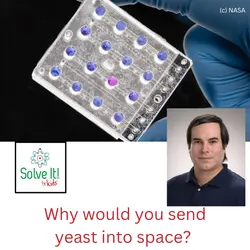
Yeast is something you probably eat every day (it's in bread!) but would you ever think about sending it into space? That's exactly what Dr. Sergio Santa Maria, the lead scientist for NASA Ames BioSentinel program is doing. BioSentinel is NASA's first biologic…
Why do armadillos have shells? How do they roll into balls? Why are sloths so slow? Can sloths actually move fast? How do they defend against predators? Why do they have such long nails? We learn about two unique looking animals in this episode: sloths and arm…
On this award winning show with Molly Oldfield discover the answers to three questions sent into Everything Under The Sun by children around the world!
We speak with Sharon Flanagan from Fitness for Kids about how when we exercise our bodies produce endorphins – also known as the Happy Hormones – so it’s no wonder regular exercise is so important to keep not just our bodies, but our minds healthy too!
On this award winning show with Molly Oldfield discover the answers to three questions sent into Everything Under The Sun by children around the world!
A continental episode this week as Marcel Lucont joins the podcast - even if he's not sure he wanted to - to help answer this week's question from Jenny: 'Why do some annoying grown-ups, when you ask them for a drink, why do they fill your cup less than half-w…

What is happening to the plants around us as we head into autumn and winter? Experts Ana Claudia and Neil talk us through the science featuring special guest Darrell!
Children are highly inquisitive and are always asking questions.
On this award winning show with Molly Oldfield discover the answers to three questions sent into Everything Under The Sun by children around the world!
**WARNING – this episodes mentions the Manchester bomb attack, self-harm and death in the context of inquests**
'Why are baboons bums so bbbbbbbbiiiiiiiiiiiggggg and rrrrrrrreeeeeeeedddddddd?' is this week's big bum question from Chrissie the Sheep. Abigoliah Schamaun has found time in her busy podcast interview schedule to explain all. Back at CC4K HQ, it won't stop ra…
Last month, Short Wave explored the evolutionary purpose of laughter. Now, we're talking tears. From glistening eyeballs to waterworks, what are tears? Why do we shed them? And what makes our species' ability to cry emotional tears so unique?
Today our magic jeep takes us to a land ruled by King Eyo, who watches over animals and humans alike. When he invites everyone to a large feast, the worm group starts an argument by calling themselves the best. Once everyone gets upset, King Eyo must find a wa…
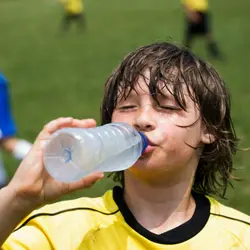
When most bodies get hot, sweat starts pouring out. Why? In this episode, we'll hop in the Amazing Truck of Minimization (ATOM) to see how sweat glands work from the inside out, take a peek back in time to figure out how we evolved to be so sweaty, and we'll f…
How did Halloween first start? How has Halloween evolved over the years? How did Halloween go from serious to fun?

Did you ever wonder why we need sleep? And what happens to our brains as we sleep at night? We have the awesome Dr. Nancy Cowdin Hennessy, neuroscientist and teacher who explains just what our brain does when its sleepy. This is an episode not to be missed! It…
Georgie Morrell takes time out of her unbelievably busy schedule to answer ???'s question about why unicorns are called unicorns, which means one corn and not unihorns as they have one horn. Back at CC4K HQ Tiernan is waiting for the Autumn leaves to fall.
On this award winning show with Molly Oldfield discover the answer to three questions sent into Everything Under The Sun by children around the world!
Want to do some real science right at home? Our friends at MEL Science have you covered with their amazing monthly science kits -- and a special discount for our Smartypants. Use code SMARTY at MEL Science or just go to this link and get started doing science,…
Laughter: We do it spontaneously, we do it forcefully, we do it with each other and by ourselves. But why did we evolve to giggle in the first place?
'There is a Mother's and Father's day but why isn't there a children's day?' asks Ned. Tiernan managed to get Mr Fibbers to take time from his very busy schedule of printing off the internet to answer this important question. Meanwhile at CC4K HQ, Tiernan is i…
Iszi Lawrence returns to the Radio Nonsense podcast to answer Emmett's very good question about 'why are flats called flats when they aren't flat?' Meanwhile Tiernan can't work out why CC4K HQ is so very quiet.
Hi! It's the Trusty Narrator!

Have you ever looked up at a tree and wondered just exactly how tall it really is? We can help with that! Brian Campbell, NASA Senior Earth Science Outreach Specialist at NASA Goddard Space Flight Center's Wallops Flight Facility in VA, tells us about the chal…
When a disaster like Hurricane Ian destroys a house, the clock starts ticking. It gets harder for sick people to take their medications, medical devices may stop working without electricity, excessive temperatures, mold, or other factors may threaten someone's…
When's the last time you thought about your bladder? We're going there today! In this Short Wave episode, Emily talks to bladder expert Dr. Indira Mysorekar about one of our stretchiest organs: how it can expand so much, the potential culprit behind recurrent …
Why do sharks have multiple sets of teeth? Why do sharks lose so many teeth? Do sharks eat fish? How do sharks breathe underwater? Do sharks sleep? Give a listen to this totally jaw-some conversation about sharks with Dr. Kady Lyons, shark researcher at the Ge…

It seems an almost heretical question, but it’s gotta be asked! Why are NZ and Australia different countries? You might be surprised to know that we did consider joining up with our mates across the Tasman back in the late 19th/early 20th century, but it never…
New episodes come out every Tuesday for free, with 1-week early access for ABF Fam subscribers.
'Why are bees always angry?' asks Millie aged 174 farting gorillas. A big question and one that can only be answered by very funny poet Joshua Seigal inbetween getting in trouble for making cat pancakes. Back at CC4K HQ, Tiernan knows its back to school for ev…
Glass is a magic thing that is both solid as a wall and clear as the air. It starts out as sand and with tons of heat, and a few key ingredients, it becomes the super useful material we know and love. In this episode we look at how glass is made, why it's clea…
New episodes come out every Tuesday for free, with 1-week early access for ABF Fam subscribers.
Ad-Free Subscription to HEYMRJIM Podcasts
What do your Armpits do? How do they help keep you cool? What are lymph nodes?
Why do we feel pain when we get hurt? What is pain? Why do we cry when we get hurt? Why do we say ow or ouch? We’re learning about how pain works with Joshua Pate. He’s a physical therapist and author of a forthcoming children’s book series about pain.
'Why is gold not man made?' asks Aden, aged 8. Who better to help with this than Helen Duff with her expertise on roller skates but for your bum? Meanwhile at CC4K HQ, Tiernan is bored.
After hearing Ryan and Bridget talk about money all season, one of our young listeners wants to know when she can start earning some money. This week we’ll look back to the time when lots of kids had jobs and learn about what’s changed and why. Along the way, …
What makes spicy foods spicy? What is the Scoville Heat Scale? What are the spiciest peppers in the world?

You've probably seen photos from your first birthday. Or maybe you heard about the time you got spaghetti sauce all over the walls when you were two. The grown ups around you remember these things, so why can't you? In this episode, we'll find out how our brai…

Hey Gen C Changemakers. This is Generation Carbon. The podcast where kids like you, help grownups like us, save the planet.
Why do friends care about each other? How do you make friends? Can you have more than one best friend? How do you deal with a bully? We answer questions about friends and bullies with Dr. Friendtastic (also known as Eileen Kennedy-Moore), a psychologist and au…
The United States and Canada are like two siblings. They live next to each other, have the same parents, and are a lot alike.
Today, you’ll learn about why symmetry dominates the natural world, how it may be possible to conserve water using solar panels, and why growing vegetables might soon involve a trip to the Moon.
How are crickets so loud? Why do they chirp at night? How are they different from grasshoppers? We’re talking crickets today with Karim Vahed, a cricket and katydid expert and entomologist (bug scientist) at the University of Derby in the United Kingdom. Profe…
What factors determine Human Growth? When do you grow the most? Is there a way to know how tall you'll be?
https://www.patreon.com/c/natureandscience4kids
It’s a rainy day, the perfect time to answer a question from one listener who started looking at the bottom of his toys. A lot of them say “Made in China,” but why? Ryan Perez and Bridget Bodnar get some help from some familiar (but legally distinct!) toy frie…
We’re 50 episodes in so Molly Murphy, writer, producer and composer for Dorktales Storytime—and our host, Jonathan Cormur’s sister—has a special message about why storytelling and imagination are so incredibly important to the Dorktales’ Team:
Brad, a girl, has sent in two very urgent questions on bike gears and the beginnings of language. And so, Nat Luurtsema joins Tiernan on Radio Nonsense to answer all.
What are fireworks made of? How do they explode into cool colors & shapes? How have fireworks evolved?
Ryan and Bridget tackle one of their most challenging questions to date: Why is it so awkward to talk about money? Using a board game that comes to life and a catchy song, they’ll find an answer that’s better than “Because I said so” and give kids (and their p…
This week Molly Oldfield is joined by Merlin Sheldrake author of Entangled Life to find out about fungi, why they grow, how many blue whales worth of spores they create and where you'll find the biggest organism on earth, which is a fungi.
50% Off Amazing Science Kits - MEL Science, science delivered to your doorstep! Code=WHOSMARTED https://melscience.com/sBHm/
50% Off Amazing Science Kits - MEL Science, science delivered to your doorstep! Code=WHOSMARTED https://melscience.com/sBHm/

Laughing makes us feel real good, whether you’re in on the joke or not. But does it serve a specific purpose? Why do we find some jokes hilarious and others to be total groaners? In this episode, Tai peels the science and sociology of laughter down to its evol…

Today we're talking about something that all of us do. They can be loud or soft, sometimes smelly and almost always funny. We're talking about fluffs, toots, air biscuits - yes, farts! - and why they come out of our bums. Join Professor Kourosh Kalantar-Zadeh …
'Why do monkeys eat bananas? And how do they peel them?' asks Cooper. Luckily Stephen Halkett joins Tiernan because he knows the answers, even though he has no clue what spin classes are. Plus Tiernan's trying to make a new catchphrase.
10% off First Month of Therapy on your schedule, from anywhere - for adults & teens. www.BetterHelp.com/WhoSmarted Better Help
All of us have some sort of mental map inside our heads for how the world is laid out. North America is north of South America. Europe is west of Asia. et Cetra.
For the past 50 years, visitors to the Smithsonian National Zoo in Washington, D.C. have been able to observe giant pandas. It’s one of the few places in the United States to see these black and white bears. For our latest episode we took a field trip to the z…
Who came up with the concept for Water Slides? How do Water Slides work? Where can you find the craziest Water Slides?
The very funny Eleri Morgan joins Radio Nonsense to answer Sir Poopington Fartworthy's questions on why Lego doesn't do big bum pieces and why you never hear famous people farting. This episode comes to you from the special location of the Comedy Club 4 Myths.
Who invented socks? What were the earliest socks like? Did early humans actually stuff leaves and grass in their shoes?
To listeners of this podcast, it’s no secret that Tai loves math. But he knows that a lot of people, including his friends, definitely don’t feel the same way. In this episode, Tai uncovers why math gets such a bad rap, and if there’s any truth to the well-wor…
Why do you burp? And do party poopers poop? Asks a totally legitimate camel. The very funny Sikisa joins Radio Nonsense to answer all and regale us with tales of being an expert yak whisperer.
Abortion access has been leading political news in recent weeks. But what happens when we look at abortion as a health care tool that betters public health? Today, Emily talks to Liza Fuentes, a Senior Research Scientist at the Guttmacher Institute, a research…
Why were early Balloons made from cat guts & cow intestines? What gas made early Balloons explode? Besides parties, what else can Balloons be used for?
Pizza, chips, gummy worms and wings — these are a few of Tai’s favourite things! He just can’t get enough of their sugary, fatty, salty goodness, even though he knows they’re not exactly good *for* you. But why does he find those foods so irresistible in the f…
Who actually invented the French Fry? Are French Fries healthy for you? What planet would be the best to make French Fries on?
How many times a day should you Poop? Why does Poop come in different colors? Why is your Poop shaped liked that?
How far back can you remember? I bet you can't remember being a baby. Most people can't and it's a total mystery as to why.
Is a Narwhal's long tusk actually a tooth? Which animal is the Narwhal a relative of? How long can Narwhals stay underwater? For free home activities sign-up at www.WhoSmarted.com
Why do flowers bloom? How do flowers grow? Why are flowers different colors? Why do people find flowers beautiful? How are seeds made? Why do plants grow from seeds? Why do we put seeds in the garden? We’re answering your questions about seeds and flowers with…
Fireball happily swam back and forth in the strawberry juice. Suddenly, he noticed something strange.
Why would a scientist COUNT lizard scales? Listen to this FUN and fascinating show with Zoologist Sarah Skebba, creator of EdZOOcating as she talks about all of the amazing animals she has been able to work with. It just might inspire YOU to become a zoologist…
Beavers have long been considered pests by landowners and government agencies. But now, many are starting to embrace them. Today on the show, Host Aaron Scott tells Host Emily Kwong how these furry ecosystem engineers are showing scientists a way to save thr…
When Kasha Patel decided to try out stand-up comedy, she was told to joke about what she knew. For her, that was science. Today on Short Wave, Kasha talks to host Emily Kwong about how she developed her sense of humor, how she infuses science into her comedy a…
Why do colors exist in the world? That’s what Phoebe wants to know. The answer might change how you think about the colors that you see! Neuroscientist and artist Bevil Conway bends our minds and our eyes, to show us how colors are the ultimate optical illusio…
Which country invented the Pretzel? What were early pretzels like? Are Pretzels seen as a sign of good luck and fortune? For free home activities sign-up at www.WhoSmarted.com
Why are some people right-handed and some are left-handed? And what’s up with some people being ambidextrous (equally good with both hands)? Why, in the past, did some people try to make left-handed people use their right hands? We talk with Chris McManus, pro…
The Future of Sustainable Farming Could Be Cold Plasma
Why do pigs snort? And why do we call their snorts “oink” in English? We’re taking our exploration of animal noises in two directions today. First we’ll learn about why we use different words to describe animal noises, depending on what language we’re speaking…

Ever wondernhow meteorologists get information to track hurricanes? Meet a real-life Hurrican Hunter! LCDR Rebecca Shaw is a pilot who flies into hurricanes to gather information for NOAA and other weather organizations. Listen to learn about her amazingly aw…

Did you know that ice isn't always made of water? It's true. "Alien" ice on other planets can be made of different chemicals. WHY that is important? Listen to this COOL chat with Dr. Will Grundy, co-investigator of NASA's New Horizon project and planetary scie…
'Why doesn't poo talk anymore?' asks Tobin and luckily Yuriko Kotani is on the podcast to help answer that, questions about macaroni cheese and enlighten us all with Japanese lessons and insights on silence. Back at CC4K HQ, Tiernan is trying to solve a myster…
Why do you get goosebumps when you're cold? Is your funny bone a bone? What other strange body quirks do you have? For free home activities sign-up at www.WhoSmarted.com
This episode is a real stinker, but it had to happen. We go behind the scenes on what makes butts and poop so funny. Why does the mere mention of them make us laugh?
Everything gets answered on this week's show featuring writer and comedian James Campbell who deals with queries on vampires, elephants and flip-flops. Back at CC4K HQ, Tiernan has sparrow concerns.
The invasion of Ukraine has been the top story in the news for the last few weeks, and kids around the world are asking questions about what is happening and what it means for them. In this episode we ask Erin Hutchinson, Assistant Professor of Russian History…
Leigh Cowart, science reporter and author of Hurts So Good: The Science and Culture of Pain on Purpose, joins Weirdest Thing for the season finale!
Bilal Zafar joins the podcast to explain all about his campaign to make pears take over from apples in, well, pretty much everything. Plus he kindly answers questions from Keziah and Willow about why dogs bark instead of saying treeeeeee and why Lego so small.
Why are Kangaroos such good jumpers? What do you call a group of Kangaroos? Is it true, Kangaroos can't move backwards? For free home activities sign-up at www.WhoSmarted.com
Subscribe to the podcast!
Fireball happily swam back and forth in the strawberry juice. Suddenly, he noticed something strange.
Why and how do cats purr? That’s what Reid wants to know. It sounds like a simple question, but it leads us to a deep challenge: Can we ever understand cats? To find out, we launch a full-scale cat purr investigation. You’ll hear from a puzzled veterinarian, a…
Why is the human body filled with so much gross stuff? Why do you get crusty eyes in the morning? Why does your body produce so much snot??? For free home activities sign-up at www.WhoSmarted.com
What happens inside a cocoon? Why are Butterflies called Butterflies? Why are some Butterflies' wings so colorful? For free home activities sign-up at www.WhoSmarted.com

Do you have a pet? Then THIS is the episode for you! We have the awesome Dr. Michelle Clements, veterinarian, chatting with us about dogs, cats, guniea pigs, rabbits, and many other animals. Don't miss this Pet-tastic conversation!
How does your sense of smell work? How many different scents can your nose pick up? How does your sense of smell affect how you taste food? For free home activities sign-up at www.WhoSmarted.com
This week, Bron and Sean at brilliant improv group Comedy Sportz join Tiernan to answer questions about chickens and dry water, while talking about Pokemon, disappointing mountains and the Monkees.
Why is the heart a symbol of love? Why do people draw hearts when they love someone? Why do we draw hearts the way we do when they're nothing like the hearts inside of your body? And do we need a heart to love or does the brain do it? We’re learning all about …
Who invented football? What two sports were combined to become football? How have the rules and equipment changed over time? For free home activities sign-up at www.WhoSmarted.com
Marshmallows, lollipops, gummi bears -- we want them all! But we’ve all heard that eating a lot of sugar isn’t that healthy for us. So what’s the deal? Why do we like sugar so much in the first place? We’ll find out why our bodies evolved to seek out sweet thi…
Subscribe to the podcast!
Subscribe to the podcast!
How do Great White Sharks keep the ocean in balance? How do Great White Sharks sneak up on their dinner? Are Cows more deadly than Great White Sharks? For free home activities sign-up at www.WhoSmarted.com
Wow, wow, wow! Our new Moment of Um podcast is finally here. Check out this sample episode, and subscribe to Moment of Um in your podcast player. There are already five episodes just waiting for you to listen, and there’s a new one every weekday.
Who invented Braces? How do Braces work? What does an Orthodontist do? For free home activities sign-up at www.WhoSmarted.com
What causes wind? How is wind created? Why does the wind blow in different ways? How does the wind start blowing and what makes it stop? Why is it windy by the ocean? Why does it get windy when the weather is changing? How is it you can you feel and hear the …
Learn about why successful people should reveal their failures; the death of planet WASP-12b; and Dutch “tulip mania.”
Who came up with the Alphabet we use today? What are some letters that didn't make the cut? Who invented The Alphabet Song? For free home activities sign-up at www.WhoSmarted.com

Join us for a supersonic blast off to our brand new season! What is it like to fly over 100 different kinds of aircraft? We are thrilled to have NASA test pilot Nils Larson join us to talk about doing just that. This exciting chat soars to new heights as Nils …
Do fish sleep? How can sea creatures sleep if they have no eyelids? How do marine mammals breathe while they sleep? For free home activities sign-up at www.WhoSmarted.com
Who invented the sneaker? Why do sneakers give you better traction? How did waffles, race cars and basketball cause sneakers to become the most popular shoe? For free home activities sign-up at www.WhoSmarted.com
New Year’s Day is not only the day we turn over a new year on the calendar, but also a day where people start resolutions, companies begin new budgets, and everyone screws up writing checks.
It's a beautiful day for a story! Welcome to the wonderful, wacky, wild world of Dorktales Storytime! Join our storytelling hosts, Jonathan and Mr. Reginald T. Hedgehog, who will take you through the land of Once Upon a Time for fairytales and fables reimagin…
Subscribe to the podcast!
Subscribe to the podcast!
How was Minecraft first invented? What was Minecraft's original name? Is the world of Minecraft really infinite? For free home activities sign-up at www.WhoSmarted.com
Environmental activist Jamie Margolin talks about the importance of representation in the climate movement and shares her work through the youth-led climate justice organization Zero Hour.
The British House of Commons has been called the Best Club in Town due to the fact that there is a 1,000-gallon vat of Scotch whiskey located in the cellar.
Why do seasons change? Why does it get darker earlier in the winter and why is there more daylight in the summer? Why are some seasons warm and some are cold and icy? Why do some places not have seasonal changes at all? We’re learning about solstices, equinoxe…
Learn about how saving the whales could help combat climate change; Jupiter’s rings; and why reading makes you carsick. Plus: a major announcement about the future of Curiosity Daily.
Learn why you act irrationally when your freedom is threatened; why you spend more with your credit card than you do when you use cash; and how statisticians calculate the probability of dying from something.
While you're waiting for new episodes of Noisy by Nature, Ann has something special for you!

Animals come in all shapes and sizes, and colours and patterns! But have you ever wondered why?
Today our magic jeep arrives in a place where a bat is going on a journey to visit his father-in-law, but he needs help to carry all of his things. The mother sheep agrees to let her young lamb journey with the bat, but the bat isn’t too kind to his young comp…
Puerto Rico was still recovering from Hurricane Maria and a string of earthquakes when the pandemic started. The island was initially hit hard by COVID-19, but is now is a leader in vaccination rates across the United States. Ciencia Puerto Rico's Mónica Feli…
Explore the basics of fossil-fueled climate change with hosts Zanagee and Olivia and special guest Dr. Heather Price. Let’s talk about the carbon budget and a livable future.
Lots and lots of questions this week from Carlo aged 0.0001 seconds old, but luckily Keith Farnan is on hand to answer absolutely all of them whether they're about computer meeses or things that melt. At the CC4K HQ, Tiernan is wondering if he's outside or not…
Learn about a heroic experiment that helps explain asthma getting worse at night; and the largest living thing on earth.
What happens in your body when you laugh? Why do we laugh at inappropriate things or when we're nervous? Is laughing good for you? For free home activities sign-up at www.WhoSmarted.com
Do mosquitoes eat your blood? Do all mosquitoes spread diseases? Why don't we just kill all the mosquitoes? For free home activities sign-up at www.WhoSmarted.com
Aduhelm, known generically as aducanumab, is the first drug to actually affect the underlying disease process associated with Alzheimer's. Yet sales have been limited, and the drug is reaching very few patients — at least so far. It's expensive, risky and like…
How did Halloween start? Why do people wear costumes on Halloween? Was Halloween once more about tricks than treats? For free home activities sign-up at www.WhoSmarted.com
Why do meerkats want to be tall? Asks ???😂😂🤣😆😄. Very good question and luckily Luke Rollason joins Tiernan to give a very good answer. Meanwhile at CC4K HQ, Tiernan has run out of sound effects.
The FDA recently gave emergency use authorization to the Pfizer-BioNTech vaccine for kids age 5 to 11. With all the news and conversation about this development, kids are curious to know more about the Covid vaccine--and vaccines in general! So in this episode…

Located on the French Riveria, just a few kilometers from the border of Italy, sandwiched between the mountains and the sea, is the tiny country of Monaco.
Duncan Oakley joins the podcast to answer Harry's important questions of 'Why are bananas yellow?' and just 'why are animals cute?' Plus Tiernan needs to burp.
Who invented LEGO? What does the word LEGO mean? How have LEGO toys evolved over the years? For free home activities sign-up at www.WhoSmarted.com
Today our magic jeep takes us to where a Warthog has built a nice big house. But the Warthog sees the Lion from one of our old stories and he becomes very scared. The Warthog runs into his home and decides to try out an old trick he heard from the Jackal, not …
Radio Nonsense returns! Vix Leyton joins Tiernan to answer the age old question from Casper Grey of just why oh why is the name Bob so very funny. Plus, Linda may or may not appear. Linda!
What is your tongue made out of? How do your taste buds work? How does your tongue help you speak? For free home activities sign-up at www.WhoSmarted.com
Why do some songs can stick with us for a long time, even when other memories start to fade? Science reporter (and former Short Wave intern) Rasha Aridi explains the neuroscience behind that surprising moment of, "Wow, how do I still remember that song?!"
What did people use to brush their teeth before the toothbrush was invented? What food can be used as an emergency toothbrush? How much toothpaste should you use? For free home activities sign-up at www.WhoSmarted.com

Teeth are some of the hardest substances in the body, so why do they break down? Listen to this FUN chat with dentist, Dr. Emily Swanson as she explain to us WHY teeth decay. You just might learn some tips and tricks for ways to keep your teeth healthy and fre…

Science is sometimes best when its slow. When you want to learn how materials are affected by the change in atmosphere, you use a balloon to transport them to the edge of space. Listen to this fascinating episode with retired Air Force Colonel Norman Black as…
Kala wants to know why we say soccer in the United States, when the rest of the world calls the game "football." In this episode we hear from people who make their living in the game: professional players, coaches and commentators.
Learn why self-control isn’t always good for you; why you can’t win an argument using facts; and what SETI is looking for.
Which animals can be pets and which should just be animals? What do all pets have in common? What are some of the craziest pets people own? For free home activities sign-up at www.WhoSmarted.com
This week is our last with Maddie as a host, so we're spending it with a trip down memory lane. The first episode Maddie invites us to relive and enjoy is our first listener question episode on the science behind thrill-seeking. She talks to psychologist Ken C…
Sophie (age 7) and Ellie (age 5) tell the story of why and how World War Two started.----more----
Ever notice how lots of prices at the store end in $0.99? So did Eli from Philadelphia, and he asked us to find out why. Turns out, it’s a method retailers use to get us to buy something — and it’s not their only one. This week, we’ll learn about how our brain…
How did early humans know which foods to eat, and which to avoid? What are some of the craziest food discoveries? Are some foods safe to eat, but also... deadly? For free home activities sign-up at www.WhoSmarted.com
Having a job is how we earn money to pay for the things we need. Money is important but it’s not the only reason people work. This week we’re going out to the pizzeria, where we’ll learn how every job is connected to lots of other jobs — and how those connecti…
Have you ever been threading one leg through a pair of pants in the morning and wondered…why do we wear pants anyway? Or wondered why pockets in clothing designed for girls are sometimes smaller than the pockets in clothing designed for boys? In this episode w…

Today we’re looking at a phenomenon that happens to all of us: losing our baby teeth and getting new ones! So how do our teeth grow in and what makes them fall out? Naturally, a group of wandering teeth helps us explain. We'll also find out why we have two set…
Who invented soda pop? Why was Coca-Cola, Pepsi & Dr. Pepper originally sold as medicine? How do they get the bubbles in soda pop? For free home activities sign-up at www.WhoSmarted.com
This week we’re tracking down answers to a bunch of your questions about why money looks the way it does. A lot of you were curious about stuff like why American money is green, why other countries have more colorful currency, and who decides whose picture goe…
Learn about how huge Megalodon was and why some people have misophonia, a severe hatred of sounds. Plus: a trivia game!
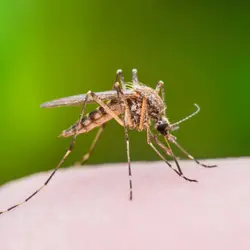
In this episode, we're tackling all the mosquito questions that have been bugging our listeners. Why do they bite? Why do the bites itch? Is scratching them a good idea? Why do some people seem to be more delicious to mosquitoes? How can we keep them away from…
One of our inquisitive listeners, Isabella, noticed when she was shopping online that women’s clothing was more expensive than men’s clothing — and she thought that was unfair. Turns out, it happens a lot.
How was basketball invented? Why were the early games played inside a giant cage? Why are basketballs orange? For free home activities sign-up at www.WhoSmarted.com
You know that feeling where you get a snippet of a song stuck in your head and it loops over and over? Those hard to shake songs are also known as earworms, and in this episode Molly has a particularly sticky one in her brain.

Did you know that a squid can be as long as a school bus or as tiny as your thumb? Learn these and other squid fun facts from the amazing Dr. Sarah McAnulty as she chats with hosts Jennifer and Jeff about these awesome ocean creatures. Squid may just end up be…
Learn how a man wrote sentences using only his mind; how popular song lyrics got simpler; and the bitterness of Bitrex.
What are fireworks made of, why are they bright and loud, and how do people make them? And, why do Americans celebrate the 4th of July with fireworks? We learn about pyrotechnics with licensed fireworks professional John Steinberg. And David Chavez, an explosi…
How many bones do you have in your skull? Are your bones stronger than concrete or steel? What part of your body has the most bones? For free home activities sign-up at www.WhoSmarted.com
Learn about "iconic sounds" of language. Plus: artificial intelligence’s limitations, with AI pioneer Michael Wooldridge.
How was broccoli invented? Why is broccoli called broccoli? What are fun ways to get kids to eat broccoli? For free home activities sign-up at www.WhoSmarted.com
How long have people been eating Pizza? Where does Pizza Come From? What Is the most popular Pizza Topping? For free home activities sign-up at www.WhoSmarted.com
In our eighth episode, Alma-Constance tells Lucinda that she was shocked to find out that she has reached the age of criminal responsibility at just 10 years old and wanted to find out why we need a criminal justice system and how does it affect children. The…
Learn how human hair can improve solar panels and why people tend to add, not subtract, when trying to improve something.

Standards make everything easier. When everyone can agree on a standard way to do things, regardless of how it is done, it can reduce confusion and facilitate progress. You’d think if there was one thing that would be standardized everywhere, it would be the s…

Join the Solve It for Kids hosts Jennifer and Jeff and their guest, Entomologist Devan George, on this trip through the science of tiny creatures-- BUGS! Learn about the types of bugs Devan studies and why YOU should try a cricket for lunch. (Hint: it's not on…

The British House of Commons has been called the Best Club in Town due to the fact that there is a 1,000-gallon vat of Scotch whiskey located in the cellar. However, I prefer to think of it as a roach motel. Because technically, once you are elected to Parliam…
What are Dwarf Planets? How many Dwarf Planets do we know about? Why isn't the Moon a planet? For free home activities sign-up at www.WhoSmarted.com
Learn about why cavities are so cold-sensitive; an ant that shrinks its brain; and why swimming makes you extra hungry.

If I was to ask you what the wealthiest royal family in Europe was, your first guess would probably be the British Royal Family. But it isn’t. It also isn’t the royal families in Spain, the Netherlands, Belgium, Sweden, Norway, or even the wealthy enclave of M…
Aaron and Eden have to use their tractors today on the farm, but they won't turn on? Something is missing on tractor! Who stole it??
Today our magic jeep takes us to a dispute between the sun and the water! Many years ago the sun and water were great friends, and both lived on the earth together. So how did their fight impact the way we see the sun and moon today? Listen and find out!
What causes nightmares to happen? What happens in your brain during a nightmare? Are there any ways to keep from having nightmares? For free home activities sign-up at www.WhoSmarted.com
Ken Cheng, host of CBBC's 'Don't Blame Me, Blame My Brain' joins Tiernan this week to answer Fia's important question of 'Why is news so boring?'
Tim Fitzhigham answers an important question from Kino, aged 7 and also ponders on jazz flutes, owning chickens and viking music. Plus this week's intro and outro are a crossover with the Comedy Club 4 Squids!
Learn about how to stop Zoom fatigue; a world that may be on its second atmosphere; and koalas’ human-like fingerprints.
We've been talking a lot about COVID in the US. Now, we want to look at how things are going in some other countries. NPR's correspondents — Jason Beaubien, Phil Reeves, and Anthony Kuhn — talk with Morning Edition's Noel King about why most of the world is st…
👋 Hello friends! If you are looking for more calming entertainment at sleep time, subscribe to Sleep Tight Premium. With Sleep Tight Premium you get access to our complete back catalogue of interruption-free bedtime stories, guided meditations, sleep sounds a…
Who invented the modern donut? Why are they called donuts? Why do donuts have holes? For free home activities sign-up at www.WhoSmarted.com
Today our magic jeep takes us to learn why the moon isn’t always full every night. There once was an old woman who was very hungry and would look to eat some of the moon every night. How could this be? Would the moon be okay with this? Learn how one person cha…
Learn about why cannabis gives people the munchies; the Bicameral Mind theory that says the ancient Greeks lacked consciousness; and the evolutionary reason why you listen to songs on repeat.
(Encore episode.) Archival records may help researchers figure out how fast the sea level is rising in certain places. Millions of people in coastal cities are vulnerable to rising sea levels and knowing exactly how fast the water is rising is really important…
(Encore episode.) Earlier this year, the Supreme Court heard arguments in a case brought by the city of Baltimore against more than a dozen major oil and gas companies including BP, ExxonMobil and Shell. In the lawsuit, BP P.L.C. v. Mayor and City Council of B…

Located in the middle of Rome, the capital of Italy, is what many people consider to be the smallest country in the world: Vatican City.
Today our magic jeep is cruising to a grassy field to watch a hunter sleep under a tree! Long ago a wicked and lazy hunter was sitting under a tree. He was thinking that it was too difficult to hunt in the hot weather and look for prey in the bushes. Did the h…
We know sugar tastes great, but is it any good for us? It tastes delicious, so why can’t we have sugar all the time?
Knock, knock… Who’s there? Science communicator and full-time funny person, Bernie Hobbs! And she’s here to help us examine our funny bones.
Jonny Donahoe and Paddy Gervers aka Jonny and the Baptists join Tiernan to talk multiple trouser wearing, pears and of course most importantly, answer Ian's complex question 'Why TV

Famed oceanographer Philippe Cousteau Jr is on the podcast to tell us why we should all care about bio-diversity. Philippe explains that the world is filled with a beautifully diverse rainbow of animals, insects, plants, bacteria and even viruses, each playing…

On December 11, 1941, Nazi Germany declared war on the United States. The interesting thing about this decision is that they didn’t have to do it. In fact, it would have been far better had they not done it. This decision has been one of the biggest mysteries …
Learn about what the “frenemy effect” can teach us about bullying; the surprising ability of marmosets to eavesdrop on each others’ conversations; and why April Fool’s Day may have originated from an out-of-date calendar.
The wonderful Rosie Jones joins Tiernan to answer a question from Saskia who lives life on edge 9, who asks 'why don't sticks walk or talk?'
Have you ever felt competitive with a friend or a sibling? Competition comes up in a lot of different ways in life. Maybe you're running a race with a friend and you want to beat them! Maybe you're trying to play a song without making a mistake and you're comp…
Learn about why bubbles appear in your water overnight; the “other-contingent extravert,” a new type of extravert that’s only outgoing in certain situations; and why food sticks to nonstick pans.
Who invented noodles? How many kinds of noodles are there? Are noodles good for you? For free home activities sign-up at www.WhoSmarted.com See omnystudio.com/listener for privacy information. See Privacy Policy at https://art19.com/privacy and California Priv…
Writer, producer, and “Flash Forward” podcast host Rose Eveleth explains why so many technology breakthroughs never pan out. Then, learn about real-life giant sand worms and why the Baader-Meinhof Phenomenon makes you notice some things more than others.
Rose Eveleth — writer, producer, and “Flash Forward” podcast host — explains why futurists don’t need to know the future. Then, you’ll learn about the oldest examples of money ever discovered.

Screens are everywhere these days! We’re taking a look at why smartphones are so addictive, and how our devices affect us. Our co-hosts took on a bold challenge for this episode: they went a week without phones or tablets. We’ll hear how their experiment went,…
Georgia aged 100 asks 'Why do people hate tomatoes?' and Ruby and Rachel from Shelf Comedy explain all! Meanwhile at CC4K HQ Tiernan has had to pop out, so his definitely not evil version Wiernan sits in instead.
Who invented emojis, and why? How many emojis are there? What is the most popular Emoji? For free home activities sign-up at www.WhoSmarted.com See omnystudio.com/listener for privacy information. See Privacy Policy at https://art19.com/privacy and California…
In the ice age, megafauna roamed North America: mammoths, saber-toothed cats, even giant land sloths! What happened to them? In this episode we answer questions about the ice age: What was it? Did birds live during that time period? How about giraffes? Did peo…

The country of San Marino is one of the smallest countries in the world. It is completely surrounded by Italy, is about 24 square miles in area, and has a population of about 33,000 people. The most interesting thing about San Marino is the fact that it exists…
Why Are Trees Always In The Way? Asks Clara-Lily who is exactly 99.9999999 years old. Thankfully Luke Toulson is on hand to explain and give expert tips on tree dodging, as well as some lovely stories about being sick all over his class at school.
Learn about why you can’t suffocate by holding your breath; how being angry makes you more likely to believe misinformation; and that time scholars tried to kick Latin out of English, thanks to words like honorificabilitudinitatibus.
How was breakfast cereal invented? What magical ingredient made cereal so popular? What is the most popular cereal of all time? For free home activities sign-up at www.WhoSmarted.com See omnystudio.com/listener for privacy information. See Privacy Policy at ht…
The brilliant Ada Campe returns to the show to answer Connor's highly serious question about why farts are called farts. Meanwhile there's been a stinky hippo invasion at CC4K HQ....
Learn about how Arnold’s ear-cough reflex can make you cough when you clean your ears; why it’s important to teach your kids about giving when they’re learning about money; and a hidden letter in the alphabet that you already sing.
In June 2020, Amazon, Microsoft and IBM announced that they were limiting some uses of their facial recognition technology. In this encore episode, Maddie and Emily talk to AI policy analyst Mutale Nkonde about algorithmic bias — how facial recognition softwar…

Everyone loves french fries. It is one of the few things which most people can agree on in the world today. The average American consumes over 16 pounds of them every year, and they have become a staple part of the cuisine in countries all over the world. Yet,…
What were early dental braces like? Why are your teeth so crooked? How do braces work? For free home activities sign-up at www.WhoSmarted.com See omnystudio.com/listener for privacy information. See Privacy Policy at https://art19.com/privacy and California Pr…

Of the 193 countries in the United Nations, exactly three haven’t adopted the widespread use of the metric system: Myanmar, Liberia, and the United States of America. Of those three, the US is the country that really stands out. It has the biggest economy in t…
How did they tell time before clocks? How did they come up with hours, minutes and seconds? What do AM and PM mean? For free home activities sign-up at www.WhoSmarted.com See omnystudio.com/listener for privacy information. See Privacy Policy at https://art19.…
Why is it so hard to feel the difference between 400,000 and 500,000 COVID-19 deaths—and how might that impact our decision making during the pandemic? Psychologist Paul Slovic explains the concept of psychic numbing and how humans can often use emotion, rathe…
Learn about why people have illusions of control; that time scientists made desert ants walk on stilts to test the pedometer hypothesis; and how to reduce your chances of getting hurt when you fall.
Who invented Gummy Bears? What shape were Gummy Bears originally? How many Gummy Bears are sold each year? For free home activities sign-up at www.WhoSmarted.com See omnystudio.com/listener for privacy information. See Privacy Policy at https://art19.com/priva…
Which would be the better planet to live on? What is the surface of Mars and Venus like? Why are we always exploring Mars and not Venus? For free home activities sign-up at www.WhoSmarted.com See omnystudio.com/listener for privacy information. See Privacy Pol…
Learn about why February only has 28 days; why early birds and night owls aren’t the only two chronotypes; and why the anchoring effect says you should always make the first offer when you’re negotiating.
What makes a cactus a cactus? And what are you supposed to call a group of these plants--cacti, cactuses, or cactus?! We'll find out in today's episode, as we learn more about the cactus family with Kimberlie McCue of the Desert Botanical Garden in Phoenix, Ar…
Learn about a newly discovered way to cut down on intrusive thoughts; why wombats poop cubes; and why UPS trucks almost never make left turns.
How do trees clean the air? How do trees breathe? Do trees die in the winter when they shed their leaves? For free home activities sign-up at www.WhoSmarted.com See omnystudio.com/listener for privacy information. See Privacy Policy at https://art19.com/privac…
Don’t tell anyone: Tai thinks he has two left feet and he still loves to dance when no one’s watching. But why do humans like to dance at all? What’s going on in the brain when people boogie? In this episode, Tai tangos into the activity that has helped humans…
Learn about why sensitive questions won’t make conversations as uncomfortable as you think; why static is worse in winter than in summer; and the “umami synergy” behind why bacon and eggs go together so well.
It's an all singing, all dancing episode with no singing or dancing in it, as Abigoliah Schamaun joins Tiernan to answer Willow's important question of 'Why Do Kids Find Poop Funny?' and tells us the tales of her battles with Gus the Mouse.
If you ever feel alone, you shouldn’t, because you are actually surrounded by viruses. They’re in you, they’re on you and, in fact, there are more viruses in the world than there are stars in the sky. So why aren’t we sick all the time? In this episode Tai loo…
Learn about why you shouldn’t add oil to your pasta water; a simple way to help kids think better; and why your dog’s paws smell like corn chips.
Learn about how the Faroe Islands created their own Google Street View using sheep; why some vaccines (like Pfizer’s and Moderna’s COVID-19 vaccines) have to be kept so cold; and why it’s easier to understand a second language than it is to speak it.
Is mold an animal or a plant? Why is mold so colorful? What color is most mold? Why is mold an ingredient in gummy bears? Free activity guide at www.WhoSmarted.com See omnystudio.com/listener for privacy information. See Privacy Policy at https://art19.com/pri…
Learn about why Wolf-Rayet stars are the brightest stars in the sky; why immune cells in your brain may have started out in your gut; and the history of why we can thank Grace Hopper for calling computer glitches “bugs.”
If habits are really stuck, we don't think much about them -- we just do them! Some habits are good (like brushing your teeth in the morning) and others are not as good (like biting your nails).

New Year’s Day is not only the day we turn over a new year on the calendar, but also a day where people start resolutions, companies begin new budgets, and everyone screws up writing checks. While documenting our trips around the sun makes perfect sense, why d…
Charlotte Corney, zookeeper extraordinaire, travels with us to watch big cats in the wild - and we learn how they communicate.
Learn about why your next relationship will probably be like your last one; what scientists learned by studying the oldest material on Earth; and what researchers learned when they had cuttlefish wear 3-D glasses.
Learn about Starlink’s unintended consequences for astronomy from astrophysicist Vivienne Baldassare, NASA Einstein Postdoctoral Fellow at Yale University. Then, learn why toilet paper is white.

Every year, people around the world celebrate Christmas on December 25. In many countries, it is the biggest single holiday of the year. Why is it celebrated on December 25? Is there any historical basis for this date and if not, then why do we celebrate it on…
Learn about why bats are the source of so many deadly virus outbreaks; and the surprisingly strong influence older siblings can have on their brothers and sisters — just in time for Siblings Day. Then, test your knowledge from this podcast with a Curiosity Cha…
Today's episode is all about the history of GREETINGS and it's full of great questions & answers about how and why humans say "Hello!" Questions we answer include: How did the word, "Hello" become the standard way we answer the phone? Why do we shake hands? Wh…
Learn about why successful people should reveal their failures; the extreme story of the death of planet WASP-12b; and why tulips used to cost more than houses during a period known as “tulip mania.”

Standards make everything easier. When everyone can agree on a standard way to do things, regardless of how it is done, it can reduce confusion and facilitate progress. You’d think if there was one thing that would be standardized everywhere, it would be the s…
Lots of people are afraid of the dark, including many kids who have shared that fear with us. In today's episode we explore the fear of the dark with Daniel Handler, better known as Lemony Snicket, the author of the Series of Unfortunate Events books, and a pi…
Quick question: who wrote the story for the movie FROZEN? Obviously it was a Hollywood screenwriter working for Disney, right? Nope! Jennifer Lee may have written the SCRIPT (she also directed the movie too, becoming the first woman to write/direct a film gros…
Weather presenter Alex Deakin joins us at the heart of a thunderstorm as we learn how thunder and lightning are created.
Learn about how curiosity gives your memory a boost; what happened when researchers put feathered hats on birds to see if other birds found them sexy; and how we trick bacteria into making insulin for us.
Learn about how a planet-friendly diet also tends to be healthier and why we don’t have battery-powered airplanes. But first, social psychologist and author Devon Price is back to explain how we can all avoid burnout.
Learn about why adding cold cream to your coffee keeps it hotter longer, why social identity can make people distrust the scientific consensus, and why you need self-compassion for self-improvement.
Why are babies small and grownups big? Why are babies so helpless, instead of little versions of adults? Do babies know they're babies? How do babies grow? How do babies learn to talk?
It's another "Back To School" episode where we take a concept you were maybe taught in school as a kid, but didn't really learn or just forgot. Short Wave producer Thomas Lu and host Maddie Sofia go on a journey to explore what a rainbow exactly is and how we …
Learn about why it’s relaxing to breathe in through your nose and the first woman who’s ever been struck by a meteor. We’ll also answer a listener question about why smacking electronics helps to make them work again.
Learn about why animals keep evolving into crabs in a principle called “carcinization,” whether water is actually wet, and if there’s any truth behind the old adage "feed a cold, starve a fever."
Laughter is a great way to release stress, bond with friends & family, and just have fun. It's also why some people end up accidentally WETTING themselves! On this episode of WHO SMARTED?, we'll visit a disastrous rehearsal of Romeo & Juliet -- where the probl…
Who doesn't love ice cream? Well - on this episode of Who Smarted? it turns out that our special guest Ice doesn't love our OTHER special guest Cream - but maybe by the end of the episode they'll figure out how to work together. (Spoiler alert: they do!). And …
A few weeks ago we talked about why kids can't vote and we also answered some questions about the U.S. Presidential Election. It's been two weeks since the November 3rd election, but we're still getting questions about it! We get answers from NPR political rep…
Learn about why life is based on carbon and not silicon, whether you should be using plastic or wood cutting boards, and how jealous feelings can help maintain friendships.
People love dogs! And what's not to love? Dogs are loyal, helpful, kind, & fill our hearts with joy (and our brains with oxytocin!) They make wonderful companions which is why, during the pandemic, dog adoption rates have doubled, and in some places there are …
Kids love to stay up past their bedtime - and so do grownups! But why do we have bedtime at all? Why is sleep so important, and why does it naturally happen at night? And what does sleep have to do with memories, unicorns, and a flying trapeze? All your questi…
Learn why spacesuits are white, and how to avoid drama by breaking the Karpman Drama Triangle. Then, test your podcast knowledge with this month’s Curiosity Challenge trivia game.
Learn about how AI could help predict which drugs won’t agree with women, and why Point Nemo is considered planet Earth’s spacecraft graveyard. But first, Ologies podcast host Alie Ward is back to tell us about her favorite ologie.
What does a bad snowstorm and a bucket of peaches have to do with basketball? And why are basketballs orange? Find out on today's bouncy episode of Who Smarted? www.WhoSmarted.com See omnystudio.com/listener for privacy information. See Privacy Policy at https…
Learn about why remote workers need a "virtual commute," what happened when scientists tried growing prehistoric-sized insects, and how the solar system has not one, but two alignment planes.
In our most recent episode, we answered questions about really big animals: whales!
The toothbrush was invented in jail - by a prisoner! How did that happen? And how did toothbrushing become a regular daily activity in the 1950s? You'll travel to Egypt, London, and more in this episode that will get your kids excited to brush! For more great …
What's that smell? It's broccoli! In this episode you'll get a new appreciation for broccoli, learn who invented it, how to make it taste good, and even find out how to make it not smell so bad! You'll journey from ancient Rome to America on a time-bending adv…
How do whales spray water? Why are humpback whales so fat and blue whales so long, and why are blue whales blue? Do whales have belly buttons? How do you weigh a whale? And how do whales drink water in the salty ocean? We have a whale of a time answering quest…
For much of the pandemic, some scientists had been pushing the Centers for Disease Control and Prevention to recognize that the coronavirus is spread through aerosols--very small particles that can linger in the air. The CDC did that this month, so we brought …
What's the real story behind pizza? We love it plain, with toppings, to go, and while we watch TV - American's alone eat 3 BILLION pizzas a YEAR! Find out the history of pizza on this week's episode of Who Smarted? And get the free study guide at www.WhoSmarte…

Having a sibling is a special thing -- but, wow, can they be annoying! In this episode we’ll look at why our brothers and sisters are so good at pushing our buttons. Plus, is there any truth to the idea that oldest kids are the most mature and the youngest one…
Learn about why predators don’t hunt their prey into extinction, then discover the history of crossword puzzles from author Adrienne Raphel!
Learn about what it would be like to travel through a wormhole, how the pumpkin became North America’s Halloween mascot, and how social isolation can fuel conspiracy theories.
In the United States, where But Why is based, we have a big election coming up. Election Day is officially on November 3rd. But more Americans than usual are voting in advance this year, sometimes in person at their town hall or city office. And sometimes by m…
Learn about how your schedule might be hurting your health, why the mantis shrimp is able to punch so hard without hurting itself, and who invented the aluminum can.
Learn how swapping bodies with our pals can alter the way we view ourselves, why California’s redwoods have been able to survive relentless wildfires, and the real reason there are colorful bumps on the sidewalk. (If this episode sounds familiar, congratulatio…
This episode may not be suitable for our youngest listeners or for particularly sensitive kids.
Scientists renamed human genes because of Microsoft Excel by Grant Currin
Learn about how rats might not have been all to blame for the bubonic plagues and why we’re more prone to mindlessly eat while we multitask.
Learn about whether animals can predict earthquakes, why younger folks experience déjà vu more often, and how software that helped us reach the moon was literally woven by hand.
Learn about how a phenomenon called the third-person effect makes us think we’re too smart for advertising to work on us, why scientists used violinists to study how humans sync in a complex network, and why you can relieve pain by holding hands!
King Lion wants to find out who is the smartest and most clever animal in the animal kingdom. Anansi the spider boasts loudly of his own wisdom but is challenged by a mockingbird because, unlike birds, he cannot fly. Anansi takes up the challenge, builds himse…
Why do dogs have whiskers? Why are dogs' eyesight black and white? Why do dogs have so many babies? Why do dogs have tails and we don't? Why are dogs thumbs so high on their paw? Why don't dogs sweat? Why do dogs roll in the grass? Why aren't dogs and cats fri…
Why do cats purr? How do cats purr? Why can't we purr? Why do cats "talk" to people, but not other cats? Why do cats sharpen their claws? Are orange cats only male? Why do cats like milk and not water? Why are some cats crazy? Can cats see color? All of your c…

Everyone loves french fries. It is one of the few things which most people can agree on in the world today. The average American consumes over 16 pounds of them every year, and they have become a staple part of the cuisine in countries all over the world. Yet,…

Of the 193 countries in the United Nations, exactly three haven’t adopted the widespread use of the metric system: Myanmar, Liberia, and the United States of America. Of those three, the US is the country that really stands out. It has the biggest economy in t…
To wrap up our Shark Week coverage, learn about why the US military tried to develop "Shark Chaser" shark repellent during World War II. Then, learn about the leading theories explaining why moths are drawn to lights; and the difference between mummies and fos…
Herd immunity. It's the idea that enough people become immune to an infectious disease that it's no longer likely to spread. It makes sense theoretically. But as NPR's Geoff Brumfiel tells us, the reality — in this coronavirus pandemic and without a vaccine — …
To celebrate Shark Week, learn about why people are afraid of sharks; how scientists discovered four new species of “walking” sharks (also called epaulette sharks); and how enhanced rock weathering might help us fight climate change with rocks.
Learn the surprising reason why religious people tend to have more children; why sea turtles are actually pretty clumsy navigators; and where astronomers found the center of our solar system (spoiler alert: it’s not the center of our sun).
Learn about why some words are more memorable than others; how hair growth works; and how fish end up in landlocked lakes.
Sophie (age 7) and Ellie (age 5) tell the story of why World War One happened – on the weekend of the anniversary of the War starting.----more----
Stanford behavior scientist Dr. BJ Fogg, author of “Tiny Habits: The Small Changes That Change Everything,” explains why the best new habits are tiny ones. Then, learn why human infants are late bloomers compared to other baby animals.
Learn about how scientists and animals are benefitting from the “anthropause” during the coronavirus pandemic; why sweat from stress smells worse than regular sweat; and whether men really “see less mess” than women.
So much of dealing with the pandemic is about how each of us behaves in public. And it's easy to get mad when we see people not following public health guidelines, especially when it looks like they're having fun.
Learn about why you might feel stronger after just one workout; why the Earth’s core doesn’t melt, even though it’s so hot; and prosopagnosia, the surprising neurological condition of face blindness.
Rising cases, not enough testing, and not enough people taking the virus seriously. NPR science correspondent Richard Harris explains why the virus is surging again, what's causing lower fatality rates, and how to think about the future of the pandemic.
Some snakes can fly, and we don't mean on a plane. Certain snakes that live in South and Southeast Asia can leap off branches, undulating through the air, onto another tree. But why do they wiggle? NPR science correspondent Nell Greenfieldboyce shares one rese…
This week, we're getting out our bug nets and talking about dragonflies and ladybugs! Why do ladybugs have spots? How many different types of ladybugs are there? How do they crawl on the ceiling without falling down? Where do dragonflies and ladybugs sleep? Wh…
Learn about the right and wrong way to approach an argument; evidence that dogs really do want to rescue you; and how blind people dream.

We’re taking on an age-old question today: Do kids have more energy than adults? Breakfast tacos, caffeine, an energized DJ and an epic battle between a girl and her parents. This episode has all that and then some. Discover how we turn food into energy at an …
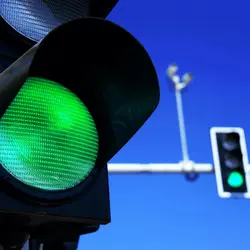
The world is full of color, but how do our eyes see it? In this episode we’ll explain how color vision works, complete with a journey to a jazz club in the back of your eye. We’ll also look at the cultural meanings of the color red, we’ll find out about a new …
Learn about why people protest and riot, according to social psychology; and how scientists stimulated the brains of blind people to make them “see” shapes. Then, test your knowledge with this month’s edition of the Curiosity Challenge.
Learn about why rainy days make you sleepy; why the “Great Unconformity” is one of the biggest mysteries in geology; and the problematic amount of energy it takes to power AI — along with a potential solution. Plus: how do you pronounce "Colorado," anyway?
Why don't spiders stick to their own webs? How do spiders walk up walls and on ceilings without falling? Why do spiders have eight legs and eight eyes? How do they make webs? And silk? What's a cobweb? How do spiders eat? And why are daddy long legs called dad…
Learn about why people tune out facts and trust their guts in medical emergencies; a Victorian-era version of credit cards; and how scientists are trying to add an eighth row to the periodic table of elements.
The brilliant Eleanor Morton helps answer the very important question sent in by Gracie, aged 11, of...WHY ARE LEAVES? Such an important question, with even more important answers involving walking forests and smashing food into your own head. Do make sure you…
Learn about a bias in your brain that makes you ignore security warnings; why people who fall in love feel like they’ve known each other for years; and a crew of prehistoric monkeys that crossed the Atlantic Ocean on rafts.
Learn about why housecats are deadlier for local wildlife than wild predators; why soft drinks taste better from a can than they do from a plastic bottle (especially when it comes to Cody and his Mountain Dew habits); and how astronomers just found 100 new min…
We head to the kitchen to answer cooking and food questions. Why does food taste better with salt? Why do we need salt to make sweet things like cookies? Why do seasonings taste good in food but not so much on their own? Why are marshmallows soft? Why do egg w…
Learn about why you eat differently when you’re stressed; how humpback whales use “bubble nets” to catch fish; and the surprising genetic reason why females outlive males.
We're talking about teeth with a friendly dentist! How do teeth become loose? Why do our baby teeth fall out? Why do people only have two sets of teeth? Why don't babies have teeth when they're born? Why are teeth white? Why do we have gums in our mouth? How d…
Learn about why bats are the source of so many deadly virus outbreaks; and the surprisingly strong influence older siblings can have on their brothers and sisters — just in time for Siblings Day. Then, test your knowledge from this podcast with a Curiosity Cha…

Nanogirl finds out why bees buzz.
We visit the bedroom of one of the messiest kids we know, Harriet. She hates cleaning her room more than anything in life and it always looks like someone opened every drawer and threw all the contents into the air. But is it her fault that her room is a pigst…
Learn about why things taste bad after you brush your teeth; a new discovery about how fast the Earth formed that may mean good things about life in the universe; and why women may experience more pain than men.
CBBC Presenter Ed Petrie joins Tiernan to tell him all about why he's been at home and refusing to go out for ages now anyway, home DIY tips and to answer just why does health food make you fart?
Tiernan asks brilliantly funny comedian Laura Lexx just why sweetcorn comes out in poo and her explanation will blow your mind, as it turns out there's a lot more to vegetables than you think.
Ed Yong rounds up some theories in a recent article for The Atlantic. He tells host Maddie Sofia one reason the virus spreads so well might have to do with an enzyme commonly found in human tissue.
Learn about why plastic bag fees have such a big influence on your behavior; how bumblebees are able to fly around while carrying up to 80 percent of their own body weight; and the neuroscience behind why yoga reduces depression.
Why do people dream? Why do people have nightmares? How do dreams happen? Can people who are blind can see in their dreams? We're listening back to our episode about dreams with psychiatrist Dr. David Kahn of Harvard Medical School.
Learn about whether people think in words or in pictures; why brussels sprouts really are tastier than they used to be; and why buying luxury items might make you feel like an impostor.
Have you been wondering what the title of our podcast means? Let me break it down for you! If there are grown-ups listening along, you’ve picked a great episode to get an overview of what this podcast is all about.
Learn about why deadhead logs so rare and valuable, people actually risk their lives looking for them, from author and TV host Kevin O’Connor. Then, we’ll answer a listener question about why you feel tired after you take a long trip.
Learn about why an overheard phone conversation is so distracting; how big or small a black hole can get; and why you should definitely tell your anesthesiologist if you smoke marijuana.
Learn about cat and dog “zoomies” and why pets sprint around the house; how to avoid the abstinence violation effect that makes you give up after a mistake; and why vision is surprisingly important for babies in the womb.
Learn about why music really is universal to humans; what studying “split-brain” patients taught scientists about the brain; and when in human history society decided that women should shave their bodies.
Learn about the surprising Medieval history of almond milk. Then, learn how some basic physics principles can help us understand why good teams kill great ideas, with physicist and entrepreneur Safi Bahcall.
Why do lions roar? Why do crickets chirp? Why do bucks shed their antlers every year? How can porcupines and hedgehogs avoid poking themselves? Do fish pee? What is the fastest fish? What do jellyfish eat? A roundup of animal questions, with answers from Paola…
In this episode, we tackle why some words are "bad". Plus: Why do people say bad words? Why aren't kids allowed to say cuss words? Why is the middle finger bad? And adults, don't worry, we won't actually be using any bad words in this episode! But we will expl…
Learn about why feet smell bad; how NASA knows where to dig on its next mission to find evidence of life on Mars; and why you associate cold temperatures with luxury.
Learn from popular mathematics writer and Cornell University Professor Steven Strogatz why calculus matters and what exactly calculus is. Plus, learn a surprising reason why you shouldn’t lie to your kids.

Spooky stuff may make you cover your eyes in fright, but many of us find ourselves peeking through our fingers to get another glimpse. Why are we drawn to things that make us jump? In this episode, we'll find out how fear can actually be fun. We visit a scient…
Learn about the scientific reasons why people either love or hate horror movies; the surprising way life expectancy affects population growth; and, where you can catch the Orionids meteor shower this weekend.
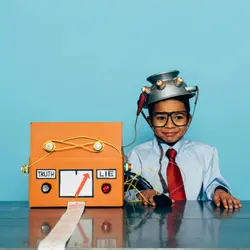
Most of us think we’re good at detecting lies, but it turns out humans only get it right about half the time. And why do we do it anyway? What makes us want to deceive other people? In this episode we get to the truth about lying. We take a look at when people…
Why does school exist? When did kids start going, and why is it mandatory? Why are there 12 grades in school? Why do we call teachers by their last names? In this episode, we get schooled on school by sociologist Emily Rauscher and National Teacher of the Year…
Tai is fascinated by what’s in the dark spaces between the stars. Considering there are trillions of stars in the universe (and counting!), it seems a bit odd that the universe isn’t just a blinding ball of light. So then, why is space so dark?
Learn about new insights into the Chesapeake Bay impact crater, which was created by America’s largest asteroid impact; why birds sing; and why your bruises change colors while they heal.
It’s a decade after the start of the war and Edward’s father has died. At a church memorial service, Edward contemplates the role of memorial in our society in all its aspects.
Why do earthquakes happen? How do the tectonic plates move underground? How do we stay safe during an earthquake? Why are continents so far apart? Why do buildings sometimes catch fire after earthquakes? Why are there tsunamis after earthquakes? For this week'…
Learn about ploonets, which are moons that leave their planets; the unbelievable true story of D.D. Palmer, the first chiropractor; and, why humans kiss.
Learn about why your eyes get puffy when you cry. You’ll also learn about the benefits of being a generalist instead of a specialist from a special guest: author David Epstein.
How do trains work? What about electric trains? Steam trains? Bullet trains? Why do they have to go on tracks? How can trains go so fast even though they're so heavy? And why don’t trains have seat belts? We’re traveling to Union Station in Washington, DC and …
Learn about the world’s first vending machine that was invented nearly 2,000 years ago; why scratching an itch can make it spread; and, why you probably don’t realize it when your beliefs change.
This week we're answering questions about gender. We've gotten a lot of questions about the differences between boys and girls so we're tackling them with Vanderbilt anthropologist Anna Catesby Yant and Dr. Lori Racha of UVM Medical Center. This is a frank but…
Learn about what the first cities looked like — and why humans built them — from author Monica L. Smith, an archaeologist and professor in the department of anthropology at UCLA. Then, learn what makes pedestrians run into each other.
Learn about why smells trigger such vivid memories; why an ancient tree is changing our understanding of how trees evolved; and how you can find out if you suffer from impostor syndrome, along with ways to get over it.
Lots of people are afraid of the dark, including many kids who have shared that fear with us. In today's episode we explore the fear of the dark with Daniel Handler, better known as Lemony Snicket, the author of the Series of Unfortunate Events books, and a pi…
In this week's science adventure, Nanogirl takes Chloe and her friends from Royal Oak Primary to Auckland's Stardome Observatory to meet expert Josh Kirkley and find out why stars twinkle.
Hey Show About Science fans! I've been working hard on a new podcast and I want to share a few episodes with you. It's called The Show About Politics and I know you're going to love it. If you do, please subscribe and leave a review wherever you listen to podc…
Why do we need to eat and how does food give us energy? Why do you have to eat vegetables? Why does junk food taste so good? So many questions about food and nutrition. We get answers from Wesley Delbridge, of the American Academy of Nutrition and Dietetics.
Learn about the evolutionary reason why older people wake up early; new research that could explain why hot water can freeze faster than cold water; and the truth behind the recapitulation theory that embryos repeat evolution.
Learn how quickly you’d age if you could move at the speed of light; how scientists discovered that Neanderthals actually walked upright; and why hangovers seem to get worse with age.
Learn about why Earth twinkles from space; why pockets are so rare in women’s clothes; and whether the first life emerged on land or water.
Learn about what’s really going on when you feel sore after a workout; why we don’t know who designed the Taj Mahal; and the real reason why you have to change your clock for Daylight Saving Time.
Why is there a big patch of garbage in the Pacific Ocean? Four-year-old Leon has heard of the Great Pacific Garbage Patch and he wants to know what the deal is. So we speak with someone who's actually been there! Teen Vogue News and Politics Editor Alli Malone…
We're exploring two different animals in today's episode. One has a long neck and the other has a long trunk! We'll answer: Why are elephants so big? How do their trunks work? Why do they have tusks? Why is elephant skin so rough? Do elephants stomp? Are they …
Learn about why blinking communicates a lot more than you probably thought; why astronomers think Uranus is tipped over; and the story of "The Blood Countess," a female murderer who may have inspired Bram Stoker’s Dracula.
How was time created? How did one minute become 60 seconds and one hour became 60 minutes? Why is time segmented into 12-hour periods? How do clocks work? Why is a year 365 days? Why is there an extra day in February every four years? Does time have a beginnin…
Learn about why your biases are so strong, you’d choose them over making money; a new theory that “dark fluid” might mean that dark matter and dark energy are the same weird substance; and Oymyakon, one of the coldest places on Earth where people continuously …
Why does the moon change shape? How much does the moon weigh? What color is the moon? Why does the Earth only have one moon? Why does the moon have holes? Where does the moon go when we can't see it? Why do we sometimes see the moon in the daytime? Why does th…
Learn about one of the only silent places in the United States; why fish aren’t electrocuted during lightning storms; why an equator theme park was built in the wrong place; and why humans are symmetrical.
How does your body make poop? How many germs are in an ounce of poop? Why do people fart and why are farts stinky? Look, everybody does it, so today we're going to tackle one of the areas kids seem to find fascinating: why and how we poop! Plus, we get some he…
Learn about whether you can actually feel a storm coming in your bones; an 18th-century woman who convinced doctors she was giving birth to rabbits; the 2 main reasons why everything takes longer than you think it will; and why barber shop poles are red, white…
Learn about the Moses Illusion, which shows how your brain processes information; why urine is yellow; and how watching horror movies can help reduce anxiety.
Learn about why hand dryers are blowing bacteria all over your hands; body parts you probably don’t know you have; what different colors mean around the world; and whether it’s possible to lose your foreign accent.
Dan and Bex find a book that transports them back to Victorian Britain to explore why children worked.
Learn about the evolutionary reason why you listen to some songs on repeat; the morning routines of high-income earners; and how you can boost your Wi-Fi signal with aluminum foil.
Why don't spiders stick to their own webs? How do spiders walk up walls and on ceilings without falling? Why do spiders have eight legs and eight eyes? How do they make webs? And silk? What's a cobweb? How do spiders eat? And why are daddy long legs called dad…
After thinking through a recent terrifying nightmare, Tai starts to question the importance of dreams. Why can't our minds just do nothing when we sleep?
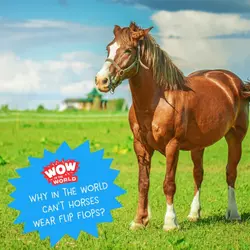
How in the world did horses get their hooves? What in the world is the difference between their feet and ours? And when in the world did tiny dog-sized horses roam the earth? Join Guy Raz and Mindy for a little trot through the latest Who, What, When, Where, W…
Why do we celebrate Halloween? Who created this holiday? Where do pumpkins come from and why do we carve them? This week we're answering your Halloween questions with a professor of all kinds of scary and creepy things, Regina Hansen of Boston University.

It's Professor Hallux's uncle Halitosis' hundredth birthday - and in his honour Hallux is creating a pop-up Digital Dental Depositary – an Oral Health Helpdesk if you like. He's going to see how many questions all about teeth he can answer against the clock.
Learn about how punctuation and exclamation points are stressing people out; why ice might be stopping us from discovering an alien civilization; and Transnistria: a country that doesn’t exist!
A cancer diagnosis can be scary, and for kids it can be bewildering. We've gotten some questions about cancer and in this episode we answer them with Dr. Donald Small, director of pediatric oncology at Johns Hopkins School of Medicine. We answer how people get…
Learn what personality traits it takes to survive a disaster, and why chickenpox is so much worse for adults. Plus, special guest Natalia Reagan answers the question: if we evolved from monkeys, then why are there still monkeys?
Learn about why you probably like talking to strangers more than you think (and why you should do it more often); how to discover your personal strengths; and the words with the most definitions in the English language, according to The Guinness Book of Record…
We visit Fireman's Hall Museum in Philadelphia and get answers to a dozen questions about fire from Philly firefighter Lisa Desamour. She tells us what fire is, why matches work to start fires, and why fire is often orange. Plus: how does water put out fire? H…
In this episode of But Why, we hear music from Music for Sprouts' Mr. Chris, Drummer Seny Daffe, and cellist Emily Taubl and answer questions about strings, percussion, and the magic of music itself. Get ready to dance.
Why do turtles need shells? Why do turtles move so slowly? Why do frogs hop? Why are frogs green? Why are colorful frogs poisonous? Why do frogs inflate their throats? What some of the biggest threats are to amphibians and reptiles? We head out to the pond to …
In this podcast, Cody Gough and Ashley Hamer discuss the following stories from Curiosity.com to help you get smarter and learn something new in just a few minutes:
In this podcast, Cody Gough and Ashley Hamer discuss the following stories from Curiosity.com to help you get smarter and learn something new in just a few minutes:
In this podcast, Cody Gough and Ashley Hamer discuss the following stories from Curiosity.com to help you get smarter and learn something new in just a few minutes:
In this podcast, Cody Gough and Ashley Hamer discuss the following stories to help you get smarter and learn something new in just a few minutes:
'But Why' heads to the farm to answer a whole herd of animal questions: How do cows make milk? Why do cows moo? Why do some animals eat grass? Why do pigs have curly tails? Why do pigs have more teats than cows? Why do eggs in the fridge not hatch? How do chic…
In this podcast, Cody Gough and Ashley Hamer discuss the following stories to help you get smarter and learn something new in just a few minutes:
Why do ants bite? Do both male and female ants have stingers? Do ants sleep? What do they do in the winter? In this episode we learn all about the fascinating world of ants with Brian Fisher , curator of entomology at the California Academy of Sciences. Fisher…
In this podcast, Cody Gough and Ashley Hamer discuss the following stories to help you learn something new in just a few minutes:
Why is tape sticky? How do erasers erase? We'll tackle arts and crafts in this episode, answering not just those two questions but learning how to make paint out of rocks and spit!! Vermont artist and wildcrafter Nick Neddo joins us with some tips on how to cr…
Why do we laugh? Why do you feel ticklish when someone tickles you? Why can't you tickle yourself? We learn about how humor develops with Gina Mireault of the Infant Laughter Project at Northern Vermont University.
Why do people dream? Why do people have nightmares? How do dreams happen? Can people who are blind can see in their dreams? In this episode of But Why, we're answering dreamy questions with psychiatrist Dr. David Khan of Harvard Medical School.
Why do people need to sleep? How do we actually go to sleep? How does sleeping get rid of toxins in the brain? And how come when it's nighttime I don't want to go to sleep but when it's morning I don't want to wake up?! Those questions and more, all about slee…
Humans eat just like every other living creature. Have you ever wondered what drives us to binge eat, or spend too much time at the grocery store? And how does the food we eat impact us emotionally? We talk to Dr. Rachel Herz, author of "Why You Eat What You E…
We're marking the winter solstice with an episode all about snow! Why do snowboards look like skateboards? We get an answer from Burton Snowboards. How is snow made? Why is snow white? Why are all snowflakes different? We'll hear from Jon Nelson, author of "Th…
In this episode of But Why we visit a credit union to learn what money is all about and Slate Money hosts Felix Salmon, Anna Szymanski and Jordan Weissman answer questions about why money plays such a big role in modern society. How was money invented? Why can…
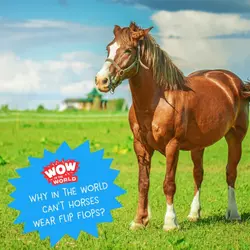
How in the world did horses get their hooves? What in the world is the difference between their feet and ours? And when in the world did tiny dog-sized horses roam the earth? Join Guy Raz and Mindy for a little trot through the latest Who, What, When, Where, W…
If you want to be comfortable in any situation, then you just need to know and remember how to behave. Manners and etiquette aren't just for snobs! Etiquette expert Jihan Murray-Smith joins the Curiosity Podcast this week to explain the guidelines behind prope…
Why do we have daylight saving time? And why are days longer in summer and shorter in winter? Daylight saving time is really just a trick. At least, so says Michael Downing, author of Spring Forward: The Annual Madness of Daylight Saving Time. He's our guest i…
Why do leaves change color in the fall? Why are leaves green? Why don't leaves turn all of the colors of the rainbow? In this episode of But Why, we're talking about fall leaves, and how trees go from green to fiery red, orange and yellow.
Children are the best language learners, says psycholinguist Evan Kidd. But how do children learn languages so easily, and why is learning another language so hard when you're an adult? It's something we've been wondering since we moved to Barcelona, Spain thi…
This episode of But Why is a serious one. We're talking about death. Why do people die when they get too old? What happens to people when they die? What does it feel like when you're dead? Our guide is Jana DeCristofaro from the Dougy Center: The National Cent…
Why do we dream? It’s one of life’s most perplexing problems – Hallux finds out more.
Bruises can go through all the colours in the rainbow before they heal – why is this? Hallux explains.
You might have found that your ears go pop when you are taking off in an aeroplane, or if you’ve been swimming. Hallux explains what’s at play.
Hallux investigates what’s behind hiccups.
If you hold a shell to your ear it is said you will be able to hear the sea. Hallux explains why.
Everyone’s ears are a little bit different – Hallux looks at the how and the why.
Our hearing can be affected by travelling in airplanes – we look at why.
Why is the solar eclipse on August 21, 2017, going to be such a huge deal? Michelle Nichols, educator and astronomer at the Adler Planetarium in Chicago, joins us on a special episode of the Curiosity Podcast to explain everything from the science to the commu…
In this episode, we're answering some of our frequently asked questions, the questions we hear a lot from all of you: why are there so many different languages? Why do we get hiccups? Why do our fingers get wrinkly in the tub? Why are plants so many colors? Wh…
In this episode, Professor Hallux explores how our bodies use water to carry nutrients, remove waste, and regulate our temperature.
What gives a collectible item its value? Certified sports memorabilia expert Michael Osacky has been the official appraiser for athletes from the Chicago Bulls, New York Yankees, and other professional teams, and he sheds some light into the world of collectin…
We're answering ten questions as quickly as we can in this episode of But Why. Why do onions make you cry? How do hummingbirds hum? Why do flamingos stand on one leg? Do moths have veins in their wings? Do cats that share a home have the same meow? What was th…
There’s something not quite right with Professor Hallux’s hearing. He and Nurse Nanobot are talking about hearing and why we have ears – and why two ears, not six ears?
In this episode we're celebrating the official return of summer to the northern hemisphere by answering some summertime questions! How do fireflies glow and can they control how they blink? Why are owls nocturnal? How do they swivel their heads around? And how…
This episode may not be suitable for our youngest listeners or for particularly sensitive kids. We're discussing animal ethics with author Hal Herzog. In a follow up to our pets episodes, we look at how we treat animals very differently depending on whether we…
Why do dogs have whiskers? Why are dogs' eyesight black and white? Why do dogs have so many babies? Why do dogs have tails and we don't? Why are dogs thumbs so high on their paw? Why don't dogs sweat? Why do dogs roll in the grass? Why aren't dogs and cats fri…
Why do cats purr? How do cats purr? Why can't we purr? Why do cats "talk" to people, but not other cats? Why do cats sharpen their claws? Are orange cats only male? Why do cats like milk and not water? Why are some cats crazy? Can cats see color? All of your c…

If you’ve ever been the ocean, you’ve tasted that salt. But where does it come from? And why aren’t lakes and rivers salty too? A sea shanty is probably the best way to explain, right?
Why do your fingers and toes turn wrinkly in the tub? Why are people ticklish? How do you get freckles? Why do some people have birthmarks? How do our hands feel things? Are humans animals? Why don't humans have tails? Why do we need food and water to survive?…
Why is all of the world split up into countries, states, cities and counties and more? Why can't we all just live as one big group? Which country has the least amount of people? We're talking about countries and borders with author Juan Enriquez. Also in this …
Kids have to live by the rules of the society they are born into but don't get a say on what those rules are. Unfair, right? Decisions made by governments today affect kids' futures but we don't let them near the ballot box. Are children wise enough or informe…
Why do we like to eat certain foods? Why do some people like to eat spicy food and some people don't like to eat vegetables? Why does pineapple hurt your mouth when you eat too much of it? Why do we taste things and how? Why do different foods taste different?…
How do birds fly? Why do they flock? How do they not get shocked when they sit on telephone wires? The Bird Diva has our answers to all of your questions about our feathered friends. And why do chickens lay different colored eggs? We visit the hen house at She…
We're heading to the coast of Maine to learn a little bit about why the sea is salty, how mussels get their shells and how model ships get in those glass bottles.

In this episode, Bobby, Chloe and Elisha think about budgeting – why we do it and how.
7-year-old Kala wants to know why we say soccer in the United States, when the rest of the world calls the game "football." In this episode we hear from people who make their living in the game, professional players, coaches and commentators.
It's all about bikes in this episode of But Why? Why bicycles can stay up when you're riding them, but fall over when stopped. Olympian Lea Davison tells how to get started when riding, and we learn how a bike chain moves a wheel.
Why is the sky blue? We get an answer from a science writer for NASA's Space Place. And what are Saturn's rings? Carolyn Porco of the Cassini Imaging Team explains.
In this episode of But Why we tackle the question of why people have different religions. Our answer comes from Wendy Thomas Russell, who wrote a book on how to talk about religion for secular families. Plus we visit a farm where kids of both the human and the…
We’re back with new episodes! Carnivores are animals that only eat other animals – so how do they get the vitamins, minerals and fiber that we humans get from eating plants? We take a trip to a salad bar with some animal pals to find out.
In this episode, Dr. Ken Libbrecht answers all of our snowflake questions: How are snowflakes made? Why are they different shapes? How is it that they’re all unique? And how does a scientist who lives in southern California study snow?

Can you tickle yourself? Probably not. Almost everybody is ticklish, but what’s happening to us is a bit of a mystery.
This question has been a mystery for millennia. Turns out there’s a name for the phenomenon: photic sneeze reflex.
While body is still waiting for his new heart, we learn about blood, what it is made from and what it does in your body! We also learn tips on how to maintain a healthy heart!
No episodes for this age just now - check back soon.
Sound Carrot is your source for Family Podcast Discovery. Verified awesome, 0% boring.
Distraction free website, no flashing banners or adverts to steal your attention.
(Some shows do contain their own ads however).
At first I made this site for my kids, but like any dad I got a little over excited. I hope you find it as useful as they do.
Whether you want to listen to them together in the car, or alone in your room - the content is all safe for younger ears.