Install SoundCarrot
Add it to your home screen for quick access.
Listened
In progress
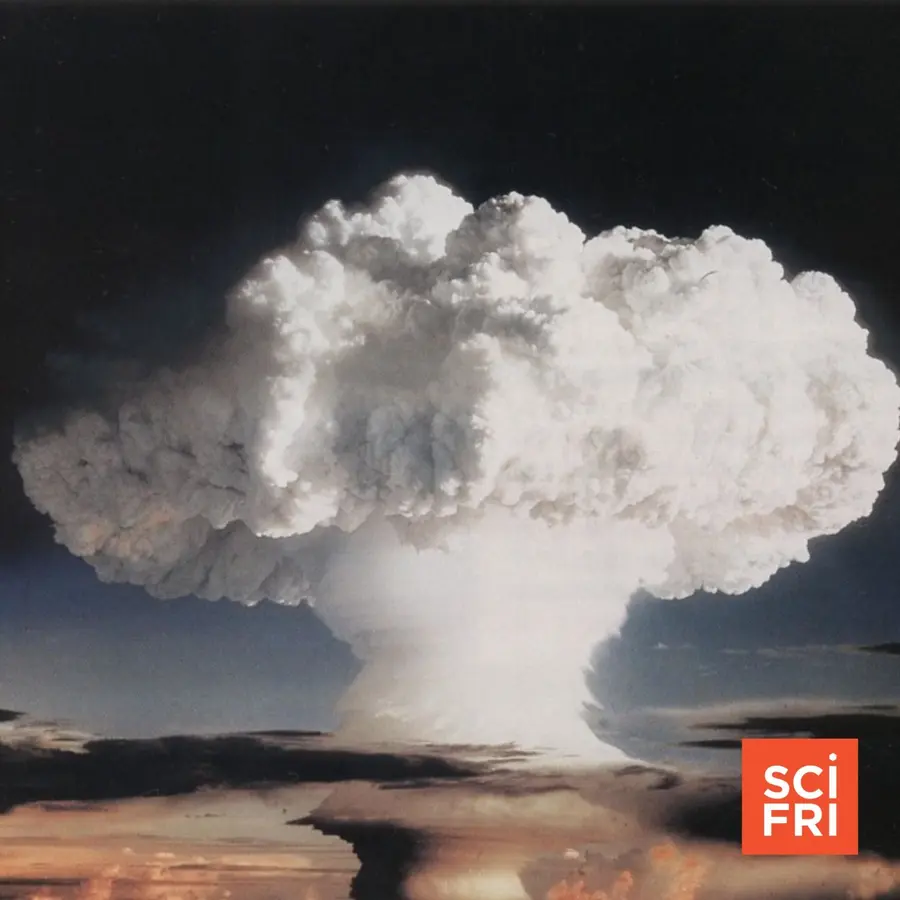
This week holds anniversaries for two important milestones in nuclear warfare. On November 1, 1952, the United States detonated a massive hydrogen bomb in the Marshall Islands. The new weapon vaporized a whole island, leaving behind a mile-wide crater. That bomb was around 700 times more powerful than the one dropped on Hiroshima seven years prior, and it renewed fears of nuclear annihilation, which would grip the world for generations to come.
Three decades later, on October 30, 1983, millions of Americans flipped open the Sunday paper to find a shadowy, apocalyptic photo with the words: “Would nuclear war be the end of the world?”
This week holds anniversaries for two important milestones in nuclear warfare. On November 1, 1952, the United States detonated a massive hydrogen bomb in the Marshall Islands. The new weapon vaporized a whole island, leaving behind a mile-wide crater. That bomb was around 700 times more powerful than the one dropped on Hiroshima seven years prior, and it renewed fears of nuclear annihilation, which would grip the world for generations to come.
Three decades later, on October 30, 1983, millions of Americans flipped open the Sunday paper to find a shadowy, apocalyptic photo with the words: “Would nuclear war be the end of the world?”
Legendary scientist Dr. Carl Sagan, writing for Parade Magazine, introduced the world to “nuclear winter,” the terrifying climate changes that might be brought on by nuclear war.
Sagan conducted some of the first research on nuclear winter, and he spent years warning politicians, world leaders, and the general public about it. Today, with thousands of nuclear weapons still in existence, the risk of nuclear winter isn’t zero.
Ira talks with another pioneer in nuclear winter research, Dr. Alan Robock, a climate scientist and distinguished professor at Rutgers University, about the science of nuclear winter, how fear of those consequences shaped policies, and what’s happening with the world’s nuclear arsenal now.
To stay updated on all things science, sign up for Science Friday's newsletters. Transcripts for each segment will be available the week after the show airs on sciencefriday.com.
Subscribe to this podcast. Follow our show on Instagram, TikTok, Facebook, and Bluesky @scifri and sign up for our newsletters. Got a science question that’s keeping you up at night? Call us: 877-472-4374
Hosted by Simplecast, an AdsWizz company. See pcm.adswizz.com for information about our collection and use of personal data for advertising.
QUICK LINKS
This is an episodic podcast, so you can listen to it in any order, but episode one is a great place to start.
Listen to episode one hereThis week holds anniversaries for two important milestones in nuclear warfare. On November 1, 1952, the United States detonated a massive hydrogen bomb in the Marshall Islands. The new weapon vaporized a whole island, leaving behind a mile-wide crater. That bomb was around 700 times more powerful than the one dropped on Hiroshima seven years prior, and it renewed fears of nuclear annihilation, which would grip the world for generations to come.
Three decades later, on October 30, 1983, millions of Americans flipped open the Sunday paper to find a shadowy, apocalyptic photo with the words: “Would nuclear war be the end of the world?”
Legendary scientist Dr. Carl Sagan, writing for Parade Magazine, introduced the world to “nuclear winter,” the terrifying climate changes that might be brought on by nuclear war.
Sagan conducted some of the first research on nuclear winter, and he spent years warning politicians, world leaders, and the general public about it. Today, with thousands of nuclear weapons still in existence, the risk of nuclear winter isn’t zero.
Ira talks with another pioneer in nuclear winter research, Dr. Alan Robock, a climate scientist and distinguished professor at Rutgers University, about the science of nuclear winter, how fear of those consequences shaped policies, and what’s happening with the world’s nuclear arsenal now.
To stay updated on all things science, sign up for Science Friday's newsletters. Transcripts for each segment will be available the week after the show airs on sciencefriday.com.
Subscribe to this podcast. Follow our show on Instagram, TikTok, Facebook, and Bluesky @scifri and sign up for our newsletters. Got a science question that’s keeping you up at night? Call us: 877-472-4374
Hosted by Simplecast, an AdsWizz company. See pcm.adswizz.com for information about our collection and use of personal data for advertising.
Sound Carrot is your source for Family Podcast Discovery. Verified awesome, 0% boring.
Distraction free website, no flashing banners or adverts to steal your attention.
(Some shows do contain their own ads however).
At first I made this site for my kids, but like any dad I got a little over excited. I hope you find it as useful as they do.
Whether you want to listen to them together in the car, or alone in your room - the content is all safe for younger ears.