Install SoundCarrot
Add it to your home screen for quick access.
Listened
In progress
Scientists determined that Lucy, a human ancestor from 3.2 million years ago, couldn’t have beaten modern humans in a foot race. Also, the Chinese AI company DeepSeek startled industry observers with an efficient new system. But how does it compare with the leading tech?
How Lucy, Our Famous Ancestor, Runs On A Virtual TreadmillLucy is one of the most famous fossils—an Australopithecus afarensis who lived about 3.2 million years ago. Her skeleton is about 40% complete, and has been studied since its discovery in 1974. In a quest to learn more about what Lucy’s life may have looked like, scientists estimated what her leg and pelvic muscles were like based on her skeleton. They then put her on a treadmill—virtually, of course.
Scientists determined that Lucy, a human ancestor from 3.2 million years ago, couldn’t have beaten modern humans in a foot race. Also, the Chinese AI company DeepSeek startled industry observers with an efficient new system. But how does it compare with the leading tech?
How Lucy, Our Famous Ancestor, Runs On A Virtual TreadmillLucy is one of the most famous fossils—an Australopithecus afarensis who lived about 3.2 million years ago. Her skeleton is about 40% complete, and has been studied since its discovery in 1974. In a quest to learn more about what Lucy’s life may have looked like, scientists estimated what her leg and pelvic muscles were like based on her skeleton. They then put her on a treadmill—virtually, of course.
The findings? Lucy was likely not a natural runner, and the modern human body evolved for improved running performance. Host Flora Lichtman talks to Producer Kathleen Davis about these findings, and other news of the week.
Flora also speaks to Anil Oza, a Sharon Begley Science Reporting Fellow at STAT and MIT, about the latest news on the Trump administration taking down scientific data from the Centers for Disease Control website for mentioning topics like gender, DEI and accessibility. They also discuss the National Institutes of Health resuming grant reviews after two weeks of restrictions imposed by the president.
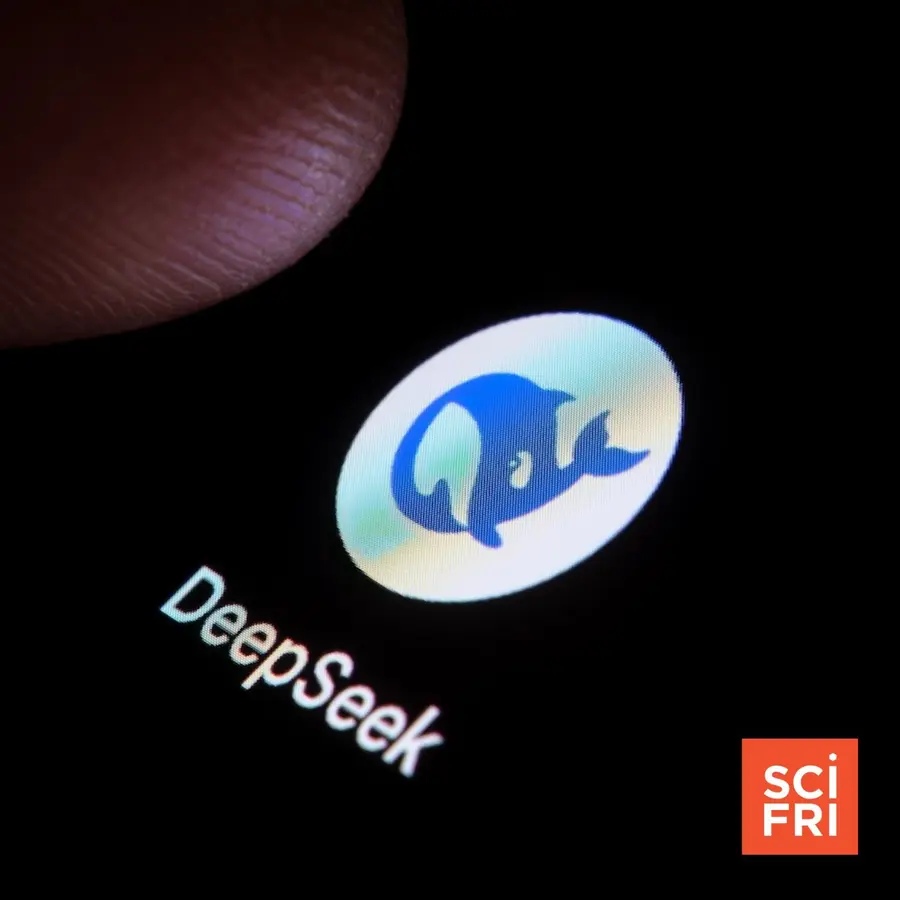
How DeepSeek’s AI Compares To Established ModelsThe Chinese company DeepSeek recently startled AI industry observers with its DeepSeek-R1 artificial intelligence model, which performed as well or better than leading systems at a lower cost. The DeepSeek product apparently requires less human input to train, and less energy in parts of its processing—though experts said it remained to be seen if the new model would actually consume less energy overall.
Will Douglas Heaven, senior editor for AI at MIT Technology Review, joins Host Ira Flatow to explain the ins and outs of the new DeepSeek systems, how they compare to existing AI products, and what might lie ahead in the field of artificial intelligence.
Transcripts for each segment will be available after the show airs on sciencefriday.com.
Subscribe to this podcast. Follow our show on Instagram, TikTok, Facebook, and Bluesky @scifri and sign up for our newsletters. Got a science question that’s keeping you up at night? Call us: 877-472-4374
Hosted by Simplecast, an AdsWizz company. See pcm.adswizz.com for information about our collection and use of personal data for advertising.
QUICK LINKS

This is an episodic podcast, so you can listen to it in any order, but episode one is a great place to start.
Listen to episode one hereScientists determined that Lucy, a human ancestor from 3.2 million years ago, couldn’t have beaten modern humans in a foot race. Also, the Chinese AI company DeepSeek startled industry observers with an efficient new system. But how does it compare with the leading tech?
How Lucy, Our Famous Ancestor, Runs On A Virtual TreadmillLucy is one of the most famous fossils—an Australopithecus afarensis who lived about 3.2 million years ago. Her skeleton is about 40% complete, and has been studied since its discovery in 1974. In a quest to learn more about what Lucy’s life may have looked like, scientists estimated what her leg and pelvic muscles were like based on her skeleton. They then put her on a treadmill—virtually, of course.
The findings? Lucy was likely not a natural runner, and the modern human body evolved for improved running performance. Host Flora Lichtman talks to Producer Kathleen Davis about these findings, and other news of the week.
Flora also speaks to Anil Oza, a Sharon Begley Science Reporting Fellow at STAT and MIT, about the latest news on the Trump administration taking down scientific data from the Centers for Disease Control website for mentioning topics like gender, DEI and accessibility. They also discuss the National Institutes of Health resuming grant reviews after two weeks of restrictions imposed by the president.
How DeepSeek’s AI Compares To Established ModelsThe Chinese company DeepSeek recently startled AI industry observers with its DeepSeek-R1 artificial intelligence model, which performed as well or better than leading systems at a lower cost. The DeepSeek product apparently requires less human input to train, and less energy in parts of its processing—though experts said it remained to be seen if the new model would actually consume less energy overall.
Will Douglas Heaven, senior editor for AI at MIT Technology Review, joins Host Ira Flatow to explain the ins and outs of the new DeepSeek systems, how they compare to existing AI products, and what might lie ahead in the field of artificial intelligence.
Transcripts for each segment will be available after the show airs on sciencefriday.com.
Subscribe to this podcast. Follow our show on Instagram, TikTok, Facebook, and Bluesky @scifri and sign up for our newsletters. Got a science question that’s keeping you up at night? Call us: 877-472-4374
Hosted by Simplecast, an AdsWizz company. See pcm.adswizz.com for information about our collection and use of personal data for advertising.
Sound Carrot is your source for Family Podcast Discovery. Verified awesome, 0% boring.
Distraction free website, no flashing banners or adverts to steal your attention.
(Some shows do contain their own ads however).
At first I made this site for my kids, but like any dad I got a little over excited. I hope you find it as useful as they do.
Whether you want to listen to them together in the car, or alone in your room - the content is all safe for younger ears.