Install SoundCarrot
Add it to your home screen for quick access.
Listened
In progress
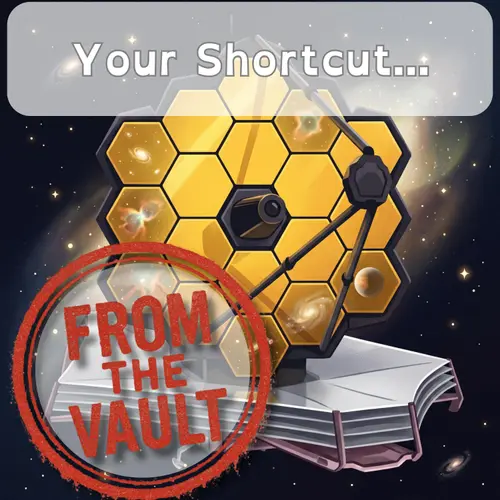
The James Webb Space Telescope has been sending back extraordinary images of newborn stars, distant planets and some of the earliest galaxies ever seen. So, this week, we’re blasting open the Squiz Kids Vault and revisiting our Shortcut to the telescope that some people call the Just Wonderful Space Telescope.
Join Amanda and Bryce as they discover HOW the JWST works, WHAT its first spectacular images revealed, and WHY scientists believe studying distant galaxies and planets could help us better understand the universe, and our own little corner of it.
The James Webb Space Telescope has been sending back extraordinary images of newborn stars, distant planets and some of the earliest galaxies ever seen. So, this week, we’re blasting open the Squiz Kids Vault and revisiting our Shortcut to the telescope that some people call the Just Wonderful Space Telescope.
Join Amanda and Bryce as they discover HOW the JWST works, WHAT its first spectacular images revealed, and WHY scientists believe studying distant galaxies and planets could help us better understand the universe, and our own little corner of it.
LINKS:
How the James Webb telescope works: https://graphics.reuters.com/SPACE-EXPLORATION/TELESCOPE/klvyknwbrvg/
Image One – SMACS 0723: https://www.nasa.gov/image-feature/goddard/2022/nasa-s-webb-delivers-deepest-infrared-image-of-universe-yet
Hubble’s view of SMACS 0723: https://hubblesite.org/contents/news-releases/1996/news-1996-01.html
Image Two – WASP 96B: https://www.nasa.gov/image-feature/goddard/2022/nasa-s-webb-reveals-steamy-atmosphere-of-distant-planet-in-detail
Image Three – Carina Nebula: https://www.nasa.gov/image-feature/goddard/2022/nasa-s-webb-reveals-cosmic-cliffs-glittering-landscape-of-star-birth
Image Four – A dying star: https://www.nasa.gov/image-feature/goddard/2022/nasa-s-webb-captures-dying-star-s-final-performance-in-fine-detail
Image Five – Stephan’s Quintet: https://www.nasa.gov/image-feature/goddard/2022/nasa-s-webb-sheds-light-on-galaxy-evolution-black-holes
QUICK LINKS

This is an episodic podcast, so you can listen to it in any order, but episode one is a great place to start.
Listen to episode one hereThe James Webb Space Telescope has been sending back extraordinary images of newborn stars, distant planets and some of the earliest galaxies ever seen. So, this week, we’re blasting open the Squiz Kids Vault and revisiting our Shortcut to the telescope that some people call the Just Wonderful Space Telescope.
Join Amanda and Bryce as they discover HOW the JWST works, WHAT its first spectacular images revealed, and WHY scientists believe studying distant galaxies and planets could help us better understand the universe, and our own little corner of it.
LINKS:
How the James Webb telescope works: https://graphics.reuters.com/SPACE-EXPLORATION/TELESCOPE/klvyknwbrvg/
Image One – SMACS 0723: https://www.nasa.gov/image-feature/goddard/2022/nasa-s-webb-delivers-deepest-infrared-image-of-universe-yet
Hubble’s view of SMACS 0723: https://hubblesite.org/contents/news-releases/1996/news-1996-01.html
Image Two – WASP 96B: https://www.nasa.gov/image-feature/goddard/2022/nasa-s-webb-reveals-steamy-atmosphere-of-distant-planet-in-detail
Image Three – Carina Nebula: https://www.nasa.gov/image-feature/goddard/2022/nasa-s-webb-reveals-cosmic-cliffs-glittering-landscape-of-star-birth
Image Four – A dying star: https://www.nasa.gov/image-feature/goddard/2022/nasa-s-webb-captures-dying-star-s-final-performance-in-fine-detail
Image Five – Stephan’s Quintet: https://www.nasa.gov/image-feature/goddard/2022/nasa-s-webb-sheds-light-on-galaxy-evolution-black-holes
Sound Carrot is your source for Family Podcast Discovery. Verified awesome, 0% boring.
Distraction free website, no flashing banners or adverts to steal your attention.
(Some shows do contain their own ads however).
At first I made this site for my kids, but like any dad I got a little over excited. I hope you find it as useful as they do.
Whether you want to listen to them together in the car, or alone in your room - the content is all safe for younger ears.