Install SoundCarrot
Add it to your home screen for quick access.
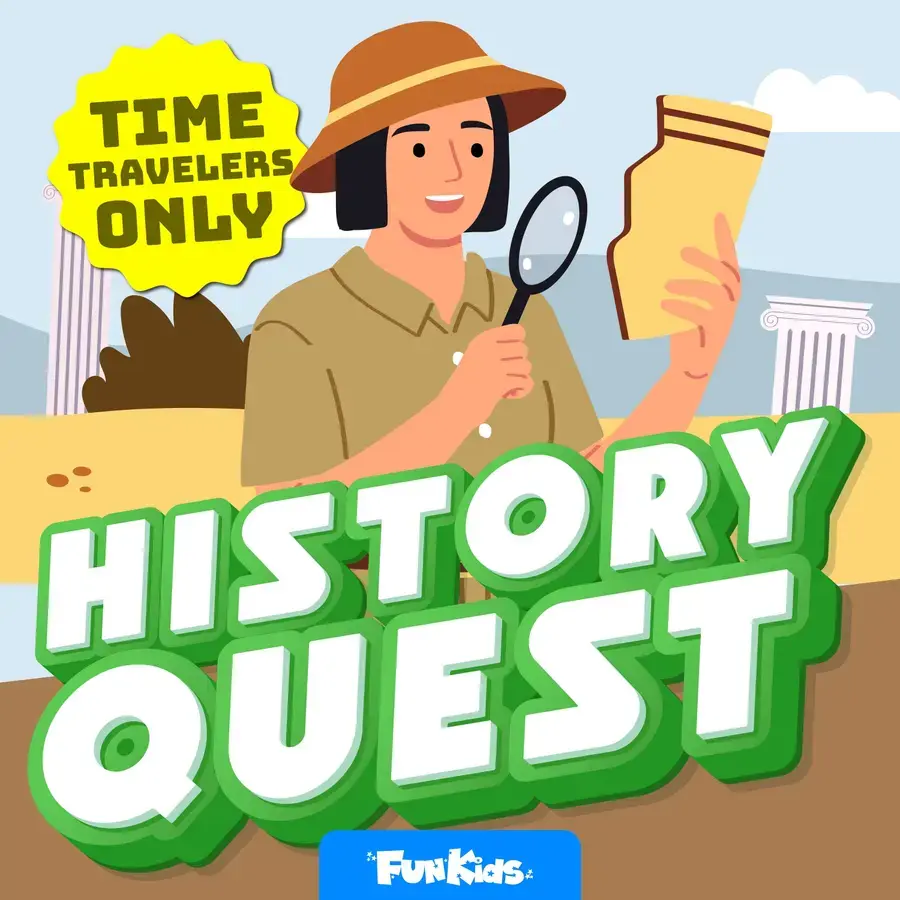
This is THE podcast for kids that want to learn all about history.
From the Victorian era to the Romans, each "History Quest: History for Kids" series dives into the lives of people living back in those days and get's kids learning all about what happened in the past!
Parent info: History Quest: History for Kids is recommended for ages 6-10 and 11 plus. It's an Episodic show that can be listened to in any order. Made in the UK, it's about History for kids. Launched in 2015, it has 4 seasons.
We can't find that particular episode - it might have been renamed, or removed by the podcast maker, but you can still browse all their other episodes here.
It's 1955 - The Blitz Kids are grown up and on the 10th Anniversary of VE Day take a road trip to visit the new national memorials.
It's Autumn 1945 - With war over, the Blitz Kids are moving on with life but things are far from getting back to normal…
It's May 1945 - The Blitz Kids celebrate the end of war in Europe, with parties and celebrations across the country. Some things are changing fast, but other things will take time to put right.
It's June 1944 - The Blitz Kids have been aware of a buzz about the preparations for D-Day but it’s all hush hush. No one wants the Germans to know
It's May 1943 - The Blitz Kids are in town – after a trip around a near empty National Gallery, they’ve gone to the cinema to enjoy a film and talk about how their favourite pass-times have been changed by the war.
The Blitz Kids are wondering how Alice is faring on Jersey in the Channel Islands, which has been occupied by the German Forces since June 1940
The Blitz Kids notice how many everyday roles are being done by women, including their female relatives, now that many men have been called up.
The Blitz Kids are Digging For Victory around their homes and discover the country is increasing food production everywhere to make sure there’s enough basic food for each table.
The Blitz Kids are still attending school, although there’s quite a few changes… and don’t forget your gas mask!
The Blitz Kids are looking forward to Christmas 1943… and Cousin Betty is coming up to London to shop with her mother… and to see George.
The Blitz Kids are on the scrounge – looking to get hold of salvageable things to help the war effort – if they can just keep hold of their cart…
The Blitz Kids are finding it harder to get everyday things that they want – not just food but fuel and clothes, and they’re having to spend more and more time in queues with their ration books.
It's January 1941 - There’s an air raid and the Blitz Kids are taking shelter at home, church and in the local Underground station.
It's September 1939 - The Blitz Kids find themselves part of Operation Pied Piper and are being evacuated to different parts of the UK. Where are they going… and when will they return?
It's September 1939 - War is declared and the Blitz Kids watch as their neighbourhood changes.
Many of us remember the fallen from the Great Wars and other conflicts by wearing a poppy. Edward’s mother and Grandmother talk about the Poppy campaign, and Edward remembers seeing the Scottish troops in London.
Memorials for the fallen come in many shapes and sizes. This is mainly due to there not being any rules about what form a war memorial should take but also because different people and communities want to remember and commemorate in different ways. Edward an…
In the aftermath of the war, Britain needed a way to remember their fallen. The Cenotaph and The Tomb of the Unknown Soldier would become the focus for the nation to remember, particularly on the anniversary of the Armistice.
It's December 1938 - The Blitz Kids are reflecting on life in the late 1930s, and whilst there’s talk of a Europe-wide war, home life seems fairly quiet… for the moment.
A story of love and hope, inspired by the real-life events of World War II.
Yolanda find’s out what life in Britain was like for the people who emigrated to Britain on the Empire Windrush and the later ships.
Yolanda learns about why people from the Caribbean decided to make the journey to Britain and what it was like on ships like the Windrush.
Yolanda learns about what life was like in Britain after the second world war and why help was so desperately needed from the people in the British Colonies.
Yolanda looks into the history of migration in this country including the Windrush Generation arriving in Britain after the Second World War.
Yolanda learns about the Caribbean immigrants who came to Britain’s aid, many on the iconic ship the Windrush.
Cast iron houses were quick to build, with materials in plentiful supply...
The Newcomen steam engine was a tremendous invention by Mr. Thomas Newcomen - first installed in the Black Country in 1712!
Roads have changed a lot, and so have vehicles!
The anchor and chains for the Titanic, and her sister ships Olympic and Britannic, were made in the Black Country - the anchors were some of the biggest ever made!
Did you know the Black Country used to be known as Birmingham-on-Sea?
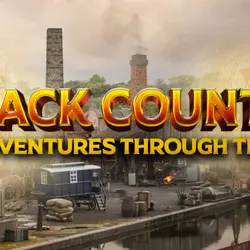
Life at home in the Black Country in the 1800's was a lot different to life nowadays.

The Black Country was famous for coal mining back in the day!

You might take being warm and cozy in your house for granted, but the people of the Black Country definitely didn't back in the Victorian era!

Staying healthy is really important, but with all those factories and mines in the Black Country, doing that was easier said than done.

People in the Black Country didn't just work in the factories all the time, they had to eat too!

Queen Victoria meant a lot to the people of the Black Country.

Mary Macarthur was a pretty amazing woman in the Black Country's history.
It’s a decade after the start of the war and Edward’s father has died. At a church memorial service, Edward contemplates the role of memorial in our society in all its aspects.
Military cemeteries were designed to be peaceful and to be a fair way to remember both rich and poor alike. Edward visits Brookwood Military Cemetery in Surrey, whilst Sid and his mother argue about John’s place in a cemetery in France.
After the war, the Government said it would look after the returning soldiers, with houses and jobs fit for the heroes they were. The reality was quite different ...
In the early hours of 11th November 1918, an Armistice Agreement was signed between Germany and the Allies. This meant that at the 11th hour on the 11th day of the 11th month there would be a truce and an end to the fighting – but peace would be a little way …
The Spanish Flu was a terrible illness that spread across Europe and was brought to Britain by returning soldiers and ships bringing food to feed the starving nation. It was a pandemic that gripped the country and would end up killing more people across the w…
Until 1918 only some men had the right to vote in elections. Groups of women, called Suffragettes had protested for many years for women to be able to vote too – sometimes the protests were peaceful but some were violent, causing damage.
Edward describes the difficulty of life in 1918. Shortages are making it hard to find vegetables and material for clothing, with news of more losses in battle adding to their worries.
Dan and Bex think about working children in other parts of the world and how we can help to change things for the better.
Dan and Bex find out that even after schools became compulsory – and free – not everyone was happy to attend.
Dan and Bex, with the help of Lord Shaftesbury’s Journal, find out that making clothes was a common way for children to help their families earn extra pennies.
Dan and Bex, with the help of Lord Shaftesbury’s Journal, take a trip to a Victorian pottery and find children hard at work
Dan and Bex, with the help of Lord Shaftesbury’s Journal, find out that it’s not just coal that’s mined – clay, slate and other minerals all involved child workers.
Dan and Bex, with the help of Lord Shaftesbury’s Journal, learn about apprenticeships – where children were sold to learn a trade.
Dan and Bex, with the help of Lord Shaftesbury’s Journal, learn what life was like for child workers in Victorian factories.
Dan and Bex find out about the jobs kids did on the transport networks – canals, roads and railways – with help from Lord Shaftesbury’s Journal.
Dan and Bex explore what jobs children undertook on the grimy streets of Victorian cities as they take a trip into Lord Shaftesbury’s Journal.
Dan and Bex, with the help of Lord Shaftesbury’s Journal, find that Victorian children frequently had work around home – once they had got home from school.
Dan and Bex find out about the jobs kids did in domestic service – with help from Lord Shaftesbury’s Journal.
Dan and Bex, with the help of Lord Shaftesbury’s Journal, find out that there’s more to mining than digging out coal.
Dan and Bex find out what life was like as trapper in a coal mine when they take a trip into Lord Shaftesbury’s Journal.
Dan and Bex find out what life was like as a farm worker they take a trip into Lord Shaftesbury’s Journal.
Dan and Bex find out what life was like to be a chimney sweep as they take a trip into Lord Shaftesbury’s Journal.
Dan and Bex find a book that transports them back to Victorian Britain to explore why children worked.
Edward and his mother are queuing for flour. They talk about rationing and the causes of the shortages. German ships have attacked the supply ships, whilst farms have been neglected as the men go to war.
Edward talks to Mrs Parry and Sid about how transport has changed since the start of the war, with more and more motorised vehicles such as buses and trams. Horses and bicycles through are still a regular sight.
Edward watches the Zeppelins bomb South London from the attic window, and talks about how it felt to have the war so close to home.
Children were certainly kept busy in 1916. Many would be caring for smaller children or had jobs. Even those still at school would help with the war effort, perhaps through the Scouts and Guides.
Edward experiences the wounded returning from the Front Line, coming back on ambulance trains. He talks to Sid about seeing injured tommies in the city.
People are desperate for news about the war – but not every report can be trusted. Government needs more and more men to join up and Edward notices an increase in the use of propaganda to encourage men to join up.
Edward talks with Mother about how many homes and schools have become military hospitals – even his rich grandmother has agreed to take in the wounded.
Father is back home on leave, and explains to Edward why the Government has had to introduce conscription.
Edward and Sid talk about how things have changed – anything with a German name is treated with suspicion, there are many new laws and women increasingly are filling the roles left by the men.
London 1916 and the war shows no sign of ending - the Battle of The Somme has shocked the nation, Londoners are experiencing changes and Edward’s father may be in the thick of it…
It’s Christmas time and Edward and Sidney are excited about the parcels they are sending to their menfolk in France. The shops are busy as Londoners enjoy getting in the Christmas spirit. Edward and his mother decorate the house and talk about the food they wi…
In this episode Edward talks about the sorts of things he and his friends write in the letters to their family members in the services, and what is in the letters they get back. Food is often a popular topic! Things continue to change for Edward, with the hous…
In this episode Edward talks about the different ways people communicate with soliders on the front and how they write back – field service postcards, honour envelopes and letters – but do any of them tell the whole story? With mother now working as a censor E…
In this episode Edward talks about the different ways people communicated in 1914. With rumours abounding, news clips at the cinematograph, and newspapers are becoming more popular, and letters and postcads vital as a way for soldiers at War and their families…
In this episode Edward describes the clothes he wears and how they compare to other boys and girls. He talks about uniforms – the army’s, and his new Scouting Uniform. He has a uniform for school too, although not all children do.Join Fun Kids Podcasts+: https…
In this episode Edward’s father has joined up and life is changing for those left behind – there are fewer men around and everyday supplies are running short. Even children like Sidney Parry, the housekeeper’s son, are caught up in war work – whether they like…
In this episode Edward talks how things are changing since the start of the war. The City Exchange has closed which means father hasn’t as much work to do, and mother is knitting for the troops. The daily trips to school and work are affected by the war effort…
In this episode Edward describes the toys and games he enjoys. On his way to go fishing with his father he sees some other children playing in the street.Join Fun Kids Podcasts+: https://funkidslive.com/plus
In this episode Edward talks about the rooms and décor in his home. He compares this with his rich grandmother’s house and the much smaller and poorer type of house in which the housekeeper Mrs Parry lives.Join Fun Kids Podcasts+: https://funkidslive.com/plus
In this episode Edward talks about all the ways he and his family enjoy themselves – including fairs, trips to the seaside, the cinema and comics. Housekeeper Mrs Parry tells him about the music hall.Join Fun Kids Podcasts+: https://funkidslive.com/plus



Content, Artwork and advertising within this podcast is not owned or affiliated with Sound Carrot.







No similar shows for this age just now.
Sound Carrot is your source for Family Podcast Discovery. Verified awesome, 0% boring.
Distraction free website, no flashing banners or adverts to steal your attention.
(Some shows do contain their own ads however).
At first I made this site for my kids, but like any dad I got a little over excited. I hope you find it as useful as they do.
Whether you want to listen to them together in the car, or alone in your room - the content is all safe for younger ears.